
How do paramedics remain safe on the COVID-19 front lines?
YOUNGSTOWN — One of the hardest parts of being a paramedic during the coronavirus pandemic is telling people that they can't ride with their loved ones in an ambulance.
Worse, they won't be able to visit them in the hospital.
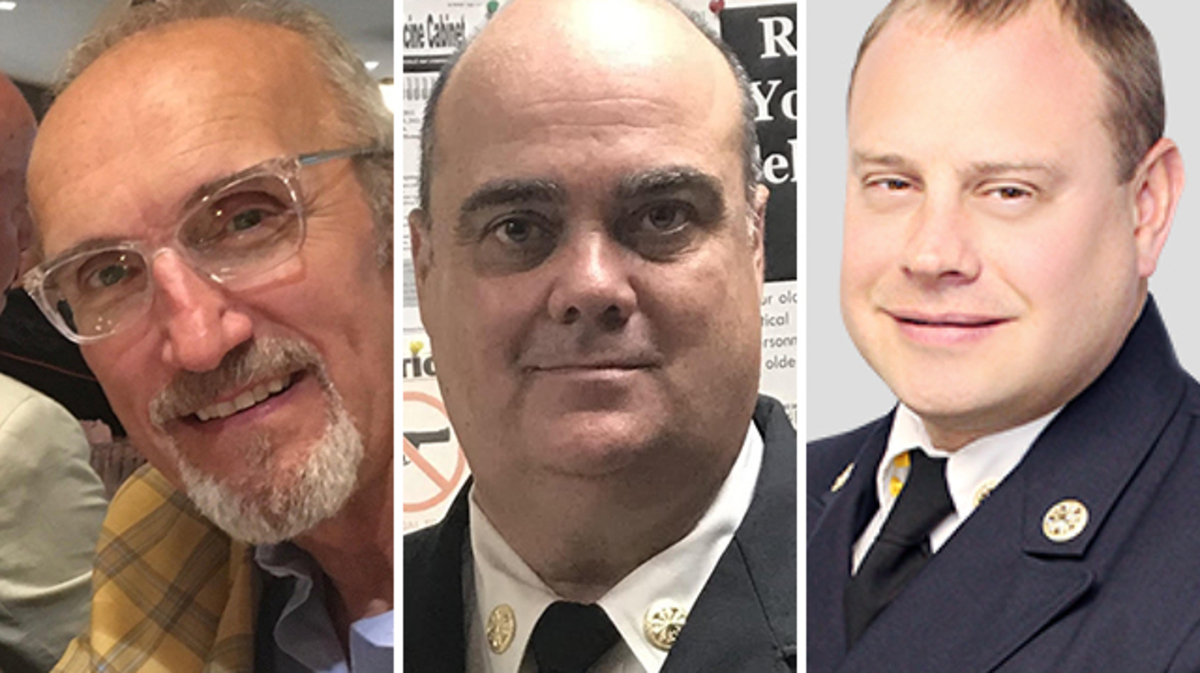
After 30 years as a first responder, Lane LifeTrans Chief of Operations Tom Lambert knows what to say and how to say it: "In a calm voice, explain to them why this is going on."
"We have to tell them, 'Don't even waste your time driving to the hospital. They won't let you in,'" Lambert said.
"When they get mad at you — just because they're yelling at you and maybe calling you an unpleasant name at the time — that's not really them," Lambert said. "That's their emotions. And I get that."
When Mahoning Matters talked to Lambert last week, he was at his home. He had been quarantined for eight days and was itching for permission to get back to work.
Lane LifeTrans CEO Joe Lane said that for Lambert — a lifelong paramedic — being at home at a time like this was "prison."
Lane LifeTrans, which provides EMS services for Boardman and Austintown, was down 10 people late last week. Five were quarantined until Friday after a situation at Niles' Arconic manufacturing company. Another five were quarantined after a Lane employee fell ill and tested positive for COVID-19.
Lane LifeTrans is not the only group of first responders operating without a full roster right now.
The Western Reserve Joint Fire District in Poland was down three firefighters Thursday. One crew of Canfield-area firefighters was ordered home Wednesday after one firefighter began showing flu-like symptoms while on duty. And three Youngstown firefighters were quarantined last week after experiencing flu-like symptoms.
And paramedics expect a spike in coronavirus cases this week.
Risks to first responders
Lambert, who is also the fire chief in Weathersfield, was one of five Lane LifeTrans first responders to respond to a call at Arconic's plant March 18.
They received a call that an employee was not breathing. Only after paramedics' attempt to revive him did they learn that he had been experiencing flu-like symptoms.
"Nobody really knew much about who he was. There wasn't a lot of information at the time," said Lane.
Those who responded to the call were quarantined for nine days, until the deceased tested negative for COVID-19 on Friday.
The situation highlights the unique risks to first responders. Even in a global pandemic, standard emergencies still take place.
"People have heart attacks," said Lane. "People have strokes. People get into car accidents."
Since the United States has lagged on testing, people are told to assume that they have been exposed to the virus. But for first responders, there's often not enough protective equipment to protect against the implications of that assumption.
Personal protective equipment
Health care professionals across the country have reported the shortage of medical supplies, and the Valley is not immune.
Last week, Mahoning County Emergency Management Agency received its first round of state-provided personal protective equipment, which amounted to two pallets for the entire county.
"We have to provide it to the hospitals, some health care facilities, nursing homes, fire departments, police departments and private EMS in our area. Two little pallets? It's gone, and people are still in need," said Boardman Fire Chief Mark Pitzer. His voice was strained; his frustration was evident.
To conserve the PPE it does have, the Boardman FIre Department is reusing N95-grade masks when responding to mild cases.
Mahoning County EMA is soliciting donations of PPE, Pitzer said. Anyone with access to PPE can donate it by sending an email to donateppe@mahoningcountyoh.gov or by calling 330-599-5351.
"The challenge right now for first responders is just the complete and total lack of PPE," said Pitzer. "We are in desperate need of more donations."
Protections against COVID-19
Since the incident at Arconic, Lane LifeTrans has adapted its dispatching protocol to triage for potential COVID-19 cases.
The first ambulance that arrives will assess the situation and determine if further protection is necessary. If so, one of Lane's three COVID-19 cars will respond staffed by paramedics in full hazmat suits.
"We covered in the inside [of the ambulance] with plastic, and that way it can be cleaned between runs," said Lane.
Some fire departments, like in Boardman, often respond to medical calls to begin assessing a patient before an ambulance arrives.
But due to the danger of spreading COVID-19 and the shortage of PPE, the fire department is responding only to "true medical emergencies," said Pitzer.
In addition to trying to avoid contracting the virus, paramedics and firefighters are also trying to avoid taking it home to their families.
So Lane employees are taking additional precautions, such as washing their uniforms at work.
Lambert called COVID-19 part of the calculated risk that paramedics assume in taking on their roles. "But nobody signed up to bring their work home and give it to their family," said Lambert.
Looking ahead
Scientists project that in Ohio the pandemic will reach its peak in mid-April, depending on the effectiveness of the state's social distancing efforts.
Pitzer called the situation "extremely problematic for all first responders in the Mahoning Valley."
The Mahoning Valley relies on a patchwork system for public services and has suffered for it. Shared public services are ad hoc. This crisis has already changed that.
"And if they're anticipating a spike [this] week, we've been collaborating between fire departments," said Pitzer. "We're communicating routinely. If [departments] are short, we're trying to figure out how we can plan and help each other out down the road."
Additionally, fire departments and ambulance providers are enacting mutual aid "a lot quicker than we ever have," Pitzer said.
In the midst of this collaboration, local leaders are doing their best to take care of their own.
"As a manager, my biggest goal is making our people feel safe," said Lambert. Whether that's giving out an additional bottle of disinfectant or just providing extra encouragement.
'Borderlines went away'
In the week that Lambert has been at home, he and the Weathersfield Fire Department have received countless donations of food and supplies.
He's received calls from local fire chiefs and even competitor ambulance company AMR, which provides ambulance service to the city of Youngstown.
"Chief Pitzer even offered to put a uniform on, because he started with us years ago," said Lambert.
While these operations are individually trying to stay afloat, the crisis has put the politics of business on the back burner.
"What I've learned in the last eight days is when a pandemic happens here in the Valley, the borderlines went away," said Lambert. "There's no longer a line between Niles and Girard or Austintown and Canfield or Boardman and Youngstown.
"We're all functioning as one unit."
This story was originally published March 31, 2020 at 3:52 AM with the headline "How do paramedics remain safe on the COVID-19 front lines?."