
Spelunking the underground: Is Youngstown’s music scene sinking to oblivion?
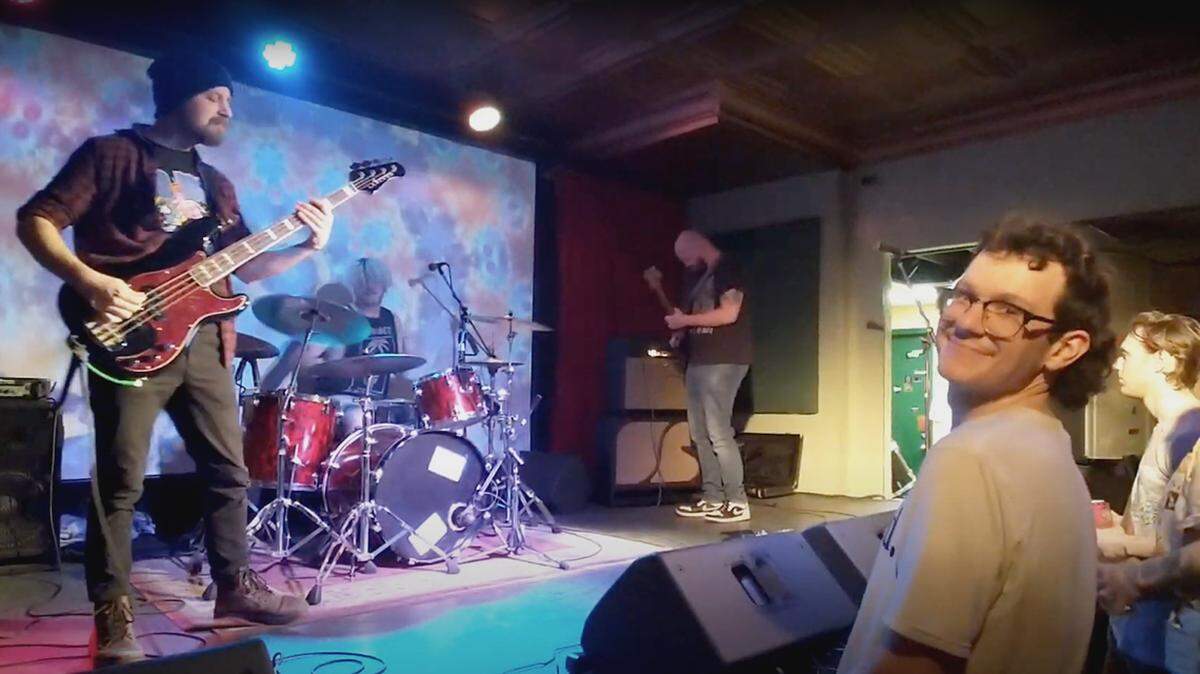
From the screaming sounds of synthesizers to the monotone drone of microphone feedback, the Mahoning Valley has seen its share of niche musical acts.
What makes defining “underground music” difficult is the lack of consistency between those who call themselves “underground musicians,” since none of them agree exactly on what it means. With no set genre to determine who’s who, it’s more of a matter of audience, according to Randall Goldberg.
Goldberg, who holds a doctorate of musicology and previously served as a professor and director in the Youngstown State University Dana School of Music, said underground music can span a variety of styles.
“It’s difficult to pin down underground because it does not refer to a distinct set of musical traits like reggae or heavy metal,” Goldberg said. “Underground typically refers to music that is free from the constraints of mainstream tastes, corporate contracts or any other such limitations.”
To Jake Brandenstein, a YSU graduate student and hobbyist musician, the term “underground music” implies a community consisting of many layers, each with their own distinct character.
“It has iceberg layers to it,” he said. “When you get into noise music territory — like [bands] Moth Cock, Ken Frost — you’re going way down there.”
Part of what makes this music so appealing to local groupies is the deviation from what’s commercially popular. Some acts, such as We — formerly known as We, the Creature — rely on unconventional techniques like distortion pedals, raw vocals and over-the-top drum arrangements to draw in a crowd of faithful fans.
“It’s music that your average, sane, neurotypical person wouldn’t want to hear. You’re not going to take your grandma to see We unless you want to scare her,” Brandenstein said. “There’s certain sonic or songwriting qualities that off-put the general crowd just enough to keep the ‘normies’ away.”
The music scene in the Valley has evolved over generations. Dance and jazz halls used to dominate.
Dorothy Shorr, 86, grew up in the area and played in jazz projects during the early 1950s. Performing became a way for her to “get out of the house.”
“My parents were very strict,” Shorr said. “In our house, when Elvis Presley was on TV, my father would come in and turn off the TV. He couldn’t stand gyrations and all that.”
As popular music shifted from the brassy sounds of the big band era to the “raunchier” rollicking of rock ’n’ roll, Shorr found herself in a shifting environment.
Today, the underground music scene shows its face in small bars, a bowling alley or a former funeral home in the Valley.
Brandenstein is in the process of revamping his projects to match the shifting scene.
The 25-year-old has been involved in an array of musical acts since 2016. He’s currently playing as the bassist for the band We. The rebranding comes from an attempt to bring an element of novelty to venues and audiences when booking shows.
The duo, and other local acts like it, is slowly transitioning out of the vestiges of pandemic lockdowns that put the live music scene on hold for over a year.
The internet has become a direct way for many young artists to share their work, particularly since the start of the pandemic. Through platforms like Spotify, SoundCloud and YouTube, many have managed to keep afloat, but it’s still not enough for others.
Members of the local band Hawktopus are all too familiar with how emigration — when combined with the pandemic — can affect the music scene.
According to U.S. Census Bureau data, Youngstown’s population decreased by 10.3% in the last decade, dropping from 66,000 in 2010 to 60,000 in 2020. At its peak, the city was home to over 168,000 people in the 1950s through 1960s, but the closing of the steel mills on “Black Monday” in 1977 sparked a dismal trend.
Hawktopus, which started in 2017, has played at a number of venues in and around the area, including Westside Bowl and Cedars West End. Since their drummer moved to Philadelphia a few years ago, they’ve barely been able to play shows together. The pandemic put a stop to their performances for two years, but their comeback show in March 2022 had a turnout much greater than they’d expected.
Bassist Daniel Richards said the band’s Youngstown shows bring the largest turnout compared to those played in Akron, Pittsburgh or Kent. The locals just want to support each other, he said.
“We live here, and that’s the biggest thing about this community,” Richards said. “Any time we play at any other place, it doesn’t bring nearly as many people.”
Brandenstein said he’s observed a number of members from iconic “staple” musical acts such as Picnic Day and The Last Evolution moving on because they don’t have the time anymore. A considerable number of band members — such as the drummer for Hawktopus — have left the area in search of career opportunities, or they’ve decided to spread out across the country to be with family.
“Some of the bands [performing in 2016] were starting to dissipate before the pandemic. A lot of those guys are now in their early 30s, and they’re getting their careers together, they’re getting day jobs and stuff,” Brandenstein said. “It’s kind of like it’s up to the youth to fix it.”
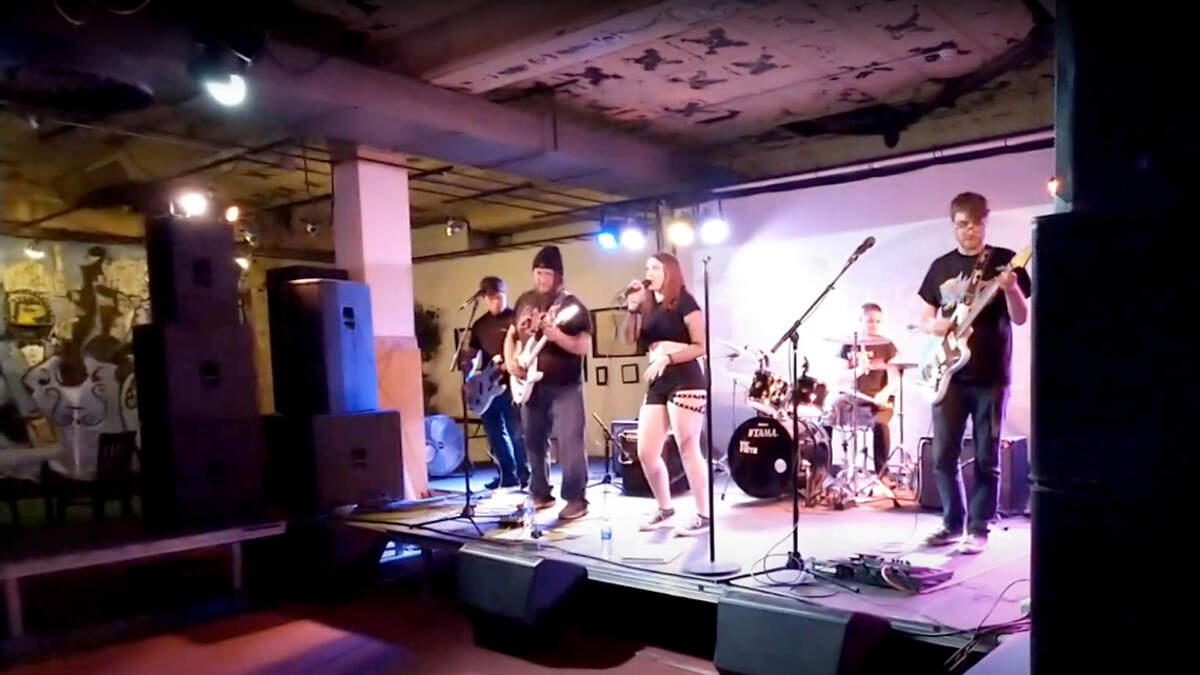
Some venues, according to Brandenstein, seem to have a better grasp than others on what it takes to incorporate younger acts into the scene. One such venue is The Wickyards on Wick Avenue in Youngstown.
Owned and operated by Valley native Erik Engartner, The Wickyards occupies the former McVean, Hughes and McClurkin funeral home, a location that plays into much of the venue’s appeal to audiences. Since its opening in 2016, it’s served as an all-ages spot for local musicians to grow their outreach.
The building itself is effective in drawing an appreciative crowd. The original woodwork and interior remain intact — from the embalming room to the many options of casket designs. The carpets, though uncleaned in what Engartner suspects has been “quite a while,” bear the vestiges of footprints from patrons and musicians alike. Stained glass windows make the rooms feel larger, and from the hallway one can see the greenroom where Engartner’s potted plants reside and guests smoke cigarettes when the weather’s poor.
Engartner’s original venue, the Backyards and Billiards in Boardman, served as a jumping-off point for his musical projects when it opened in 2011. With the help of his father, the 16-year-old converted the old warehouse into a safe space for him and his friends to play shows. Venues, like bars, aren’t accessible to younger musicians, so the father and son decided to create a new landmark.
In 2016, Engartner moved the venue to the Wick Avenue mansion, which had originally belonged to the area’s notable Tod family. Now, The Wickyards has become a haven for those looking to express the “weirder” and less conventional side of music.
“Really, it’s just for anyone either looking to start out, or for stuff that doesn’t have mainstream appeal. For people who are united through that niche interest, who want to explore that in different ways. It’s the very definition of counterculture,” Engartner said.
Brandenstein said The Wickyards is one of the best places to experience the scene “up close and personal.”
“What’s so great about The Wickyards is that people go to see the music — they go to see the bands — because that’s all that’s happening there is the band. The atmosphere is great,” Brandenstein said. “You’re not going there to drink or eat or watch TV.”
Engartner plans to expand the venue to include a recording studio, and is working on developing a haunted house for fall 2022. He just wants more people to stop by, listen to good music and enjoy themselves.
However, Engartner said there aren’t as many young bands and musicians to replace those who are fleeing the scene for other life paths.
“One thing I’ve noticed is that there are fewer high school bands around, in general,” Engartner said. “There’s a lower market, I think, of younger bands, but the ones [that are here now] absolutely embrace the scene.”
He speculates that it’s a combination of a lack of equipment or transportation, and that the pandemic certainly didn’t foster any live music socialization.
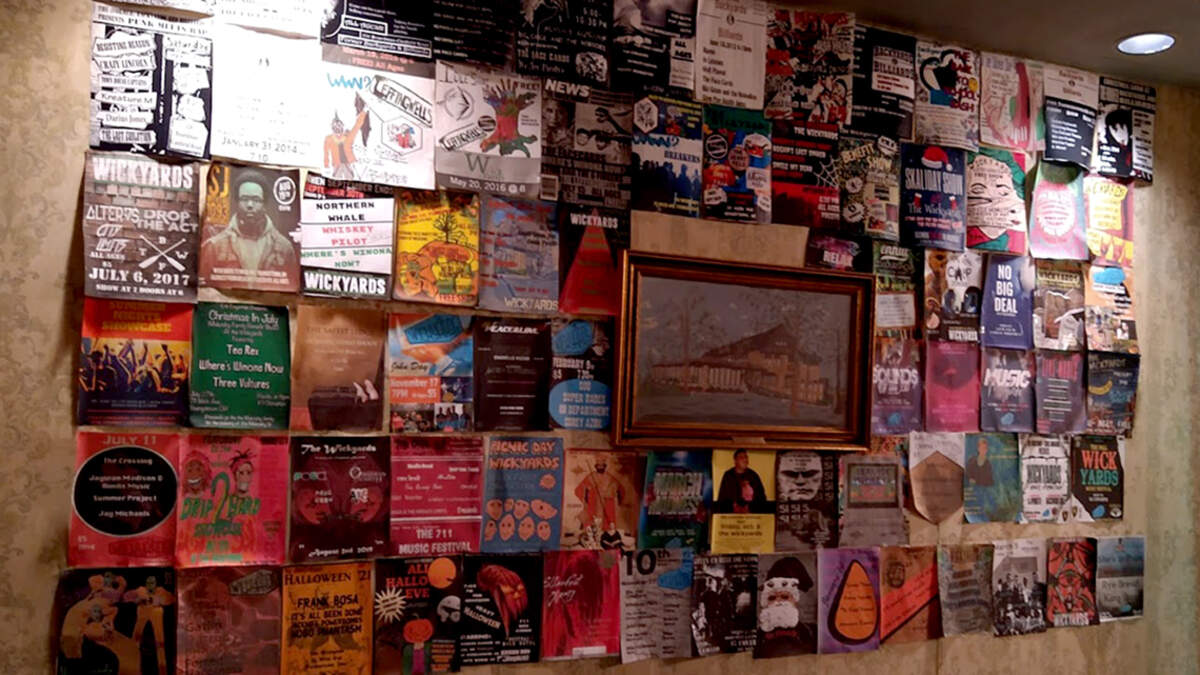
When it comes to talent scouting, Engartner has a few methods. A lot of the time, it’s reaching out to bands who know other bands, or filtering through emails and inquiries daily. Since 2018, he’s expanded the venue’s genres to include more hip-hop and R&B acts, as well as out-of-state musicians, to round out the wall of posters for every show that’s taken place since The Wickyards opened.
Talent scout Nicholas Mishko, founder and president of talent company 10 and 8 Management, has been in the music business since 2008. He started working as a marketing intern for Rock Ridge Music, which he attributes to cementing his desire to work in the industry. In pursuit of working more directly with artists, he started his own music management company in 2012.
Now, he has bands like Autopilot, Alteras, The Youth We Lost and more under his wing. The company works to book shows and help artists establish a media presence that will get them off the ground.
“The goal is for the band to be bigger than the year before,” Mishko said. “Build their fanbase, make sure they have consistent releases. Make sure they play shows and do consistent social media.”
Mishko has also noticed a migration of local bands and musicians from the area, as they search for more opportunities and audience expansion.
“Cleveland, Pittsburgh and Akron have a lot more music venues. Youngstown just doesn’t have that many venues,” Mishko said. “I have high hopes for Youngstown. One day, I would love to bring another venue to the Valley.”
Youngstown-based band Where’s Winona Now? has seen a revolving door of members since its formation in 2014. Singer Lucy Sawyer and guitarist Tyler Toporcer said they’ve seen other bandmates come and go.
“We’ve lost and gained so many different members,” Sawyer said. “People get jobs, people move — [there are] creative differences and personal reasons, too.”
But they haven’t let it keep their sense of optimism down. They recently performed on the main stage at Youngstown’s Federal Frenzy music festival, and they have plans to record and release new music this summer.
“We’d like to see ourselves opening acts, playing as headlining acts,” drummer Ryan Augustine said. “If you’re in a band, you should always dream of making it big. Even if you don’t, it could still be a goal.”