
After 13 years heading diocese, Bishop Murry resigns to fight leukemia
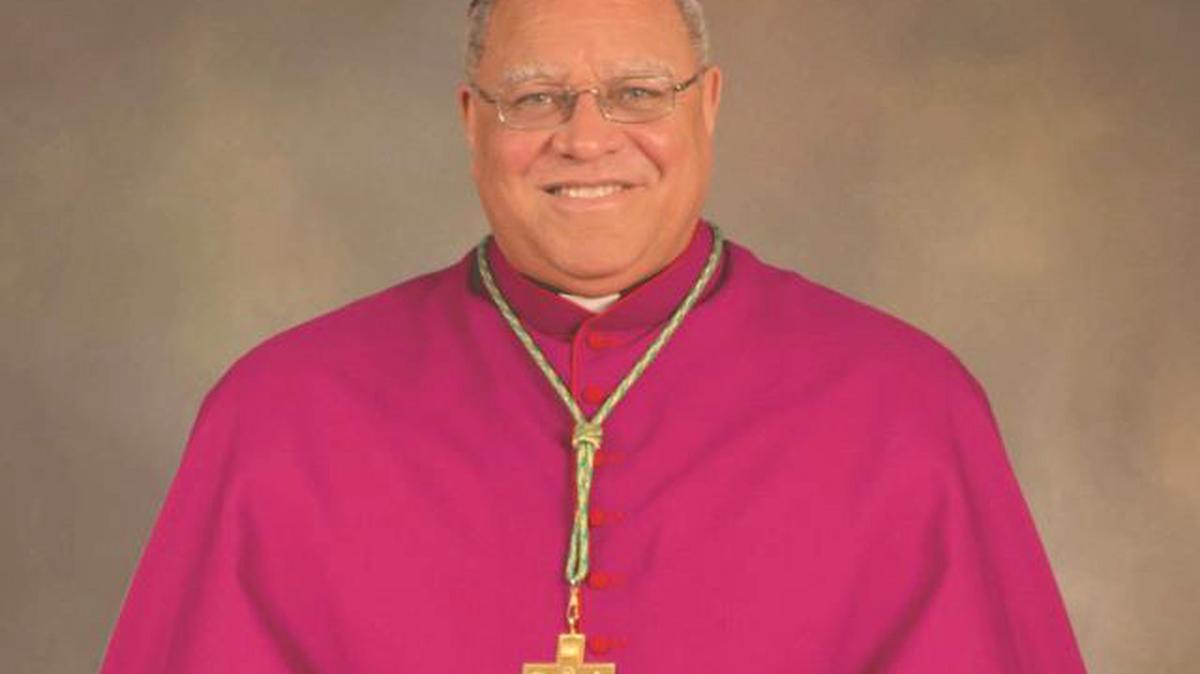
YOUNGSTOWN — The Most Rev. George Murry has chosen to step down as bishop of the Catholic Diocese of Youngstown, as he continues to battle a second recurrence of acute leukemia.
Bishop Murry, 71, who was installed in March 2007 as the Youngstown diocese's fifth bishop — succeeding the Most Rev. Thomas Tobin — cited "reasons of ill health" in his resignation which will be delivered to Pope Francis, the diocese announced Tuesday.
Following "intensive" chemotherapy treatment at the Cleveland Clinic after he was first diagnosed in April 2018, Bishop Murry recovered and returned to the diocese on a part-time basis that September. The cancer returned the following July, however, and he underwent a second round of treatment, according to the diocese.
"At that time, tests confirmed that he was in remission and that doctors were not recommending a bone marrow transplant," the Tuesday release states. "This past April, his leukemia returned and he resumed treatment.
"With this third bout of leukemia, his present state of health leaves him less able to fulfill the tasks entrusted to him as bishop of the Diocese of Youngstown."
Rev. Msgr. John Zuraw, diocese chancellor, told Mahoning Matters Bishop Murry continues to receive outpatient treatment at home.
"After prayerful consideration, he always looks out for what is best for the diocese, and he realizes that his stamina and energy level is not where it should be to continue ministering in an effective and pastoral way to the people who have been entrusted to him," he said.
WHAT HAPPENS NOW
Bishop Murry's letter of resignation will be communicated through Archbishop Christophe Pierre of Washington, D.C., who is the U.S. ambassador to the Vatican. Zuraw said it may be weeks before Bishop Murry's resignation is formally accepted.
Then the Holy See may do one of two things, Zuraw said: They may appoint an apostolic administrator to handle the day-to-day functions of the diocese or name a diocesan administrator, which can employ marginally greater powers under canon law.
It could be more than a year from the time Bishop Murry's resignation is accepted until a new bishop is named for the Youngstown diocese, Zuraw said. Other vacancies will likely be filled first, he said, such as in the Cleveland diocese, whose former Bishop Nelson Perez left to lead the Archdiocese of Philadelphia earlier this year.
BISHOP MURRY'S IMPACT
Aside from daily liturgical celebrations that Bishop Murry would normally oversee — including baccalaureate Masses for the area's six Catholic high schools that would be taking place now, if not for the COVID-19 pandemic — the bishop would take up correspondences, administrative tasks and anything else contributing to the "overall spiritual welfare" of the area's Catholics.
"His day is very full from the moment that he gets up to the moment that he goes to bed," Zuraw said. "There's no one day that basically is exactly the same as the day before. There are new adventures and new situations that do, in fact, come up that demand his attention."
Since Bishop Murry was installed in 2007, the diocese's population and finances have remained "stable," Zuraw said. Prior to Bishop Murry's third bout with leukemia, he also oversaw a realignment of pastoral staffing by parish, due to a limited number of available priests, to ensure each diocese parish could "continue presence" for its parishioners, he said.
Bishop Murry also played important roles on the national level, serving on a U.S. Catholic Conference of Bishops committee to address racism, a committee which Zuraw said was "near and dear to his heart." Bishop Murry headed that committee before choosing to step back following his leukemia diagnosis. He still had "an integral part" in developing the conference's pastoral letter on racism, which is used as an educational tool in church jurisdictions across the country, Zuraw said.
Murry was also among 18 members appointed to the Ohio Task Force on Community-Police Relations by then-Gov. Jon Kasich.
Sister Mary McCormick, general superior of Canfield's Ursuline Sisters of Youngstown, the area's only motherhouse, said Tuesday she was "saddened" by news of Bishop Murry's resignation. Though the 1874-founded sisterhood predates — and is not technically part of — the Youngstown diocese, it still operates shelter homes and outreach under the greater auspices of the Catholic Church.
"All of the Ursuline Sisters — we've been praying for him since we've learned of his illness," she said. "I must admit I think it takes a great act of courage for him to recognize that the best thing for our local church and the diocese right now is for him to resign and somebody else take on that responsibility. I am just in admiration of his courage to do that."
Sister McCormick recognized Bishop Murry oversaw the diocese during a time when society itself was undergoing change, and noted his key influence as an officer of the national bishops' conference.
"He brought a perspective to our diocese that, I think, was both attentive to the local needs of this local church as well as what were some of the things that were going on in the United States church in general," she said. "He was a gifted speaker and certainly a ... not just well-educated but astute student of history and of the church.
"I think that served the diocese well, too."
This story was originally published May 27, 2020 at 4:16 AM with the headline "After 13 years heading diocese, Bishop Murry resigns to fight leukemia."