
DeWine to call for more police oversight, training in Ohio
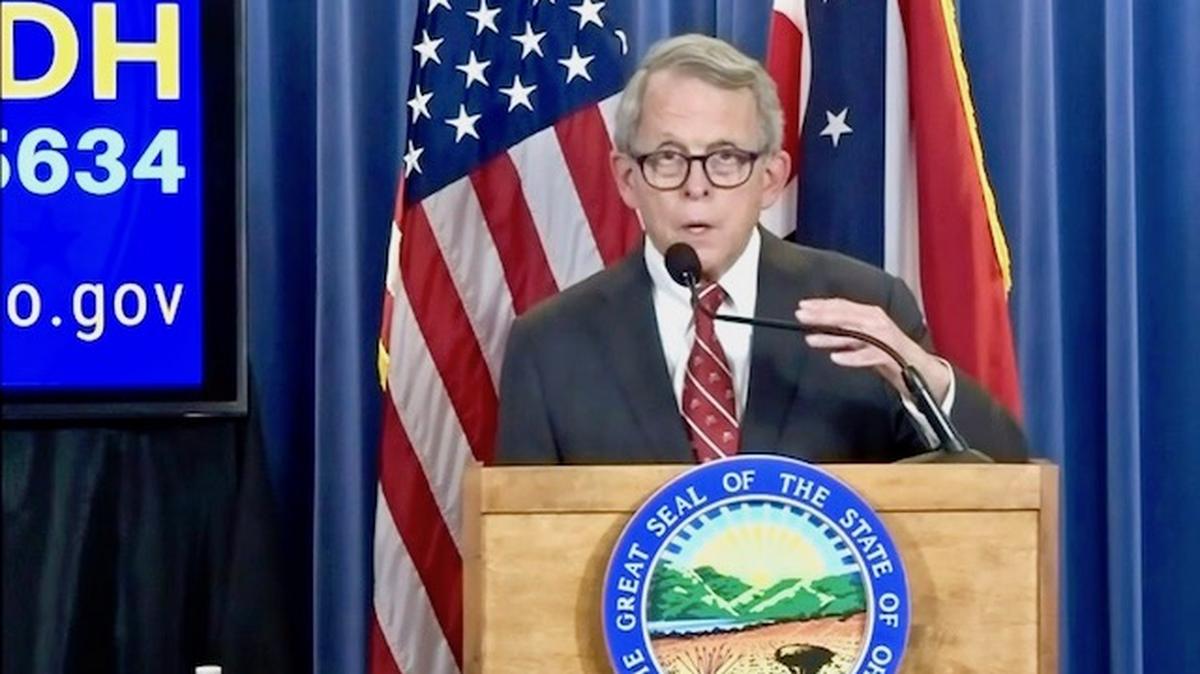
COLUMBUS — Amid continuing statewide protests of the death of George Floyd during a Memorial Day encounter with Minneapolis police, Gov. Mike DeWine said he wants to enhance Ohio police oversight.
The governor said he intends to recommend new initiatives that would promise more transparency and accountability for police misconduct in Ohio during Thursday's briefing on the state's coronavirus response.
Local law enforcement heads who spoke with Mahoning Matters on Tuesday welcomed new ways to root out bad actors in police agencies but said hiring and training methodologies are already exhaustive.
DeWine said during Tuesday's briefing he and the Ohio Legislature have "laid a foundation" for more racial equality but state policymakers must go further. He suggested the new initiatives would establish more training for Ohio police officers on de-escalation techniques and how to recognize their own unconscious biases.
"The divisions of race have plagued this country since its inception," the governor said. "While there are no simple solutions, all of us, I think, have an obligation to be a positive voice in advancing change for all those who are marginalized. We have an obligation to create equality in health, education, economic opportunity for all of our citizens.
"This is a moment. It really is a moment in history. And it is our time to act," he said.
DeWine suggested bolstering recruitment of officers from minority communities and developing new ways to accurately identify and target bad cops who may be terminated for misconduct from one department but continue their law enforcement careers elsewhere.
On a question from reporter Andy Chow of the Statehouse News Bureau, DeWine added the state could take a second look at police-related deaths of African-Americans that have already been adjudicated or otherwise reviewed, to determine if the officers should remain on-duty.
Timothy Loehmann, the Cleveland police officer who shot and killed 12-year-old Tamir Rice in 2014, was later hired on at another Ohio police department, according to the New York Times — though he later resigned.
DeWine likened the police profession to that of nurses or teachers, who can permanently lose their licenses for misconduct. He suggested Ohio chiefs of police could benefit from a new information source that catalogs misdeeds and can inform their hiring decisions.
"I think that is an awesome idea," said Mahoning County Sheriff Jerry Greene. "That is a huge problem in law enforcement ... officers that bounce around from agency to agency.
"That would be an excellent tool for vetting out potentially dangerous candidates that have been problems elsewhere."
Mahoning County Sheriff's Office began a minority recruitment campaign years ago — recruiters started appearing at area job fairs — and even bought TV ad space last year. But the applicant pool remains shallow, Greene said Tuesday.
Those who do apply must first pass an initial "strict" background screening, then undergo a panel interview with the department's administrators. Independently contracted investigators and another in-house investigator work to dig up credit scores, military service records, bankruptcies or any misconduct reports at previous agencies.
They later undergo voice analysis tests, which suggest whether a candidate spoke truthfully when asked direct questions about things like their use of force while on duty, Greene said.
"We always call [a candidate's previous] chief, and even then, sometimes you have to take into consideration what they're saying," he said, adding that police administrators — just like in the private sector — are unable to offer "bad" verbal references for candidates. A candidate's personnel records, however, are always available for review, he said.
Greene's office also makes learning tools of the past mistakes of former deputies who were incarcerated for crossing the line of duty, he said.
"You can come to work as innocent as can be, or just doing your job, and at the end of the day you've committed a felony — usually by using very poor decision-making," he said. "Our power is so awesome and we have so much authority, you have to take special care of that responsibility.
"You try to pass those experiences on to them so they can learn."
The process for hiring officers in Boardman is extensive and time-consuming, said police Chief Todd Werth. The department conducts initial background checks on the top performers on the civil service exam. The candidates will then take a pre-hire assessment conducted by PRADCO, a Chagrin Falls personnel assessment firm.
PRADCO's test might indicate behavioral issues, like, for example, difficulty multitasking.
Test results are used to direct conversations with the applicant and with their former employers and references.
In a more thorough background check, an applicant's references, neighbors, family members and previous employers are consulted — that includes a review of the applicant’s personnel files at prior law enforcement jobs.
A supervisor conducts this screening, and, along with the chief, investigates any questionable complaints.
But Werth said, in hiring Boardman police officers, he hasn’t encountered potential hires who had prior issues with excessive use of force.
After background checks are completed, applicants complete drug and medical screenings and a more extensive psychological test.
“Every person has something on that thing,” said Werth. “People don’t come through these things 100 percent, A-plus.”
If the person is hired, these results are provided to training officers.
“We put the whole process together,” said Werth.
New hires are assigned to training officers then spend three or four months under the supervision of various training officers and one year on probation.
Werth looks for people who interact well with all kinds of people. He’s unlikely to hire someone who doesn’t handle stress well or get along with others.
Even in taking great pains to hire good people, Werth fields a lot of complaints from the community.
“We’re in a profession where we deal with people on a daily basis and some people quite frankly are not very happy we’re interacting with them,” said Werth.
In instances where someone reaches out to complain about an officer’s conduct, Werth talks to his officers and tries to sit down with the community member, listen to their experience and, if relevant, explain the situation from the perspective of his officers.
Issues he finds troubling will trigger an internal investigation. If a conversation doesn’t solve the problem, he will encourage the person to file a complaint.
When Mahoning Matters talked to Werth Tuesday afternoon, he had not yet read about DeWine’s plans but said whatever is in the works will not be effective without appropriate funding.
“An unfunded mandate from the governor is not going to help law enforcement,” he said.
This story was originally published June 3, 2020 at 5:15 AM with the headline "DeWine to call for more police oversight, training in Ohio."