
‘Freedom at the end of a bayonet’ | Amid Afghanistan chaos, Valley veterans wonder about alternatives
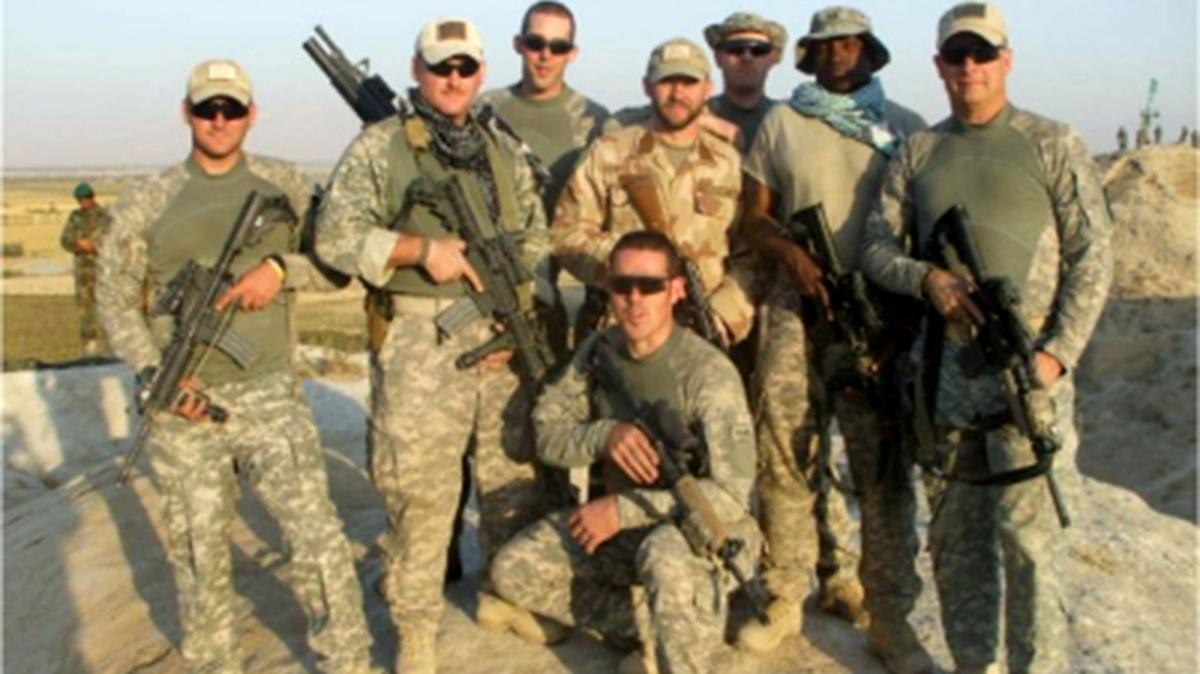
Rick Stockburger said he didn't watch President Joe Biden's Monday address on the withdrawal of U.S. troops, which allowed a Taliban resurgence, leading to frantic evacuation and uncertain futures for the hundreds of thousands of American allies who remain there.
The 37-year-old Stockburger, CEO of BRITE Energy Innovators in downtown Warren, spent a year in Afghanistan during his time with the U.S. Army. For the sake of his mental health, he's tried to avoid recent news about the region's rapid unraveling. He expects current events are worsening personal crises among the men and women who fought there.
Speaking to Mahoning Matters, Stockburger said, was a way for him to continue processing the experiences that ultimately led him to seek VA counseling for post-traumatic stress disorder.
Like many Afghanistan and Iraq war veterans about his age, Stockburger, a 2002 West Branch graduate, was emboldened to enlist after the Sept. 11 attacks. He joined up in 2003 at 19 years old. But after 20 years of warfare, trillions of dollars spent and thousands of American lives lost, "it was time to go," he said — but there never really was a good time to do it.
"We shouldn't have been there a year let alone 20," Stockburger said.
But had the withdrawal been delayed by a few more months, Stockburger wondered whether there might have been a slightly better outcome. Taliban fighters are much more active during summer, outside of Muslim holidays like Eid-al-Fitr and, later, Eid-al-Adha, the latter of which ended on July 23 this year.
"I think we should have waited until winter when the passes were closed. The Taliban wouldn't have been able to move this fast," he said. "Sometimes you teach your kid how to swim by throwing them in a pool. We could have done that. We could have thrown Afghanistan into the deep end of the pool and said, 'You need to sink or swim.'
"Instead we're like … 'We're going to throw you into a raging river. Best of luck' — knowing there was zero chance they would have been able to ever figure it out."
Under a deal struck with the Taliban by former President Donald Trump, American forces would have been withdrawn by May 1. President Biden during his Monday address said America's choice was to either honor that agreement or reignite hostilities in the upcoming spring fighting season, possibly sending soldiers "lurching into the third decade of combat."
"There would have been no ceasefire after May 1. There was no agreement protecting our forces after May 1, no guarantee of no American casualties," Biden said.
Though Biden said there was never a good time to withdraw, the past week's developments are proof that it was "the right decision."
"American troops cannot and should not be fighting in a war and dying in a war that Afghan forces aren't willing to fight themselves," the president said.
Retired Air Force Col. James Dignan, the former CEO of the Youngstown/Warren Regional Chamber who's now a JobsOhio consultant on military installations, spent five of his 28 years in the military flying reconnaissance and patrol sorties in the Middle East. The large C-17 military transport aircraft he flew were the same seen in a recent video from a Kabul airport, with frantic Afghan nationals clinging to the plane's side in a desperate bid to flee the country.
Four presidential administrations have had a hand in guiding America's 20-year insurgence in the Middle East, and Dignan told Mahoning Matters he feels each made their own missteps. He called the Americans' literal fly-by-night evacuation of Bagram Air Base "a disaster."
"Over these last few weeks, the Taliban was moving in rapidly. The Afghanistan army was not putting up any resistance. The U.S. just evacuated Bagram Air Base overnight. All these things just made me uneasy," Dignan said. "When we saw what was happening, when they rolled into Kabul, I think it was sad. It was disheartening. It was so predictable and, unfortunately, avoidable.
"We've let our partners down. We let our allies down. There's a lot of unfinished business. You can't just say, 'We're leaving the game' and walk away with the ball. And that's what this feels like."
Dignan drew parallels to the Fall of Saigon in 1975 at the end of the Vietnam War, and the U.S.' abandonment of Kurdish allies in Syria in 2019.
He said he would not have committed to a total drawdown of American and allied forces. Though that deal was cut under Trump's presidency, he said he thinks the Biden administration had ample opportunity to make changes over the last several months — "but they didn't. Not only that, they doubled down."
Stockburger said he now worries over the fates of the hundreds of thousands of Afghani nationals who aided him and other U.S. soldiers throughout the decades-long campaign, who remain in the country and may face retribution.
Special immigrant visa applications remain in limbo for about 18,000 Afghani civilians who assisted U.S. forces as translators and general contractors, as well as their families, the New York Times reported Monday. About 34,500 such visas have been authorized yet only about 15,000 of visa holders have landed on U.S. soil, the Times reported.
Some of the 18,000 pending applications were filed a decade ago, Betsy Fisher, director of strategy at the International Refugee Assistance Project, told the Times. About 300,000 Afghan civilians have assisted U.S. forces over the last 20 years, the Times reported.
"Many will be killed for their participation — and that's on our hands," Dignan said.
Stockburger said he thinks "the rest of the world is watching" that abandonment.
"I don't understand why we didn't do a slow withdrawal, made sure we gave political asylum to basically any contractor that helped us and their family," he said — and not just asylum in the U.S. "It could be anywhere."
Amid the relentless fighting, Americans fostered new interactions with a society that had largely been closed off from the rest of the world, Dignan said. And women and children likely led much better lives than had the U.S. not stepped in.
Stockburger said he witnessed their treatment firsthand. He recalled a time when he and other soldiers ordered stuffed animals to deliver to children as they passed through their area. When the soldiers returned, each child that had accepted a gift was missing their small finger. There was also the time he helped deliver postnatal incubators to a nearby hospital. The devices were destroyed by the Taliban, he said.
"It's really hard to give people freedom at the end of a bayonet," Stockburger said.
Stockburger said he thinks U.S. presence in the Middle Eastern countries serving as training grounds for violent extremists likely kept the Taliban from spreading out and "saved a lot of lives." But he otherwise struggled to find optimism about lasting positive impacts Americans made there.
"Whatever new government takes over in Afghanistan will have plenty of roads and plenty of utilities and plenty of American dollars," he said. "I guess 'no' is the answer.
"We left an entire arsenal there for [the Taliban] to just take and do with what they want," he said. "What I'm hearing is they've already sold half of it, so they're getting very rich, and the rest they're getting ready to use."
Dignan said he thinks what little good may have come out of America's 20-year incursion may unravel in the coming months.
He said Afghanistan presented a new challenge for American nation-building efforts: the region's varied ethnic makeup of several distinct tribal governments — things that "as Americans, we don't fully grasp," he said.
"Nation-building is something we've not done very well in our history — nor has anyone else, for that matter," he said.
"They were starting to build the capabilities of a nation-state and were starting to build an education system that could help lift millions out of poverty; lift them into the global mainstream. But now, who knows?" Dignan said. "A lot of these advances we've made over the last 20 years are going to be undone — and unfortunately, not on our terms."
Back home, Stockburger said he's bracing for a rise in Afghanistan veteran suicides. The hyperpartisan landscape of social media isn't helping, he said.
He called out crude memes circulated on social media for hollow political points — one about the lowering of the LGBT rainbow flag that hung over the U.S. embassy in Kabul in honor of Pride Month in June.
"It infuriated me," Stockburger said. "This is real stuff that people like me are trying to deal with, and there are real consequences still happening today.
"People are already out there making fun, bringing coronavirus and their other pet political things into us leaving Afghanistan. Don't bring stuff to the table that has nothing to do with it, because you're just spitting in the face of veterans — Afghan War veterans, specifically, [who] are trying to figure out how to navigate their feelings right now."
On Facebook, Stockburger pointed friends to the Veterans Crisis Line — which can be reached by dialing 1-800-273-8255 and pressing "1" — and encouraged his fellow veterans to seek help if they need it.
"There's always somebody out there that's going through the same stuff you're going through. That doesn't make it any less real," Stockburger said. "It means there's a lot of brothers and sisters out there to talk to and a lot of people that understand what you're going through.
"No matter the outcome, you should still be very proud of your service to the country."
This story was originally published August 18, 2021 at 4:11 AM with the headline "‘Freedom at the end of a bayonet’ | Amid Afghanistan chaos, Valley veterans wonder about alternatives."