
How a shrinking Rust Belt city like Youngstown struggles with wastewater ‘sins of the past’
YOUNGSTOWN — An estimated nearly 1.3 billion gallons of wastewater and stormwater was discharged into the Mahoning River last year from the city of Youngstown's decades-old combined sewer system, which is designed to overflow during wet weather.
That's twice as much as in an average year.
Combined sewer systems like the city's, which collect not only wastewater by also stormwater runoff for treatment, are designed to overflow in periods of heavy rain or snowfall and discharge into nearby water bodies at certain points, called combined sewer overflows, or CSOs.
Though these types of combined systems were common and acceptable decades ago — long before the Clean Water Act of 1972, which gave the EPA authority to regulate pollutants pumped into U.S. waters — they've become targeted for elimination due to the environmental hazards they pose.
"The EPA has instituted new regulations to curb that pollution, and that process is starting, but there's lots of areas that are grandfathered in that are releasing stormwater into these streams" like Youngstown, Chuck Shasho, the city's deputy director of public works, told Mahoning Matters in an interview last week.
Nationwide, today's task of remedying now-outmoded wastewater systems is a generational problem, created by predecessor administrations, pursued by their successors and fueled by millions of dollars of investment sometimes borne on the backs of ratepayers.
But Youngstown is not the city it was generations ago.
$160-million plan delayed
Though city officials are working their way through a multi-phase, 20-year plan to bring $160 million in federally mandated improvements to the city's wastewater treatment system — including an interceptor to divert sewage away from Mill Creek, treatment plant upgrades and a new facility designed for heavy sewer flow — records show some parts of the plan are behind schedule.
Under a 2002 federal consent decree ordering the city to fix up the city's wastewater system, the EPA could fine the city nearly $700,000 for just one of the major deadlines that was missed.
A U.S. EPA spokesperson told Mahoning Matters the agency doesn't comment on "potential or ongoing enforcement cases."
Though Shasho told Mahoning Matters he thinks other persistent pollution points have more of a long-term impact on local water quality than CSOs, those overflow points have brought numerous EPA violations in the past several years.
'Sins of the past'
In 2020, the city's about 100 CSOs discharged a total of nearly 1.3 billion gallons, more than twice as much as in a typical year, according to an annual report on the city's CSOs published in March.
Last year was much wetter than average. City rain gauges recorded an average 12 inches more rain than in a typical year, or about a third more. Whereas an average 662 sewer overflows occur in a typical year among the city's CSOs, there were 1,296 in 2020, nearly twice as many.
The systems aren't just vulnerable to wet weather, but also blockages and vandalism.
On a dry day in early August 2020, city wastewater operators discovered a blockage causing one such overflow, according to an EPA violation notice. It took about a day-and-a-half to clear it, and by that point about 35,000 gallons of untreated sewage had been discharged into Jones Creek.
It took city crews a little more than three days to fix an overflow near the intersection of South and Williamson avenues in January 2018, which ultimately poured 585,000 gallons into the Mahoning River, according to city officials' response to another violation notice.
Crews there faced several logistical challenges, according to the report: the overflow's hard-to-reach location, emergency rentals of heavy-duty vacuum trucks in the middle of the night and an active rail line nearby that crossed their pumping route. Inside the sewer line, they found several manhole covers and a railroad tie obstructing most of it, presumably thrown in by vandals, according to the report.
In June 2015, more than 100,000 gallons of sewage that overflowed into Lake Newport choked the water's oxygen, causing a massive fish kill that drew public attention to the city's combined wastewater and stormwater sewer system.
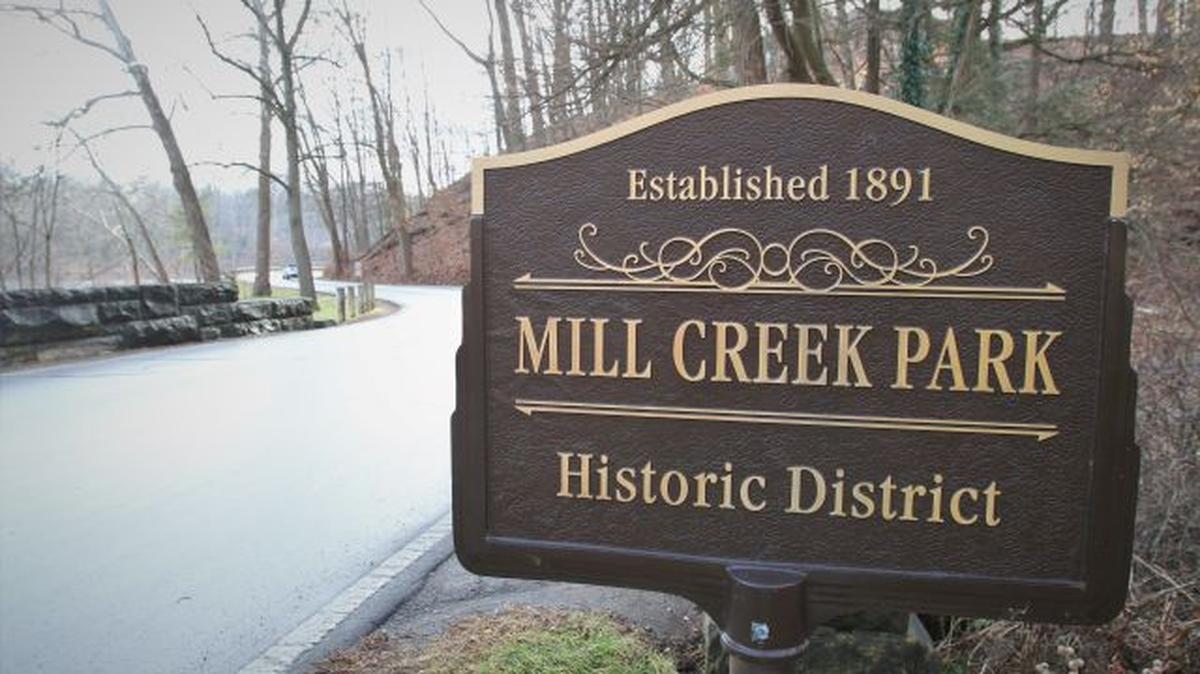
Of the city's 100 CSOs, 14 of them discharge into Mill Creek waterways about 73 times a year, on average. The June 2015 incident led to the MetroParks water bodies being closed to the public for the first time in more than a century, according to The Vindicator.
In May 2015, one month prior to the Lake Newport fish kill, a power outage at the city's wastewater treatment plant caused more than 3 million gallons of combined sewage overflow to end up in the Mahoning River, according to an Ohio EPA violation notice dated the following July.
Some of the city's mandated sewer improvements included electrical upgrades, which were completed in 2018, according to a timeline showing the city's progress on those long-term projects.
The city took on about $74 million in loans for the first phase of that EPA-mandated long-term sewer plan, which will extend the wastewater system's life span another 50 years.
But Shasho said officials are "stalled" on its second phase, which includes a new facility that will more than double the system's peak capacity and eliminate its largest overflow.
Even farther off is a third phase expected to divert wastewater from overflows that discharge into Mill Creek.
One of the long-term plan's unmet 2020 milestones was the design of a sewer interceptor for Mill Creek. Though preliminary design and modeling was slated to begin in the first quarter of 2019, Shasho said he expects officials will likely start design work "this year into next year."
"Our area, in general, has taken big strides in preventing water pollution through various methods. … [Pollutant] awareness now is more intensified, but it goes well beyond CSOs," he added, pointing to myriad sources of urban runoff, which sends harmful material like vehicle fluids, sewage from failing septic systems, fertilizer, animal feces or garbage into nearby water bodies, as well as stormwater systems.
"I don't think the CSOs are a comprehensive source of pollution going into Mill Creek. I will say that it's something we're interested in doing," Shasho said. "The responsible thing to do is to care for our waterways, for our future.
"The sins of the past are something we have to live with, unfortunately."
'Rust Belt cities ... are shrinking'
More than a century ago, Mill Creek MetroParks founder Volney Rogers fought to the state's high court to keep a sewer system out of the parks, according to The Vindicator archives.
"The idea of bringing all the sewage for about six and one-fourth square miles, now in the city, and as much more later perhaps from Boardman to the center of as valuable a park as our Youngstown Mill Creek park, as a sanitary proposition, is so abhorrent and so destructive to the highest benefits that the people are entitled to enjoy, that I am sure those who suggest this plan do not do so understandingly," Rogers wrote in a two-page spread given to him by the newspaper to advocate against the sewer system in 1915.
As the region's steel industry grew, so did waste and sewage dumping into the Mahoning River. The federal government seized control of the river, forcing the city to develop a sewer for steel-making to continue, The Vindicator reported.
The interests of industry prevailed, and Rogers lost. When construction on the sewer system began in 1919, Rogers reportedly left the city and never returned. He died later that year.
Fast forward to 2002, when the federal government forced the city into a long-term plan to solve its wastewater woes. The city's estimated population was less than half of its all-time peak of 170,000 in 1930, just after the combined sewer system was installed.
Census estimates put the city's population at about 65,000 people in 2019, meaning the city's sewer system, designed for 150,000 people, is now well-under capacity, officials said.
"The problem is Youngstown's no longer the size of the city it was when all of this infrastructure was put in place," Kyle Miasek, the city's finance director, told Mahoning Matters. "We were hesitant at the time to enter into any agreement. We knew we'd never be able to afford what they wanted."
The next phase, construction of a wet weather facility to eliminate the city's largest CSO at the end of Federal Street near Weatherbee Coat Co., where Crab Creek enters the Mahoning River, is projected to cost $90 million — a price inflated by soaring construction costs related to the COVID-19 pandemic, Shasho said.
To build up sewer fund reserves for the new work, city officials in December 2019 approved a five-year sewer rate hike of 4 percent each year, raising customers' rates from about $99 per 1,000 cubic feet to an expected $120 in 2024, according to The Vindicator.
But there are fewer ratepayers than there were even 10 years ago, before the city's long-term sewer improvement plan was introduced. The concern is swelling sewer bills would cause even more to leave.
"No one's getting money for this across the country," Miasek said. "These Rust Belt cities — some of them are shrinking. If we tackle this, we're going to decimate the ratepayers in the city who are already being decimated if you look at their average bill. Nobody [at the EPA] wants to listen to us."
The city's expected $88.6 million in federal funding included in the American Rescue Plan could offer some respite, Shasho said, but it'll be up to city officials how to spend it.
Even if the city pays off its new wastewater project debts — some of which started coming due this year — Miasek expects there'll be more before the city's worked through the long-term plan, which spans through 2033.
Overall, it's not feasible for the city to eliminate CSOs entirely, Shasho said.
"To separate all the sewers — we do it when we can, but it's not something that we're able to do. These projects were developed over decades of planning and negotiating," he said.
"We're not going to be in compliance with the CSO policy but we'll be, hopefully, to … the level of compliance they'll accept."
This story was originally published April 30, 2021 at 3:52 AM with the headline "How a shrinking Rust Belt city like Youngstown struggles with wastewater ‘sins of the past’."