
‘Much work to be done’ | The Valley considers what’s next after Chauvin verdict
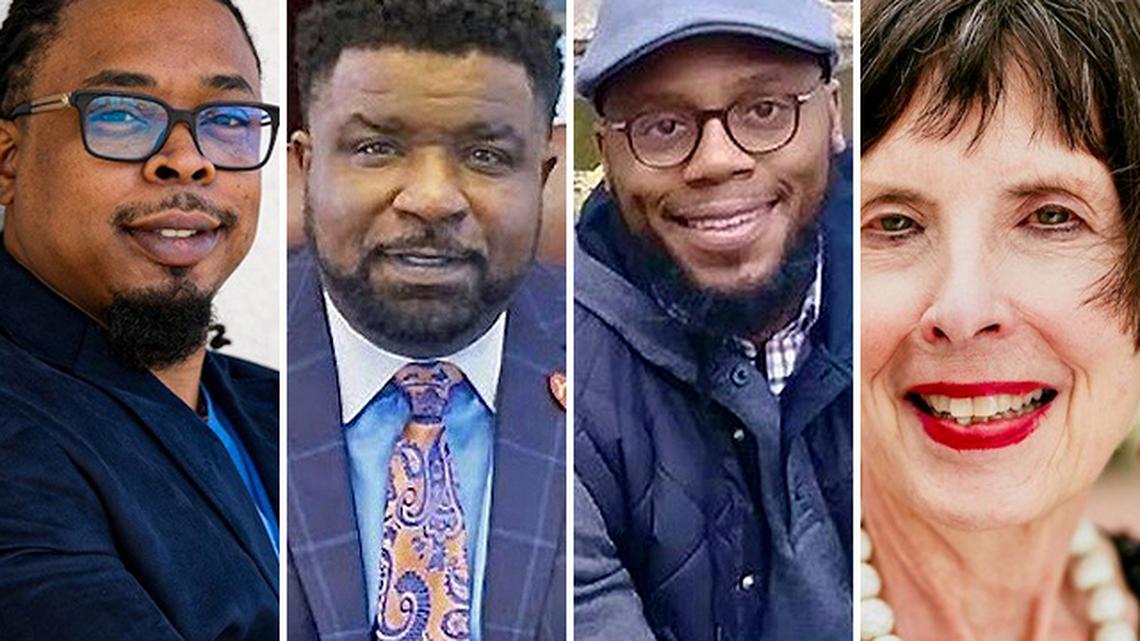
YOUNGSTOWN — After learning of Derek Chauvin's guilty verdict in the murder of George Floyd on Tuesday, Valley leaders said their relief was tempered by the tragic fact that accountability does not compensate for loss of life.
The conviction of a former police officer only after millions watched a viral video of a Black man's murder creates, for many, a sense of celebrating the bare minimum.
To 1st Ward Councilman Julius Oliver, justice was only partially served; he wants to see restitution for Floyd's family.
"I'm glad they acted on the actual evidence that was presented in bringing justice to a human being that was flat-out murdered," Oliver said.
Meanwhile, Chauvin's very public trial and the movement for racial equity fomented by Floyd's death hasn't stopped police killings of unarmed Black people.
Today, a funeral will take place in Minneapolis for 20-year-old Daunte Wright, a Black man killed by police during a traffic stop a mere 10 miles from where the trial of Derek Chauvin took place.
Chauvin's guilty verdict, said Sojourn to the Past Director Penny Wells, "is a step," but there's much work to be done.
"My concern would be — do we have to see a murder on television for someone to be convicted?" she asked. "Or is this a move forward in this country that we're going to treat everyone the same and not just have this dichotomy of white people [being] treated better than Black people when they're stopped by the police? … What about Breonna Taylor shot and killed in her house? What about these other people who were stopped and it's not necessarily on camera?"
Is reform enough?
During his Wednesday briefing, Gov. Mike DeWine voiced support for a "common sense" police reform package to be introduced "within the next few days." It's the result of collaboration between law enforcement groups, civil rights leaders and Rep. Phil Plummer, R-40th, former sheriff of Montgomery County.
The bill aims to increase accountability by establishing a statewide use of force database and a statewide officer discipline database. The bill also establishes an independent funding source for police officer training throughout the state, DeWine said.
"They just make sense," DeWine said about the provisions promised in the bill. "Shouldn't we treat police officers the same way we treat other professionals?"
DeWine also touted reforms made by executive action since Floyd's murder.
He ordered each department to review use of force policies and ban the use of choke holds. DeWine also ordered the Ohio Highway Patrol to acquire body cameras.
In response to Floyd's murder — and ongoing killings of Black people at the hands of police — State Rep. Erica Crawley, D-26th, wants to see demands not only for change and accountability but a reimagining of policing in America.
That starts with looking at policing in historical context, she told Mahoning Matters.
Modern policing "goes all the way back to enslavement with marshals being hired to find runaway slaves and bring them back to the plantation," Crawley said.
It's time for communities to ask how police should be involved in different matters of public safety, she said. For example: "... Do we need law enforcement to go out to a situation where someone has called on family member who may be experiencing a mental health crisis?" Crawley asked.
"Studies have shown over and over again that when law enforcement arrived [to the scene of a mental health crisis], especially when it's a person of color, the likelihood of great bodily harm or death has increased."
She suggested a social worker or psychiatrist instead could respond to these kinds of issues. But, of course, ensuring trained mental health specialists are available and able to intervene requires that those agencies are properly funded, she added.
Community policing in Youngstown
The city's approach to policing should be guided by tenet: "We're all responsible for the village," said the Rev. Lewis Macklin, a pastor at Holy Trinity Baptist Church and chaplain for the Youngstown Police Department.
But community policing requires trust, especially from Youngstown's Black residents, leaders agree.
"We come from a culture where we frown upon the police," said Assistant Director for Youngstown's Academy for Urban Scholars Bryant Youngblood. "We don't necessarily always trust the police."
Mayor Jamael Tito Brown said it's important the city's young people have faith in the justice system. They must know officers who act like Chauvin did on May 25 are in the minority.
"I just want to see our police officers and our new chief of police really being hands-on with the community and showing that they're just regular people, just like us, establishing those relationships with the neighborhood folk. Just making people feel more comfortable around them," Youngblood said.
Hopefully, building trust with communities will also help the Youngstown Police Department solve more crimes, Youngblood said. "A lot of that has to do with the streets know the truth, but the police don't."
Youngstown is "in the beginning stages" of addressing inequity at all levels, said 3rd Ward Councilwoman Samantha Turner.
City council in June declared racism a public health crisis, giving officials a concrete foundation on which to tackle systemic inequity.
In addition to revisiting police enforcement policies, the police department is also pricing body cameras for all officers.
That's a huge step, Wells said.
"I know that police in Youngstown were working on getting body cameras, and not so long ago, they said, 'We don't have the money for that.' That's partly from pressure," she said.
Macklin suggested a citizen review board could further establish trust between police and Youngstown communities while providing a system of checks and balances.
"We have to make sure we're doing the proactive steps of making sure that officers who are doing the right thing are rewarded and acknowledged and celebrated and honored and those who are not are removed, punished and separated from the community," he said.
Anti-racism and education
Eradicating racism in police departments is not enough, Wells said.
"We need to educate every organization," she said. "Every group has a diversity policy, but does it really have meat to it? Does it really have teeth? Does it have action attached to it?
"We need to work on changing our policies whether they are discriminating or not, because many times I think we're all ignorant of policies not geared toward equity."
"Every organization" includes schools, and anti-racism education must also start young, she argues.
"Education is the key," she said. "Schools, and it's not just Youngstown Schools that have a predominantly Black student body, but it's schools like Canfield and Boardman and Poland. To embed anti-racism and anti-bias education through literature, and it can happen from pre-K."
Wells has been heartened to see racial issues discussed publicly in the past year. To her, the discussion reached a volume she has not seen for decades.
"There's been more discussion I think in the past year than there has probably since the civil rights movement," Wells said.
And discussion is just the beginning, leaders agree.
The verdict does not mean advocates can ease up, said Ty'onna Powell of Warren, a 20-year-old whose community organizing group We Matter coordinated a June march of 1,500 people in downtown Warren following Floyd's death.
"I think that victims are going to finally start seeing justice," she said. "I definitely think this was a first step in the door. But it's definitely not over. We have to just keep fighting and keep advocating for change."
— Reporters Justin Dennis and Ellen Wagner contributed to this report.
This story was originally published April 22, 2021 at 3:52 AM with the headline "‘Much work to be done’ | The Valley considers what’s next after Chauvin verdict."