
RACE IN THE VALLEY | ‘It’s stressful to be Black in America’
YOUNGSTOWN — Lashale Pugh said it wasn't until she was 30 years old that she felt it was "OK to be Black."
Pugh, a medical geographer who's since earned her doctorate in geography, was working for a phone company at the time. At a company conference in New Jersey, she noted many of the employees — the ones who "did everything; they ran all of it," she said — were Black.
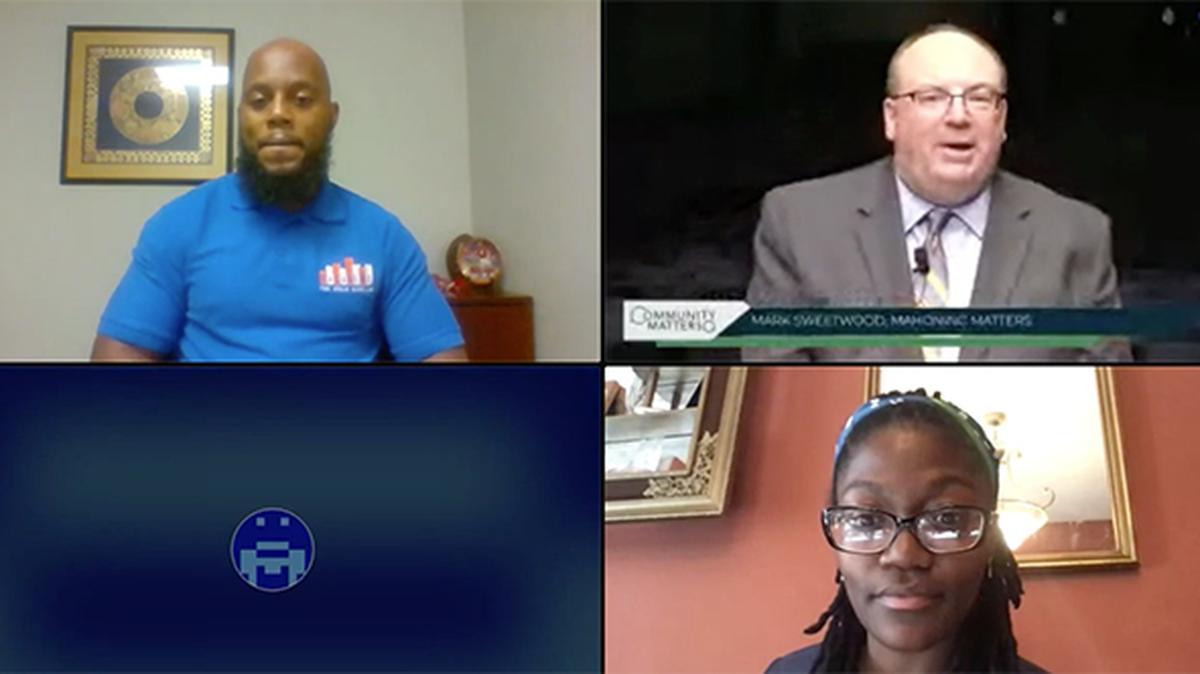
Pugh and others on Tuesday shared their perspectives and personal experiences on how systemic racism affects physical and mental health and holds up progress on social policy as part of the "Community Matters" series sponsored by Mahoning Matters.
Tuesday's forum, "Racism as a Public Health Crisis in the Valley," hosted virtually at Youngstown's Stambaugh Auditorium, in partnership with the Stambaugh and The Business Journal, also featured:
• U.S. Sen. Sherrod Brown of Cleveland, D-Ohio, who today plans to introduce a Senate resolution promising a review of historically discriminatory social policy;
• Samantha Turner, Youngstown City Council member and the Rotary Club of Youngstown's first Black female president in its more than 100-year history;
• Jaladah Aslam, president of the Youngstown Warren Black Caucus;
• Bryant Youngblood, assistant director of the Academy for Urban Scholars in Youngstown and executive director of Mahoning Valley Fatherhood Coalition, who also helped Mahoning Matters Editor Mark Sweetwood moderate the hour-plus session.
Due to technical difficulties, a livestream of the event was ultimately canceled, but Mahoning Matters is working to publish a recording of the session.
Youngstown, along with communities throughout the country, has declared racism as a public health crisis, joining Columbus, Akron, Cleveland, Dayton and Cincinnati in Ohio. The Ohio Legislative Black Caucus also introduced state-level legislation to declare racism a public health crisis on June 2.
Guests gave their opinions on the next steps in undoing decades of racial disparities in access to healthy food, local transportation and health care. They also discussed how collective or personal biases — even unconscious ones — affect them personally every day.
"Every one of us has had some experience with [people who] consider themselves good, fair-thinking white folks who really believe that they're not racist, but were, in fact, born into a lifestyle which automatically gives you some privileges we don't have," Aslam said. "Even Black women with good jobs, with adequate health care, who see their doctors, still experience a larger problem.
"It is stressful to be Black in America."
That is supported by plenty of evidence:
• Though wages for Black workers have seen recent growth, much of the country's decade-long economic bounce-back has passed them by. The median wage for Black Americans is still 78 for every median dollar a white worker would make, according to a New York Times analysis from this year.
• A little more than 40 percent of Black Americans own a home — that percentage is virtually unchanged since 1968.
• Systemic racism also impacts health outcomes for Black Americans, 9.7 percent of whom are uninsured nationwide, compared to 5.7 percent among whites, according to 2018 statistics.
• Though Black women and white women in 2016 were diagnosed with breast cancer at about the same rate, the death rate is higher for Black women, The Vindicator reported.
The COVID-19 pandemic has been "the great revealer" of health disparities for communities of color, Brown said. Though Blacks account for 13 percent of the U.S. population, they make up 22 percent of its COVID-19 cases. About 33 percent of COVID-19 patients nationwide are Latino, despite making up 18 percent of the population.
Brown and other federal legislators today are expected to introduce a Senate resolution encouraging "concrete action to address health disparities and inequity across all sectors in society," according to a release today from Brown's office.
"We will not make progress until we acknowledge and address all of the ways that centuries of racism and oppression have harmed Black and brown Americans," Brown is quoted in the release. "This resolution is an important step toward recognizing the racial disparities in healthcare that have existed for far too long while also outlining concrete action we can take now to help reverse them."
U.S. Sens. Kamala Harris of Oakland, D-Calif., whom Democratic presidential candidate Joe Biden on Tuesday named his running mate, and Cory Booker of Newark, D-N.J., have co-sponsored the resolution, which acknowledges how historic racism has created health barriers for communities of color and encourages real congressional action to tear them down.
"COVID-19 has caused a public health crisis that is disproportionately impacting people of color," Harris is quoted in today's release. "In fact, available data shows that African-American and Latinx people are three times as likely to get sick with the virus; and nearly twice as likely to die. This is, in part, due to long-standing barriers to care that are rooted in generations of systemic racism. This resolution affirms Congress' commitment to fully acknowledge and address racial inequities and injustice across all sectors."
A companion bill is expected to be introduced into the U.S. House.
In Mahoning County, whites are counted as about 80 percent of the population, but about 63 percent of the county's COVID-19 cases, while Blacks made up about 16 percent of the population and 17 percent of its COVID-19 cases, according to Mahoning County Public Health. Race was not reported in another nearly 15 percent of COVID-19 cases in the county.
Statewide, COVID-19 patients are 25 percent Black, despite making up only 14 percent of the state's population. Similarly, Latinos account for just under 4 percent of the state's population, yet 6 percent of its COVID-19 cases.
Youngblood questioned Pugh on the issue of seeking help for mental health issues, which often carries stigma more keenly felt by Black men.
Pugh said she feels that stems from the Black community's inherent distrust in medical professionals — "they've survived so much, they say, 'I don't need to go to the doctor. I can survive this on my own.'
"We're seeing more and more mental health professionals that are Black, so that's one way to break that barrier for people to seek out a mental health professional that may have some shared experience."
Aslam, who's focused her racial justice efforts in the Valley's political arena, said Valley residents should be prepared to "un-elect" officials who aren't putting in the work for their constituents.
"Folks who are willing to dig in and maybe make some of their constituents mad and do the right thing is what we need to have," she said. "We want to make sure government has the right population. We also want to make sure we're not electing anybody Black or anybody with a certain initial behind their name because 'it's supposed to be a certain way.'"
Aside from political action, there's more that Valley denizens can do every day to make the community a more just, equitable place.
"Get involved," said Turner. "Allow yourself to become uncomfortable. If there's someone who's working toward an initiative you support, figure out how you can work with them.
"We understand what grassroots organizations can get us in this community. Volunteering, getting involved, helping at the ground level, getting dirty — that goes a long way in the Valley."
Pugh said she wants more public funding for social organizations that are at that ground level, serving their communities — specifically, in housing, education and employment. Often, big-ticket grants are awarded to larger organizations that have the means to roll out new outreach initiatives but don't understand the communities they're trying to serve, she told Mahoning Matters in June.
With mere months to the 2020 general election, Aslam pointed out: "Make sure you're registered to vote," she said. The deadline to register is Oct. 5, and early voting begins 28 days before the election on Nov. 3.
"If you really want to change things … you will vote in this election. I would love to see our voter participation in this nation at 90 percent for the first time, ever."
Mahoning Matters' next community forum, set for October, will cover issues like voter registration, mail-in ballots and results from a Mahoning Matters survey seeking voters' top issues.
This story was originally published August 12, 2020 at 4:11 AM with the headline "RACE IN THE VALLEY | ‘It’s stressful to be Black in America’."