
The Earnheardts | Gen Xer parents in a pandemic
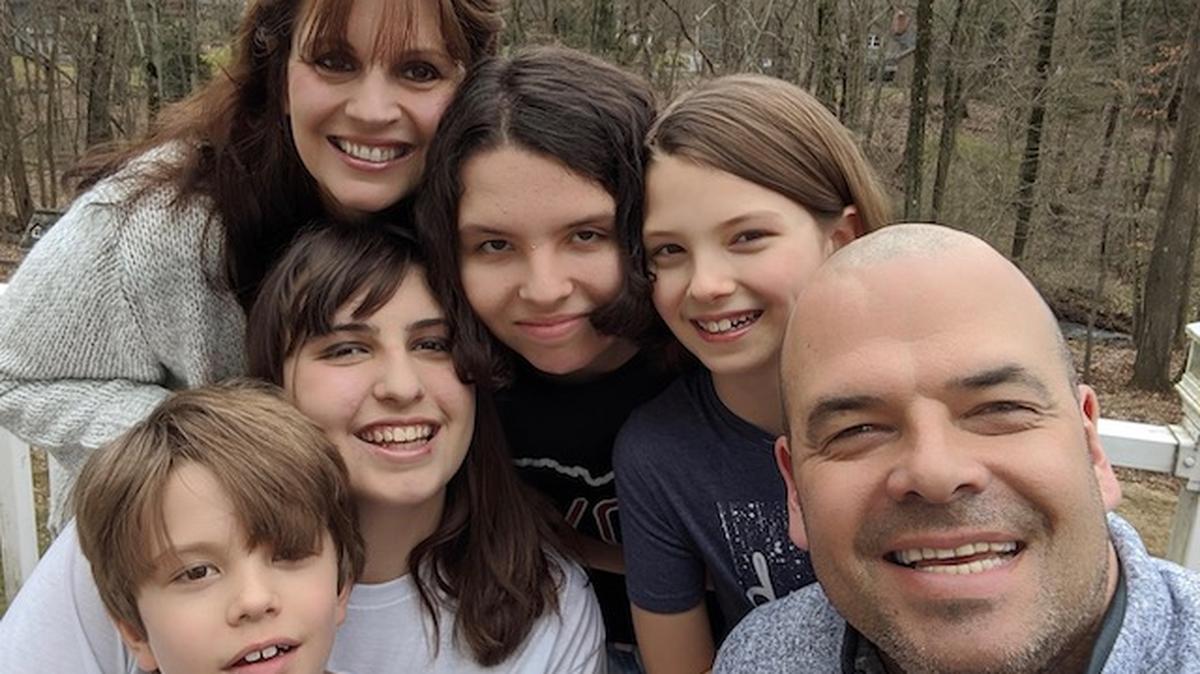
I don’t usually insert myself into generational warfare, but ever since my 12-year-old started responding to my orders with an eye roll and, “OK, boomer,” I’ve discovered a rage I didn’t know existed.
She uses it as a punchline, a rhetorical tool to get a reaction, but I receive it as a slur.
I’m not a boomer. I’m also not a millennial.
I am a Gen Xer, and it’s time the kids learn what my generation is capable of.
We’re often overlooked, and most of us are OK with this because we like to keep to ourselves. The generational scholars can spend their time writing about boomers and the millenials; we don’t care. We’re not the silent generation — we’re the “Don’t bother us and we won’t bother you” generation.
But now that it’s pandemic time, social media has come alive with my people. In a strange turn of events, Gen X has something to say. We have advice for the masses. We are the generation that was built to shelter in place. If you learn to live like us, you’ll be OK.
We know this on a gut level, but there is also research to back it up. Even though we’re not a favorite subject of study, in the instances where academics were forced to grapple with our existence, they kind of nailed it.
William Strauss and Neil Howe referred to Gen Xers as “nomads.” They point to the fact that we were born during a cultural awakening, “a time of social ideals and spiritual agendas when youth-fired attacks break out against the established institutional order.”
If you know any Gen Xers, you’ve probably heard them talk about their flower-child, hippy parents who marched to protest war, experimented with drugs and “loved” everyone. This was great for our parents, but all their freedom left them little time to attend to our needs.
The research describes nomads as under-supervised, slightly unprotected children. We came into this world as an alienated group, but we grew into responsible young adults, often leading frenetic, exhausting lives.
Here’s the catch that makes us perfect for the current moment: Nomads are also pragmatic midlife leaders during a crisis who will age into resilient post-crisis elders.
This certainly rings of truth. The average Gen X childhood was much different than what we see today. It’s not that our parents weren’t around, they just did distinctly adult things while we were left to fend for ourselves. I grew up on a farm, so my experience was a little bit different, but I saw how my friends lived.
When I would get off the bus with one of them (which was often), we were left on our own until the parents arrived. Sometimes there would be an older sibling around, absent-mindedly guarding the ship. For the most part, we had the run of whatever house we invaded. When we got home from school, we’d eat cereal or ramen, and watch lots of television.
My husband, Adam, is also a Gen Xer. He grew up just north of Pittsburgh, and in spite of the fact that he’s a city boy and I’m a country girl, our loosely supervised childhood experiences are very similar. Now we’re drawing on the strength we gained from our misspent youth to help our kids through the lockdown.
We know firsthand just how resilient children can be. We’re cool with the kids scrounging the kitchen for chips and pop (it was good enough for us). We love to hear complaints about boredom (try being alone for hours with no internet, then we’ll talk). If the kids are going to grow into their potential, it’s our duty to let them alone so they can teach themselves how to play a guitar or code a video game.
In our experience, being parented is the real drag on a child’s creative genius.
When we were little, even when parents came home from work, they didn’t play with us or ask us how the day went. They were too tired for that nonsense. So we’d do our homework, do the dishes, and either hit the streets, explore the woods or isolate in our rooms where we’d listen to local radio, create mixtapes and sing into our hairbrushes.
Think about it: If there was ever a time to make a mixtape, it’s now.
We used sharpies to draw on our ripped jeans and create our own tie-dyed shirts. We built forts from blankets and living room furniture. We made collages from Tiger Beat magazine cut-outs while our siblings had cardboard lightsaber duels. We are capable of having fun while being socially isolated because it reminds us of the good old days.
We survived by finding things in our environment and using them for creative play.
If we made it through childhood (yes, the lack of supervision had some consequences), it was off to college where we continued to cultivate useful pandemic behaviors.
Our fashions were focused on comfort. Even when we went out, Gen Xers wore flannel shirts, combat boots, and babydoll dresses. I don’t miss my work clothes — I’m teaching my kids the freedom of grunge.
After we flatten the curve and start to move about the world again, it’ll be time to tackle the collapse of the economy. It’s a good thing college prepared us for a lifetime of debt.
Back when we were in school, anyone could get a credit card. We’d fill out the applications in the student center just to get a free T-shirt. Bankruptcy was for later. We lived in the moment and didn’t realize how screwed we were until we saw our first bill and learned to calculate a 20 percent interest rate.
Sure, the pandemic will leave us in a global recession unlike anything we’ve seen in modern times, but we’ve dug out of debt before and we can do it again (did I mention we’ll eat ramen and cereal for every meal?).
My generation is uniquely qualified to make the best of this life, and it’s a good thing because this has hit during our prime caretaking years. We have aging relatives and children who need us to be strong. It’s a lot of responsibility, but we can handle it.
We’re Gen X. We’re here for you. Or, you know, whatever.
— Mary Beth Earnheardt is director of the Anderson Program in Journalism at Youngstown State University. You can follow her on Twitter at @mbexoxo.
This story was originally published April 13, 2020 at 4:11 AM with the headline "The Earnheardts | Gen Xer parents in a pandemic."