
To mask or not to mask? Now, it’s up to businesses
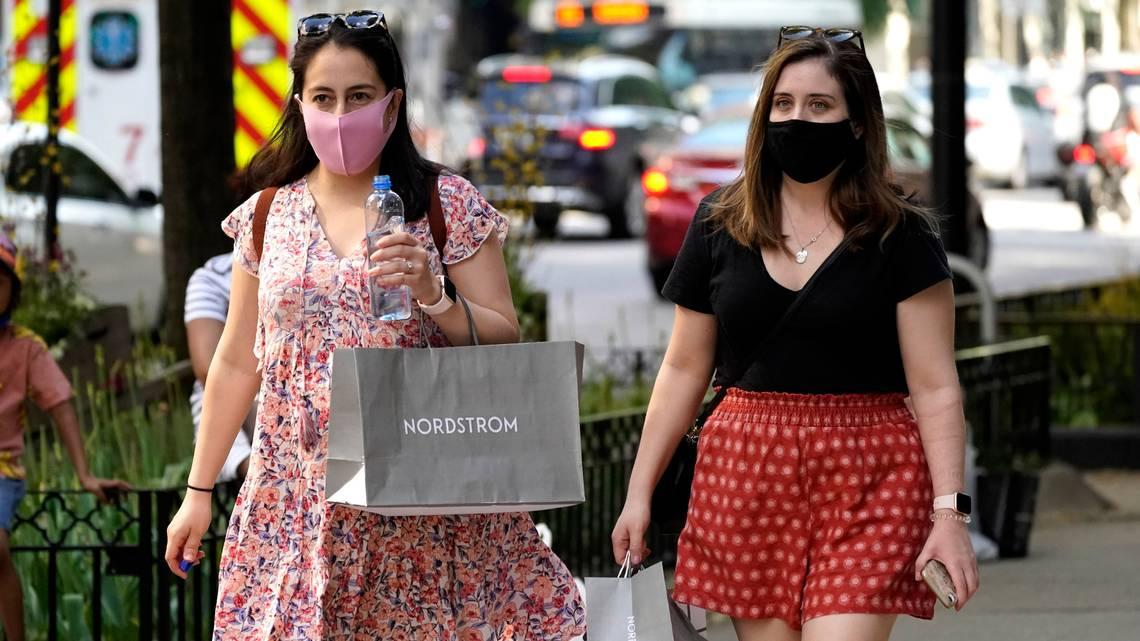
YOUNGSTOWN — The delta variant has initiated the fourth wave of the coronavirus pandemic in the U.S., just weeks after most states abandoned the last of their pandemic-inspired public health measures.
The wave's epicenter currently stretches from MIssouri to Florida, but the delta variant has taken hold in Ohio, too.
For the third time in the last seven days, Ohio's new confirmed COVID-19 cases topped 1,000. Before July 28, the state had not reported daily confirmed case totals exceeding 1,000 since early May.
Since yesterday's report, there are 30 new cases in Mahoning County, 25 in Trumbull and 12 in Columbiana.
Amid the country's pandemic fatigue and confusion about the behavior of the variant, governmental leaders have been slow to reintroduce pandemic restrictions, like mask mandates.
As a result, in this latest wave of the coronavirus pandemic, instituting public health precautions has primarily been the responsibility of businesses.
When wearing a mask is a political statement as much as it is a health precaution, mandating masks and enforcing mask mandates isn't easy — and it's even trickier for small local establishments.
Mandating masks ... again
In light of coronavirus case spikes caused by the highly contagious delta variant, the Centers for Disease Control and Prevention last week revised its masking guidance, urging everyone to mask up in indoor spaces, regardless of vaccination status.
Some states, counties and cities have reintroduced mask requirements indoors, including:
- Los Angeles County
- Washington, D.C.
- Louisiana,
- San Francisco
Other leaders, like Ohio Gov. Mike DeWine and New York Mayor Bill de Blasio, said they don't plan to bring back state- and city-wide mask mandates, opting instead to focus on vaccinations.
DeWine said Sunday on CNN, "We have had a significant increase in vaccination in the last week or so ... I think it's the fear of the delta variant is certainly one of the causes."
However, the Ohio Supreme Court announced Tuesday it will require masks for employees and visitors of the Thomas J. Moyer Ohio Judicial Center.
Businesses step up
In the absence of specific governmental action in response to delta, some businesses are stepping up.
Home Depot announced Monday all associates, contractors and vendors will be required to wear masks indoors at Home Depot stores, distribution centers and officers, as well was customers' homes and businesses — regardless of vaccination status.
The retailer is also asking customers to wear masks in their stores and will provide masks to people who don't have one.
Apple announced last week it would require masks for staff and customers at more than half of its 270 U.S. stores.
Masks are now required for employees at all APTIV plants,
McDonald's, Target, Kohl's and Walmart are requiring masks for employees of stores in high-risk areas.
McDonald's is also requiring that customers wear masks in restaurants located in places with high transmission, whereas Target and Kohl's are strongly recommending masks for customers in those stores.
Giant Eagle now requires masks for store employees and strongly recommends them for customers. Elsewhere in Ohio, Kroger strongly recommends all staff and customers mask up in its grocery stores.
Wait and see
For small local businesses, it's not that easy.
Jack Kravitz, owner of Kravitz Deli in Liberty, hasn't decided if his store will re-adopt a mask requirement for customers and employees.
"I wish they would make a decision," he said, referring to the government. "It's so, so difficult to put the burden on businesses to have to enforce their own mask mandates."
"It would be so much better if the government would say, 'Yes, you should be masked. Everyone should be masked.' And not, 'Oh, well, whatever you want to do.' Because people get mad at you," he said.
Joe Bell, Cafaro Company spokesperson, said the company, which owns Eastwood Mall Complex, is taking a similar approach.
"It largely depends on state mandates, right down to county mandates," he said.
Bell also voiced doubt the mandates are effective in controlling spread.
"In general, we're kind of reluctant to jump the gun on anything like that," he said. "I think a lot of people are just very, very tired. We saw what happened last year. We saw how well those mask mandates worked.
"So, it doesn't make a lot of sense to us right now," he added.
There's also the precarity of the workforce to consider.
When asked if he would mandate vaccines for his employees, Kravitz said, "Would I like to make it mandatory? Yeah. But on the other hand, there's a shortage of food service people. So what do you do? You fire people and then you don't replace them?" he asked.
A Morning Consult survey — conducted June 23 to June 27 with a sample of 1,119 employed adults — found that 18 percent of workers said they'd "quit immediately" if faced with pandemic-related mandates, including masking, vaccines or COVID testing.
Despite the lack of political will, Kravitz predicts masks are on the horizon.
"Me, personally, I think it's probably going to happen," he said. "Everyone's going to need masks. We always have the highest standards, so I'm sure eventually we're going to have one. But, right now I'm a little perturbed about having to decide on our own if we're going to do the government's job to decide if they want masks or not."
This story was originally published August 4, 2021 at 3:52 AM with the headline "To mask or not to mask? Now, it’s up to businesses."