
WRTA will soon be leaving Warren. Here’s why the county won’t join the system. It’s complicated
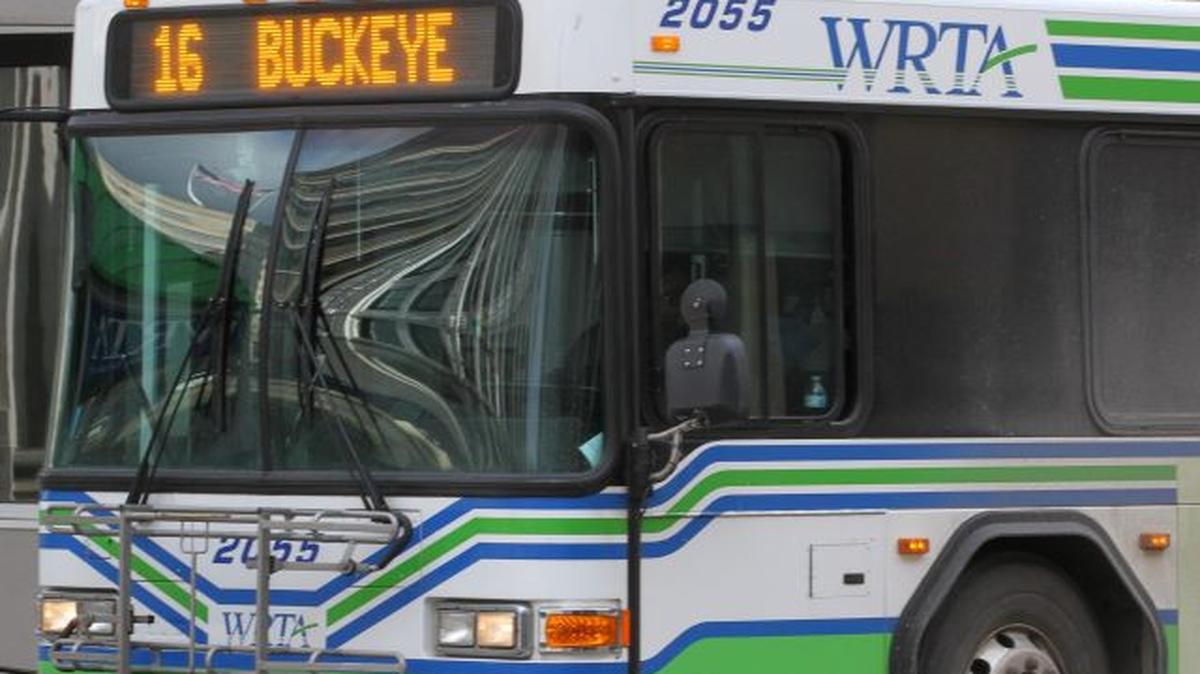
WARREN — The fate of a reliable public transit program in Trumbull County has — like most other things in the Mahoning Valley — come down to politics and spending.
Trumbull County commissioners recently chose not to take up a proposal to join the Western Reserve Transit Authority, meaning those now taking advantage of its temporary pilot program offering fixed routes in Warren will be left on the curb when it expires at the end of August.
Had the county joined WRTA — with approval from Mahoning County and Youngstown — a referendum for a quarter-percent sales tax to fund WRTA’s $6 million program would have been put to voters in both counties.
The new tax would have cost 25 cents on every $100 spent — the same rate paid in Mahoning County, which generates about $9 million — and would have provided WRTA service that’s “similar” to Mahoning County’s, but which would need to be built out over three years, WRTA Executive Director Dean Harris said.
But by letting the proposal die at the end of May, after months of deliberations and delays, there’s almost certainly not enough time to get the issue on the November ballot. Also, voters who’ve said they’re desperate for that new transit infrastructure won’t get that chance to decide for themselves.
“As long as commissioners don’t vote to join, the public will never get to vote. The public deserves to vote and have that chance,” said Trumbull Commissioner Niki Frenchko, who’s repeatedly pushed to bring the measure to a vote, but needs a nod from at least one other commissioner to get it on their agenda.
Commissioners Frank Fuda and Mauro Cantalamessa have rejected WRTA’s $6 million proposal for being too oversized, claiming only about one-fifth of the county’s residents would benefit from fixed WRTA routes across the county, though all of them would be paying the sales tax.
Trumbull commissioners were also cautious to preserve the county’s voting power as a potential WRTA member. Proposal talks were delayed until WRTA agreed to give the county seven WRTA board positions, to match the number of positions shared by Mahoning County and the City of Youngstown.
There’s also concern that Mahoning voters, whose votes in the WRTA taxing district would carry the same weight as those from Trumbull, could force Trumbull residents into a sales tax the majority of them voted against. Mahoning County has a little more than 50,000 registered voters, about 1,800 more than Trumbull, according to both county elections boards’ May primary election reports.
WRTA attorneys working on Trumbull’s potential agreement were open to language providing Trumbull officials an escape hatch from the program, in case a majority of Trumbull voters came out against the tax, or if officials weren’t happy with the service after a few years, said Mike Salamone, the county’s transit administrator.
But it’s unclear how the second option would have been measured. The deal never got that far, he said.
It’s also unclear what would have happened if Trumbull accepted the proposal and joined WRTA, yet voters denied the sales tax levy, Fuda said. And that’s part of the problem, he said — the deal had too many unknowns.
Fuda said seniors make up the biggest portion of the county’s public transportation ridership, which wouldn’t immediately be covered by WRTA.
Under WRTA’s proposal, it would take about 12 months to 18 months to build up service so those riding on senior levy services can make the switch, Harris told Mahoning Matters.
Fuda would rather prioritize riders for senior and disabled residents, currently offered through about $450,000 in senior levy funding. Commissioners estimate those groups make up 80 percent of the county’s ridership.
Fuda said officials would consider a different deal with WRTA for specific routes for the public, or a busing service that connects with WRTA routes, but didn’t offer any specific plans. In the past, commissioners had Salamone review transit plans that would have offered rides to Youngstown State University or to certain employers.
But ultimately, nothing ever came of those plans.
“We’re looking for a transportation system that will work for Trumbull County,” Fuda told Mahoning Matters. “Our key issue is to make sure we have funds to run our county.”
Fuda said he thinks sales tax revenues should be directed toward the general fund and county upkeep, and worries that if voters were to approve a new sales tax for new services, they’d be less keen in the future to approve a new tax for some dire need.
Trumbull County has an about $48 million annual budget.
“Transportation is important. … Is it $6 million-important? That’s the question,” he told Mahoning Matters.
WRTA has been running a state grant-funded pilot program providing fixed routes through the city of Warren since March 2020. Additional state funding stretched the program out once, but without new funding, it can’t continue past August.
Warren Mayor Doug Franklin this week expressed his “disappointment” at commissioners' decision to push WRTA aside, as reported by the Tribune Chronicle. Likewise, Lordstown Mayor Arno Hill said the village needs reliable bus service for those soon expected to be working in the village.
WRTA does, however, have enough funding to continue its countywide on-demand service through the end of the year, Harris said. WRTA will also continue its permanent Warren Express route, which visits six stops including downtown Youngstown’s Federal Station, Niles’ Eastwood Mall and downtown Warren, and ends at Kent State Trumbull.
As of May, the demonstration program in Warren had served more than 32,000 rides. But since COVID-19 has put a damper on public transportation systems nationwide, the past year’s ridership figures aren’t a good indicator of demand, officials said.
In December, Warren’s peak ridership month, WRTA gave nearly 3,000 rides in the city, compared to 64,000 among all its Mahoning County routes. Last month, there were more than 2,000 rides in Warren and about 65,000 in Mahoning.
Salamone said WRTA averages 1.5 million rides a year in Mahoning and he’d expect WRTA to provide 1 million trips a year in Trumbull. By contrast, transportation provided by the county’s senior service levy funds has given about 50,000 rides a year for the past several years.
Frenchko told Mahoning Matters she’ll keep pushing to bring the WRTA deal to the table. In recent meetings, her motions have been locked out, or raised outside meeting rules. Commissioners could take up the issue again before the next election deadline, but she’d prefer to wait until the November general, which likely means higher voter turnout.
Frenchko, former chair of the senior services advisory council, says reliable public transit is needed as an economic tool. The county’s lack of transit may be unattractive to future development, she said.
“We’re on the cusp of job creation and I’ve been saying it for a long time that site selection firms or site selection representatives look at transit,” Frenchko said.
But Fuda said he thinks it’s more chilling to business prospects when officials don’t work well together.
“The last thing a company wants to see is arguments amongst the elected officials,” he said.
“I understand those people from Warren need transportation," Fuda said. "It’s time for me to sit down with the mayor of Warren, our council and commissioners and any communities that have this transportation problem … and see how we fix it.”
Coming up next: Mahoning Matters will take separate looks at the cases for and against bringing WRTA to Trumbull County as well as the facts surrounding regionalized transportation and Trumbull's federal transportation funding pipeline.
This story was originally published June 18, 2021 at 3:52 AM with the headline "WRTA will soon be leaving Warren. Here’s why the county won’t join the system. It’s complicated."