
YSU engineering faculty develop 3D filtration device for masks
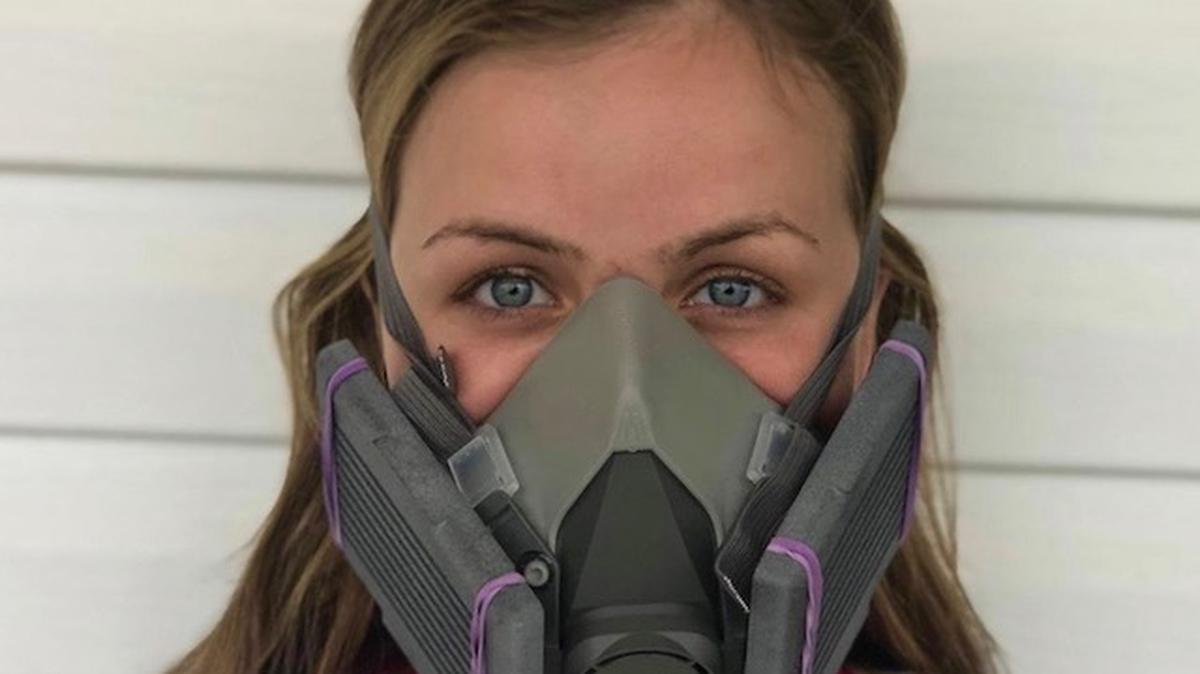
YOUNGSTOWN — Youngstown State University engineering faculty have developed a 3D-printed filtration cartridge that will fit on protective masks of medical workers on the front lines of the COVID-19 pandemic.
The reusable, adaptable filter cartridge could help address the national shortage of personal protection equipment.
Eric MacDonald, the Friedman Chair for Manufacturing at the Rayen School of Engineering and Engineering Technology, initiated the project, which is now being reviewed by the National Institute of Health and going through approvals from the Food and Drug Administration and the Veterans Administration.
America Makes is fast-tracking these reviews while working to find the best way to use 3D printing to help alleviate the impacts of the COVID-19 pandemic.
“Once they've decided, yes, this is a good idea, then they will make those ideas available to the public, including manufacturers, who can then take those ideas and hopefully mass produce them and get them out to help the people on the front lines who really need them,” said Darrell Wallace, YSU professor and program coordinator for manufacturing engineering.
Wallace and Brian Vuksanovich, YSU associate professor of mechanical engineering technology, designed the 3D-printed filtration cartridge with input from medical professionals at Mercy Health and YSU faculty within the Bitonte College of Health and Human Services.
The design is adaptable and can attach to many commercially available protective masks, like the popular N95 respirators. Once attached, a disposable filter material needs to be placed inside the filter cartridges.
“With just this little piece of filter media, every time [medical workers] need to change it, they can just change the filter. The rest of it, they can wash, sanitize, disinfect and then put in a fresh piece of filter,” Wallace said.
Wallace suggested using FDA and NIOSH approved filter materials like N95, but when those materials run out, to use alternatives.
“If you have HEPA filters like for your furnace, if that's what you've got, then that might be good enough,” Wallace said. “Cut off [a] 3-by-4-inch piece, stick it in the box. And this ensures that it fits tightly to your face and you're actually breathing through this instead of around it.”
The design file is available on the National Institute of Health’s website as a starting point for anyone who wants to evolve the design to make their own 3D printed mask, but the specific design is not yet approved to be made.
“It's there, and it's freely available, but with a very strong caveat that says, ‘We really aren't supposed to be using this yet,’” Wallace said.
“Anybody's home [3D] printer could produce this,” MacDonald added.
A prototype was printed at Tronix3D, an industrial 3D printing manufacturer in Westmoreland County, Pennsylvania, which has the ability to print the filtration cartridges at high volume.
The Tronix3D team has worked with various institutes to make equipment for medical staff like face shields and the YSU designed filtration cartridges. Buck Helfferich, president of Tronix3D, said many hospitals don't realize that these masks are readily available.
“We have the resources to do it, but we don't have anybody calling us for some masks,” Helfferich said.
“[Additive manufacturing professionals] have just done everything possible to help with this situation,” he said. “I've just seen so much collaboration and so much generosity of this releasing designs, so everybody can use them.”
For Wallace, this project is his way of thanking the medical professionals at the front lines of the pandemic.
“This group is just trying to do what we know how to do to try to protect [medical professionals] and to do our part,” he said.