HELP WANTED | Why local health care providers are competing with retailers, warehouses for workers
[Editor’s note: This is the fifth report in our multipart series “Help Wanted,” in which Mahoning Matters will review labor shortages in Mahoning County’s top employment sectors, focusing on jobs that are difficult to fill, have high turnover or are otherwise in high demand. Nationwide, 4.3 million people quit their jobs in December 2021 alone, according to federal data. This report focuses on health care jobs; future articles will focus on manufacturing, veterinary care and other sectors. Have something to say about local employment rates or in-demand jobs? Email us at news@mahoningmatters.com, send us a confidential tip here or call us toll-free at 888-655-1012.]
[Editor’s note: This story has been updated to correct the title for John Luellen, president of Mercy Health’s Youngstown and Lorain markets.]
___
Amid a nationwide shortage of medical workers, representatives of local health care providers said they’re competing with retailers and warehouses for hires, hosting more career fairs, offering signing bonuses and even reimbursing entry-level workers for the skills training needed to move up into a more specialized job.
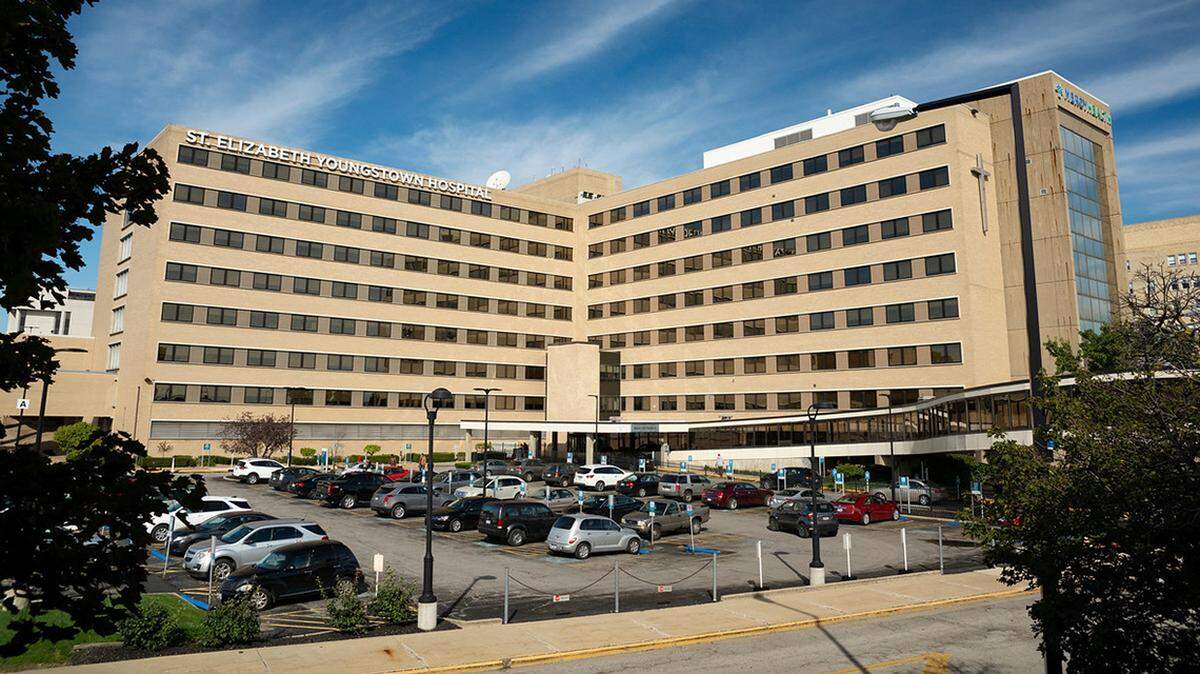
“It’s a highly competitive market right now,” said Shannon Williams, the Mercy Health director of talent acquisition covering the Youngstown market, whose greatest need is for “ancillary” jobs, as well as imaging technicians.
“We are competing not only with other hospitals in the area but … competing with Chick-fil-A, T.J. Maxx.”
Some of Mercy’s lab professionals have traded in their health care jobs for warehouse jobs at Lordstown’s new TJX HomeGoods distribution center, she said.
“There’s a lot of competition, and people have a lot of options,” Williams said — many of them offering comparable pay and lower stress environments.
The health care sector lost nearly 450,000 employees nationwide between February 2020 and this past January, according to the nonprofit health research firm Altarum. While physician’s offices, dentist’s offices, outpatient centers and other subsectors gained workers during that time, nursing and residential care facilities lost more than 420,000 workers, the firm reported. Hospitals lost 95,600 workers.
Though health care is one of the fields that gained jobs nationwide in February, its overall employment is still down by 306,000 workers, or nearly 2%, since February 2020 — just before the onset of the COVID-19 pandemic — according to the latest federal employment statistics.
“Hospitals are in need of compassionate and skilled professionals to join integrated teams with delivering the services that comprise the core mission of caring for people,” John Palmer, spokesperson for the Ohio Hospital Association, told Mahoning Matters via email. “The pandemic has exacerbated the challenges already facing the health care workforce, including shortages and burnout.”
But demand for those jobs is only going up, local and state representatives said.
In Ohio, 6 of the 10 fastest growing job sectors are in a health care-related field, Palmer said, citing Ohio Bureau of Labor Market Information data. Leading those sectors was home health care services, followed immediately by outpatient care centers.
Nationwide, the health care and social assistance sector is expected to add 3.3 million new jobs between 2020 and 2030 — the most of any sector, the U.S. Bureau of Labor Statistics reported in September.
Among those jobs, health care support — including entry-level assistants or aides who assist health care professionals — is expected to be one of the fastest growing occupations this decade, the bureau reported. Simply, more caregivers are needed for the aging baby boom population, for patients who now have longer life expectancies and for the rising number of patients who are developing chronic conditions, according to the bureau.
“Several of the fastest growing health care occupations — including nurse practitioners, physical therapist assistants and physician assistants — are projected to see strong demand as team-based healthcare models are increasingly used to deliver healthcare services,” the bureau reported.
But meanwhile, post-secondary cohorts for respiratory technician programs are “dwindling,” Williams said.
Williams said after two years of a global pandemic that overtaxed medical providers nationwide — “and the amount of patients we were caring for” — those considering a new career in health care have likely started looking at other industries offering the same amount of money.
“I think most health care facilities are challenged with vacancy rates at the moment,” Paul Satterlee, a human resources specialist and recruiter for Salem Regional Medical Center, told Mahoning Matters via email. “With that said, everyone is drawing from the same pool of candidates, so filling open positions has proven to be difficult.”
Salem Regional’s biggest need is for registered nurses and nursing support staff, he said. It’s also in need of imaging technicians — like Mercy Health — as well as personal care assistants and chronic pain syndrome therapists.
The hospital is offering a $5,000 signing bonus for new full-time registered nurses and $2,500 for part-time nurses, along with benefits and tuition reimbursement, Satterlee said. Cardiopulmonary and medical imaging workers can also get signing bonuses, he said.
“We have also increased wages for a wide range of positions,” he said.
Salem Regional has also begun bi-monthly hiring events for clinical and nonclinical jobs from 10 a.m. to 2 p.m. on Wednesdays in the ground floor cafeteria of the hospital, 1995 E. State St., Salem.
“These events allow applicants the chance to participate in open interviews with our recruiting team, and even meet with department managers in some instances about the position they are interested in,” Satterlee said.
Upcoming events are set for this Wednesday and April 13 and 27.
More than 200 people attended a Mercy Health hiring fair last month, Williams said. Of those, 80 people were offered a job on the spot, and most of them accepted, she said. Based on the big turnout, it’s something Mercy Health is now considering doing on a regular basis, she said.
The health care provider is now looking to promote from within, training up entry-level staff like housekeepers, food service workers or patient transporters to become sorely needed imaging technicians or respiratory therapists. It’s a more recent shift in Mercy Health’s approach to employee engagement and retention, said John Luellen, president of the Mercy Health Youngstown and Lorain markets.
Mercy Health in October announced a partnership with Guild Education, an education and upskilling platform that more than 48,000 Mercy workers can use to grow their skill set and their careers.
“What’s very unique about the health care environment is these entry-level positions … can evolve into clinical positions that have substantial educations associated with them; they have substantial compensation adjustments associated with them; they have a lot of opportunity to grow within the organization,” Luellen said. “We view that entry-level opportunity as an opportunity to get that person in the door … and then grow that person over time.”
The entry-level wage for a Mercy Health worker is $15 per hour, which Williams said is “highly competitive.” But the more experienced a candidate, the more pay they can command, Williams said.
This story was originally published March 22, 2022 at 5:00 AM.