
Winter storm bringing ice, sleet and snow to the Valley — here’s what to know
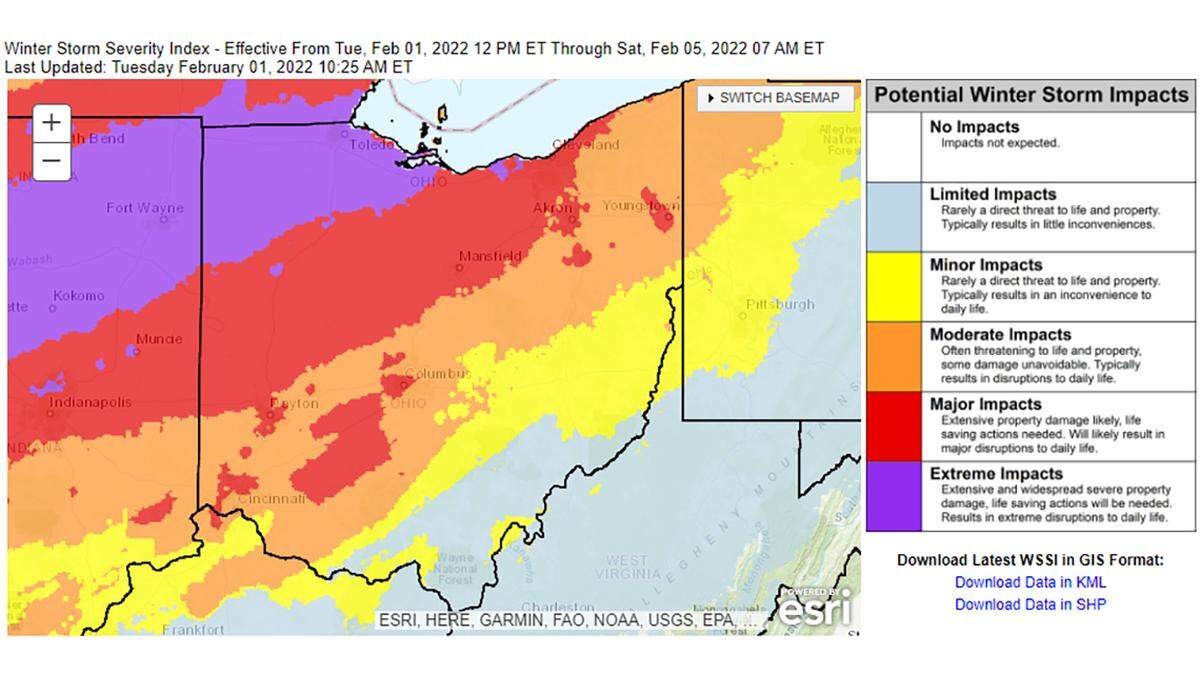
Parts of the Mahoning Valley could be covered in several inches of snow or a sheet of ice by the time Winter Storm Landon passes through, expectedly by Friday, making travel “very difficult,” said the National Weather Service.
As of Tuesday afternoon, however, Landon appeared to loom larger in Northwest and Central Ohio. But it’s a complicated storm to forecast, Ohio meteorologists said this week. Even for communities on the outskirts of this potentially historic ice storm, it’s better to be prepared.
What’s unique about Landon is how slow it’s expected to move. Unlike the storm that dumped up to a foot of snow in some parts of the Valley in one day last month, tonight’s storm is expected to take a few days to resolve and bring a wintry mix of ice, sleet and snow.
Though NWS on Tuesday had the entire northwest corner of Ohio under a winter storm warning, which means severe weather is expected, Valley counties were only under a winter storm watch, which means residents should start preparing for a potential storm.
Winter is coming
Mahoning and Trumbull counties are under a winter storm watch from Wednesday evening to Friday morning, including Alliance, Austintown, Boardman, Niles, Warren and Youngstown.
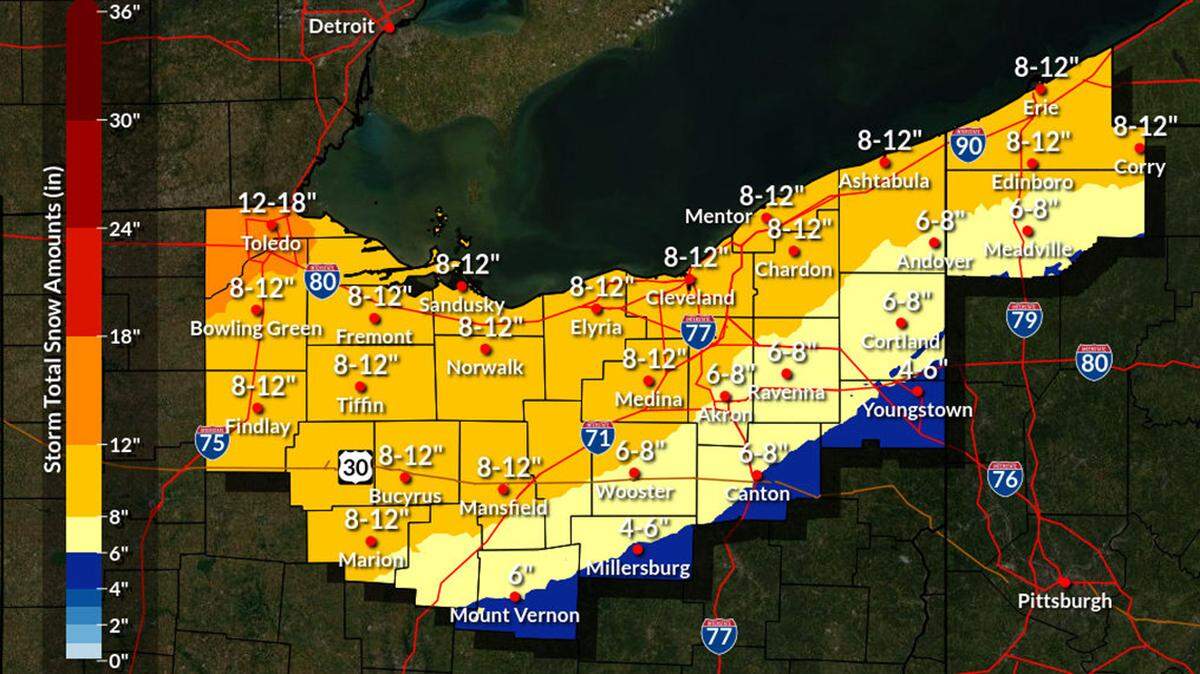
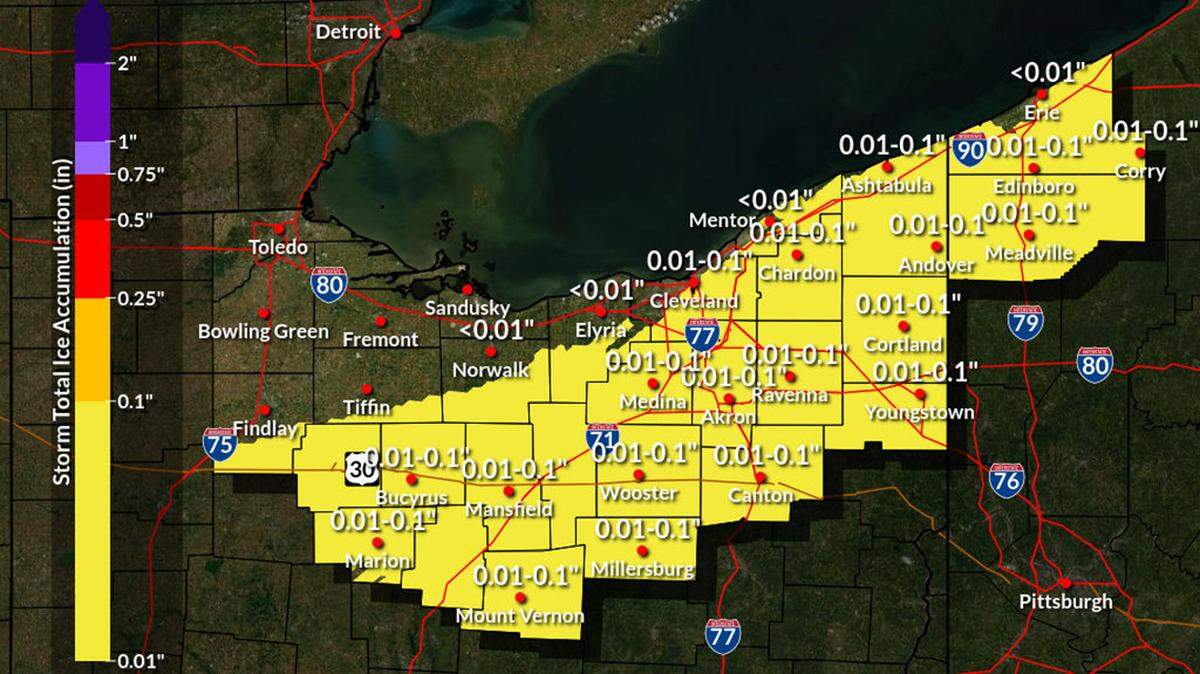
As of 4 p.m. Tuesday, the National Weather Service was saying “heavy mixed precipitation” is possible — between 5 and 10 total inches of snow and a “light glaze” of ice. The most is expected to come down Wednesday night.
“Travel could be very difficult. Areas of blowing snow could significantly reduce visibility,” NWS reported. “The hazardous conditions could impact the morning or evening commute.”
Columbiana, Mercer and Lawrence counties are also under a winter storm watch from late Wednesday night to Friday morning, including Sharon, Hermitage, Columbiana, East Liverpool, New Castle and Salem.
As of 7 p.m. Tuesday, NWS said the areas could get more ice but less snow than the northern part of the Valley — between 3 and 5 inches of snow and sleet and up to one-tenth of an inch of ice.
It will most likely affect the Thursday morning and evening commutes, NWS reported.
No parking
Several Valley communities have already issued winter parking bans, WKBN has reported, including Campbell, Canfield, East Palestine, Hubbard, New Middletown, Salem, Sebring, Struthers and Warren, as well as Austintown, Bazetta, Canfield, Liberty and Warren townships. For dates and times, check WKBN’s live list.
To submit a closure or cancellation, delay or winter advisory to Mahoning Matters, email info@mahoningmatters.com.
Stay home, if possible
Ohio Department of Transportation plow crews are preparing for what could be “significant” snowfall, according to a Tuesday news release.
“Motorists are encouraged to stay home. If travel is required, allow plenty of extra travel time and plan ahead by checking out OHGO.com to view hundreds of live traffic cameras, traffic speeds, and be informed of any crashes or incidents,” reads the release. “Mechanics have been tuning up the snowplows and our drivers are ready to begin 12-hour shifts. If we get the expected amount of snowfall, it will be very difficult for our crews to keep up. Don’t expect perfect road conditions. Our snowplows will be plowing and treating roads and doing their best for those that must travel.”
Western Reserve Transit Authority is preparing for possible service delays Thursday. For the latest information, visit WRTA’s website.
But if you’re on the road
Don’t crowd the plows, the Ohio Turnpike says, and avoid passing them. “Allow extra time and space for the plow drivers to clear the road,” reads a Tuesday news release. “Crews typically work together clearing multiple lanes simultaneously so make sure to give them plenty of room to work. Keep in mind the safest place to be on the road is behind a snowplow.”
Visibility may be poor due to blowing and drifting snow.
Keep an emergency kit in your car that includes warm clothing, blankets, a flashlight, food and water and a cell phone charger.
If you break down or crash, turn on your hazards, get as far off the roadway as possible, stay in your vehicle and call #677, the turnpike’s emergency line.
With wind gusts of up to 30 mph expected, the Ohio Turnpike has banned high-profile vehicles from all routes, starting at 7 a.m. this morning and ending at noon on Friday.
That means no triple-trailer vehicles or double-trailer vehicles more than 90 feet long, mobile home or office trailers, boat or horse trailers towed by passenger vehicles or high-profile campers or enclosed trailers.
Commercial trucks towing single flatbed or box trailers are still allowed, however, as are low-profile trailers and any other smaller trailer towed by a passenger or pickup truck.
Turnpike officials said they’ll be “continually evaluating” the travel ban throughout the storm.
The National Weather Service offers some survival tips in case you get stuck in a storm.
More ice = More power outages
Ice accumulation can bring down power lines and tree branches, FirstEnergy Corp. said Tuesday in a news release, and the company’s prepared to respond. It’s rallying more dispatchers, damage assessors and analysts to its regional offices, along with extra line, substation and forestry workers, according to the release.
Here’s how you can prepare for a possible outage:
Keep electronic devices such as cell phones, laptops and tablets fully charged;
Have a car charger on-hand to charge mobile devices if your power is out. If you have a smartphone, this will ensure you have access to online information sources;
Keep a flashlight, portable radio and extra batteries handy in the event of a power outage. Tune to a local station for current storm information;
Gather extra blankets or a sleeping bag for each person;
Do not use gas stoves, kerosene heaters or other open-flame heat sources to prevent deadly carbon monoxide gas from building up in your home;
If you have a water well and pump, keep an emergency supply of bottled water and/or fill your bathtub with fresh water;
Stock an emergency supply of convenience foods that do not require cooking;
Consider having a hard-wired phone available to report an outage or emergency. A plain, hard-wired phone can operate on power delivered through the phone line.
If you’ve got a backup generator, here’s how to operate it safely.
To report a power outage, FirstEnergy customers can call 1-888-LIGHTSS (1-888-544-4877), text “OUT” to LIGHTS (544487) or select “Report Outage” online on the company’s website.
Check on loved ones
The Ohio Department of Aging recommends seniors set phone check-ins or in-person visits with relatives, friends or neighbors during emergency situations, and decide on what they should do if that helper can’t reach them.
“Caregivers should plan for the possibility that they will not be able to physically be with their loved ones or their loved ones may need to leave their home for safety,” reads a Tuesday news release from the department.
The department says caregivers should:
Know the locations of nearby emergency shelters and have a plan for getting your loved one there, especially if you don’t feel safe driving;
Identify trusted neighbors or nearby individuals who can act as backup caregivers in a crisis;
Let your backup caregiver know about your loved one’s condition and how to communicate with them effectively; and
Store a recent photo of your loved one and copies of their medical documents on your phone to share with first responders, if needed.
When the neighborhood freezes over, the department encourages reaching out to older neighbors, to see if they need help. It “helps them feel connected,” the department said, and it’s an opportunity to see if they’re in need of other assistance:
Check their home: Is the temperature comfortable? Are they heating it safely? Is there any damage to their home? Are outdoor walkways clear of snow, ice and debris?
Check their health: Do they appear alert and aware? Have they fallen? Are they taking their medications as prescribed? Do they need medical attention?
Check that their daily needs are being met: Do they have safe food and water? Are they able to do what they need to do? Do they have someone to call for support and a reliable way to call for emergency help if they need it?