
Niles symposium to ‘Unmute’ racial injustice, mental health issues
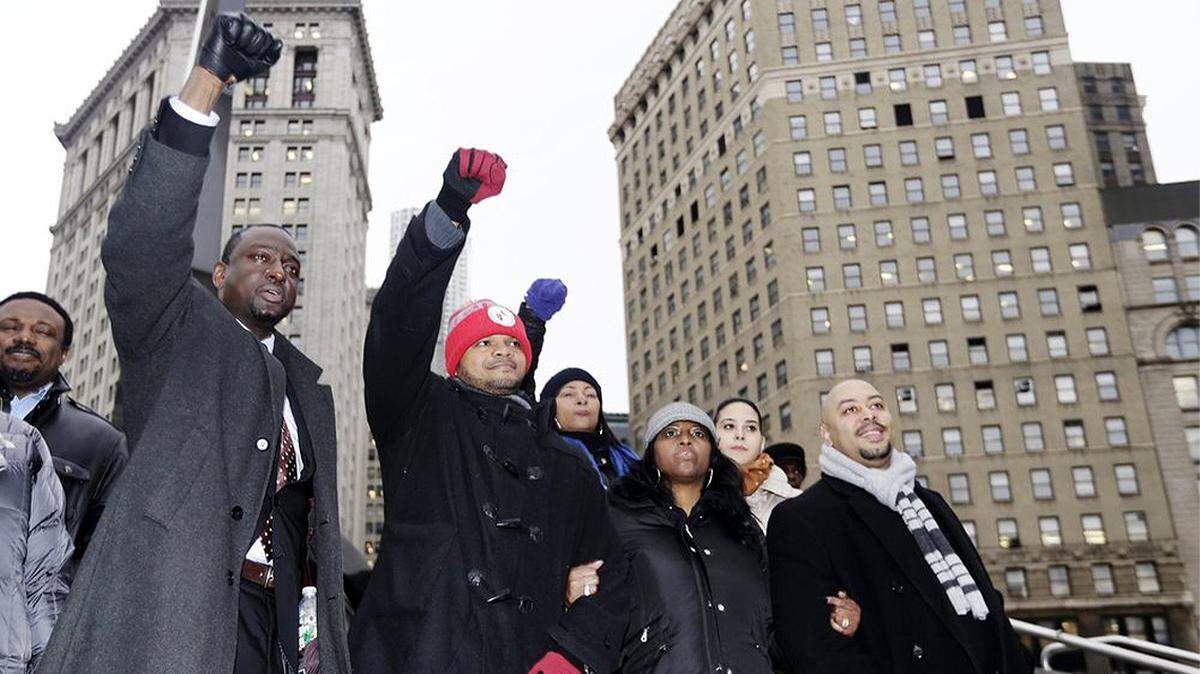
Two Black men wrongfully convicted of violent crimes in the 1990s plan to speak today in the Mahoning Valley on racial profiling by law enforcement and court systems and youth vulnerability to false confessions.
“We have to talk about what we can do to interrupt the system where it doesn’t work effectively for all, and so that’s a big part of it,” said Youngstown Municipal Court Judge Carla Baldwin, one of several speakers set to address issues of racial justice, mental health awareness and suicide prevention during the Unmute the Uncomfortable Symposium today at the Eastwood Event Centre.
Kevin Richardson, one of the “Central Park Five,” who served more than five years in prison before being exonerated for the attempted murder, rape and robbery of a 28-year-old female jogger in New York’s Central Park in 1989, and Laurese Glover, one of three men wrongfully convicted in the 1995 shooting death of 19-year-old Clifton Hudson in East Cleveland, and who spent 20 years in custody, have traveled to the Valley to tell their stories.
Today’s symposium is sponsored by Coleman Health Services and other community partners.
“The past three years in this country, we have seen events take place that have caused society to look at itself in the mirror,” Malik Mostella, community liaison for the Youngstown Police Department and symposium emcee, is quoted in a news release. “It is good that we are able to sit down to discuss our differences, and ironically find out that we are not that different from each other.”
Speaking to Mahoning Matters earlier this week on the symposium topics, Baldwin called the inclusion of trauma-informed care in the court system a revolutionary change. She said she plans to demonstrate how judges, lawyers and prosecutors can handle cases with more care and compassion based on a defendant’s previous trauma.
“First, you have to recognize that everybody who comes into the courtroom likely has some trauma, and that will range based on life experience,” Baldwin said. “I need [defendants] to see me as a cheerleader, a motivating force, and leading a team of people who are wrapped around them.
“They should be handled with care, and they just didn’t happen to come in front of a courtroom,” she said. “Now that they’re here, we have to figure out how and why they [got] here, and then to create a proactive plan so that they don’t come back.”
Baldwin said historic racism was built into the structure of the legal system. It’s something judges in the courtroom today need to take proactive steps to overcome, she said. It’s the little things — how justice officials talk to and treat defendants — that make a difference, she said.
“My prayer is that they never leave [my] courthouse feeling disrespected, and that justice wasn’t even an opportunity for them — that I have written them off before I even heard their voice,” Baldwin said.
James DeLucia, clinical director for the Mahoning County Juvenile Justice Center, also intends to present on adverse childhood experiences and trauma-informed care in the juvenile justice system.
DeLucia oversees inpatient and outpatient, incarcerated and non-incarcerated youths, and also runs the county juvenile justice center’s sex offender program. He told Mahoning Matters earlier this week it’s important to provide incarcerated youths with a positive and safe outlet to confide in.
“Even though we can’t change the past, if we are able to load things from anywhere [for] support, [provide] safe adults just to talk to and to potentially confide in. ... We can help prevent and try to kind of front-load the positives to attempt to outweigh the negatives,” he said.
DeLucia said there are many things that can impact an individual’s ability to receive adequate mental health care, regardless of race.
“Living in poverty or in impoverished areas — sometimes the [mental health] information isn’t there,” he said. “Just within our county, we have so many agencies where you can get everything from medications to counseling to case management.”
Yet, there are still many people who believe in “locking them up and throwing away the key, and, ‘Once a criminal, always a criminal,’” DeLucia said. “That’s farthest from the truth. … We make things very convenient for families to engage in person by keeping them in the community for mental health [treatment].”
Katie Cretella, director of clinical services at the Trumbull County Mental Health and Recovery Board, said the goal of the symposium is to educate and raise awareness on “bridging the gap between the medical, mental health and legal systems of care.”
“We are excited to be able to provide this educational event for many different professional fields while also being proactive on these critical issues,” she said.
Years of injustice
Baldwin said she thinks it’s likely the justice system has failed many more men like Richardson and Glover.
In Richardson’s case, he and four other teens confessed to the brutal attack on the Central Park jogger, after long periods of police interrogations, according to the National Registry of Exonerations. Though a forensic analyst testified a hair found on the victim was “’similar’ to Richardson’s hair ‘to a reasonable degree of scientific certainty,’” DNA testing later found it belonged to the true culprit.
“Since all five men were exonerated by DNA evidence in 2002, their case has illuminated police coercion tactics with young people, youth vulnerability to false confessions, and the profound dangers of media bias and racial profiling,” The Innocence Project reported in 2019.
All five teens were convicted and sentenced to five to 10 years in prison. Richardson was 14 years old at the time of his arrest and served a 5 1/2-year prison sentence, according to The Innocence Project.
However, in 2002, convicted murderer and rapist Matias Reyes confessed to the jogger attack. Investigators never linked Reyes to that crime — despite having his name on-file — but DNA and other evidence corroborated his confession, according to the registry.
The five men’s convictions were overturned later that year.
In 1995, police arrested and interrogated Laurese Glover, 16, and Derrick Wheatt and Eugene Johnson, both 17, for the shooting death of 19-year-old Clifton Hudson in East Cleveland. Their car was parked in a driveway three blocks away from the shooting and identified by a witness.
Forensic testing found gunshot residue on Wheatt’s hands and on the interior and exterior of the car, according to the registry. The three were convicted of murder. Glover was sentenced to 15 years in prison.
More than a decade later, the University of Cincinnati’s Ohio Innocence Project filed a motion for a new trial to review the gunshot residue evidence, due to scientific advancements in gunshot residue testing, according to the registry.
“The motion noted that the method used in the case to test for residue was known to be subject to false positives from materials other than gunshot residue. … Research showed a high likelihood of contamination from police sources such as being in a police car or a police station,” according to the registry.
Ohio Innocence Project lawyers also obtained police reports that had never been disclosed to defense attorneys revealing that witnesses had identified another man as the shooter.
Glover, Wheatt and Johnson were released on bond in March 2015 — 20 years after their initial arrests — and all charges were dropped in 2016, according to the registry.