
Youngstown to put $1.6M toward lead pipe removal at nearly 100 homes, starting this summer
Hundred-year-old lead pipes will be replaced in communities around the city this summer with funding from the American Rescue Plan and Bipartisan Infrastructure Bill, local and federal officials said Tuesday.
Youngstown is expected to receive $1.6 million in federal infrastructure dollars to replace lead-lined pipes built into the city’s older homes.
That’s part of $242 million for lead pipe removal expected statewide.
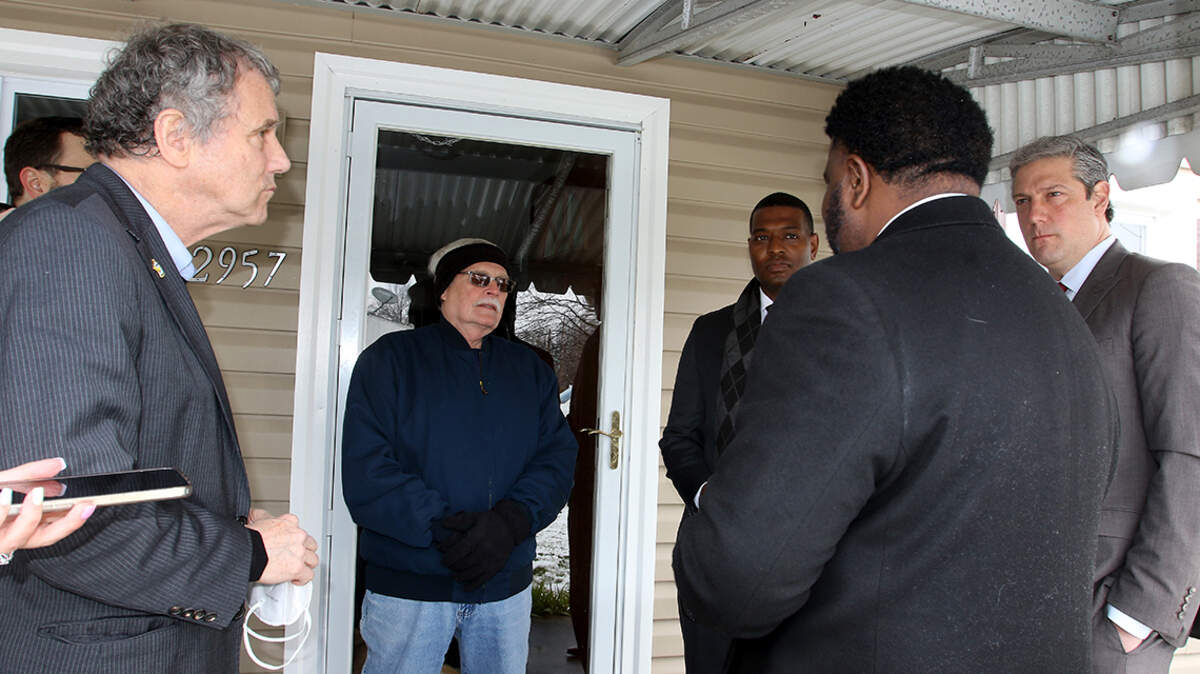
U.S. Sen. Sherrod Brown of Cleveland, D-Ohio; U.S. Rep. Tim Ryan of Howland, D-13th; Youngstown Mayor Jamael Tito Brown; and Michael Regan, U.S. Environmental Protection Agency administrator, on Tuesday morning spoke with residents along Eddie Street about the work, expected to begin in July.
Bill Kuhley’s Eddie Street home is one such target for that funding.
Residents ready for a change
Kuhley has lived on the city’s West Side for 20 years, he said. His home was built in 1967. Homes built before 1978 are more likely to contain lead-based paint, as well as lead pipes, faucets and plumbing fixtures, according to a U.S. Centers for Disease Control and Prevention report.
Kuhley said he hopes the city can repair lead-lined pipes in nearby homes to make the city more appealing to live in. He said his son lives next door and his home is also long overdue for pipe replacements.
“My son’s house was built in 1923 and I was going to take a water sample down to the labs and have it tested now. After everything is said and done, I would have it tested again to really see the improvement here,” he said.
Kuhley said he has noticed more iron in his water. Lead-lined pipes can form a coat of iron inside them, according to the CDC.
“I have not had any health issues from the pipes, but Ohio has very [dense] water,” he said.
Regan said as officials design the infrastructure programs, residents will start to see more affordable water rates.
“Water affordability is key to this entire infrastructure package,” he said.

The West Side is first for lead pipe replacements
City officials plan to inspect more than 90 homes with lead-lined pipes this summer, starting on the West Side, Mayor Brown said. There could be more in the future.
Youngstown Water Department Commissioner Harry Johnson said the city won’t know which homes will need pipe replacements until they dig up the land. He said the first 90 homes can take 60 to 90 days to complete.
“We are looking at pipelines, not homes specifically, so some roads may have 40 homes [in need of repairs] where others may have 20,” Mayor Brown said. “If you look at where we are now, we are more environmentally conscious and what we did in the past was not great.”
Mayor Brown said though lead pipes were once used to build “good quality homes,” their builders did not consider their long-term environmental harms.
“Look at how we polluted our rivers and steel mills. We are trying to be more environmentally friendly so this is a great opportunity to right some wrongs of the past,” he said.
Mayor Brown said lead paint is also being assessed in homes from a socioeconomic stance.
According to Ohio Department of Health child lead exposure data, 0.9% of the nearly 2,700 Mahoning County children screened for lead in 2012 had blood-lead levels of at least 10 micrograms per deciliter — which was considered “elevated.” It was the 16th highest rate among Ohio’s 88 counties, Mahoning Matters reported in January.
ODH in 2012 predicted more than 1 in 3 children in Youngstown’s Warren neighborhood would have a blood-lead level of at least 5 micrograms per deciliter — nearly 38%, which was the highest probability in the county, according to ODH. The census tract identified in the study spans from the intersection of West Warren and Glenwood avenues at its northwest corner to the intersection of Youngstown-Salem Road and State Route 62 in the southeast.
Black children living at or below poverty level are four times more likely to have lead in their blood, according to Regan.
“Exposure to lead can lead to severe mental and physical development, and for children it can stop growth, slow down learning and cause damage to the brain,” he said. “No person should live in fear the water in their tap will poison them.”
Fourth Ward Councilman Mike Ray, who represents the West Side, and said the majority of its residents have low to moderate income. More than 40% of Youngstown residents are Black and 34.9% live below the poverty level, according to U.S. Census Bureau data.
Seventy percent of households in the census tract including Eddie Street have income below the poverty line, according to data compiled by OpportunityDb.com. The statewide rate is 13%. There, the median household income is $20,000, which is 66% lower than the state’s median income of $59,000.
“I think this neighborhood will see a big impact,” Ray said. “We’re going to dig everything up and replace the lead pipe lines [on the West Side].”
The largest water infrastructure investment in U.S. history
U.S. Sen. Sherrod Brown of Cleveland, D-Ohio, said Ohio has 600,000 leaden water pipes in need of replacement.
Through Sen. Brown’s Build America Buy America bill — included in the bipartisan infrastructure plan — American-made materials and products like steel and pipes will be used, he said.
“This will bring a lot more prosperity to the Valley. When you think of safe drinking water, you shouldn’t have to live in an expensive suburb to have clean drinking water,” Sen. Brown said.
He said Ohio has more pipes to replace than any other state, besides Illinois.
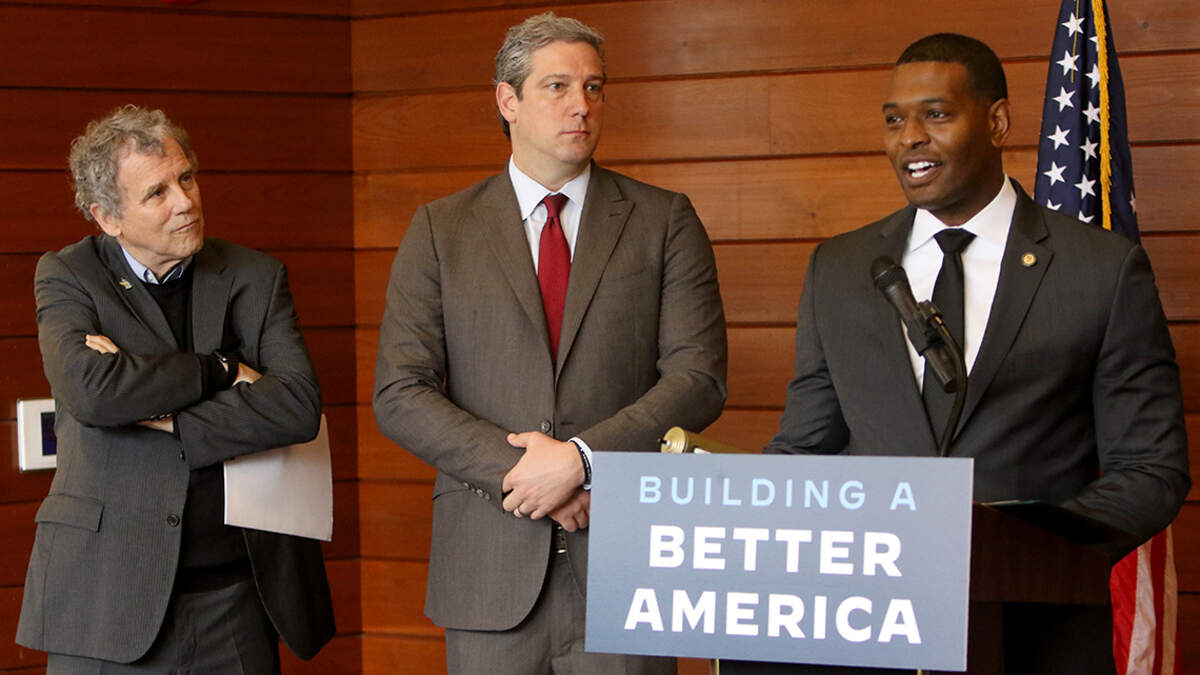
Up to 10 million homes in America do not have safe drinking water, Regan said, adding the law is the largest investment in water infrastructure in U.S. history.
More than $50 billion will be invested through EPA infrastructure programs, including $15 billion to remove all lead service lines across the country, Regan said.
“Here in Ohio, that means an investment of $242 million just this year and 3,700 jobs will be created for plumbers, pipe fitters and construction laborers,” he said. “We’re going to make sure the communities most in need will finally get the resources they deserve.”
About $50 million will be provided to mayors across Ohio to do assessments on pipes in their neighborhoods, Regan said.
Ryan said the infrastructure plans ensure everyone has the opportunity to drink healthy water.
“Lead poisoning is irreversible. … This isn’t something you can go to the doctors for and get fixed,” he said. “You can’t learn in school if you are not healthy, so these investments go a very long way.”