
‘It’s a different life over there’: Valley Jewish leaders delivered goods to Ukrainian refugees
As the Russia-Ukraine war continues, so grows its refugee crisis, local Jewish leaders said Monday.
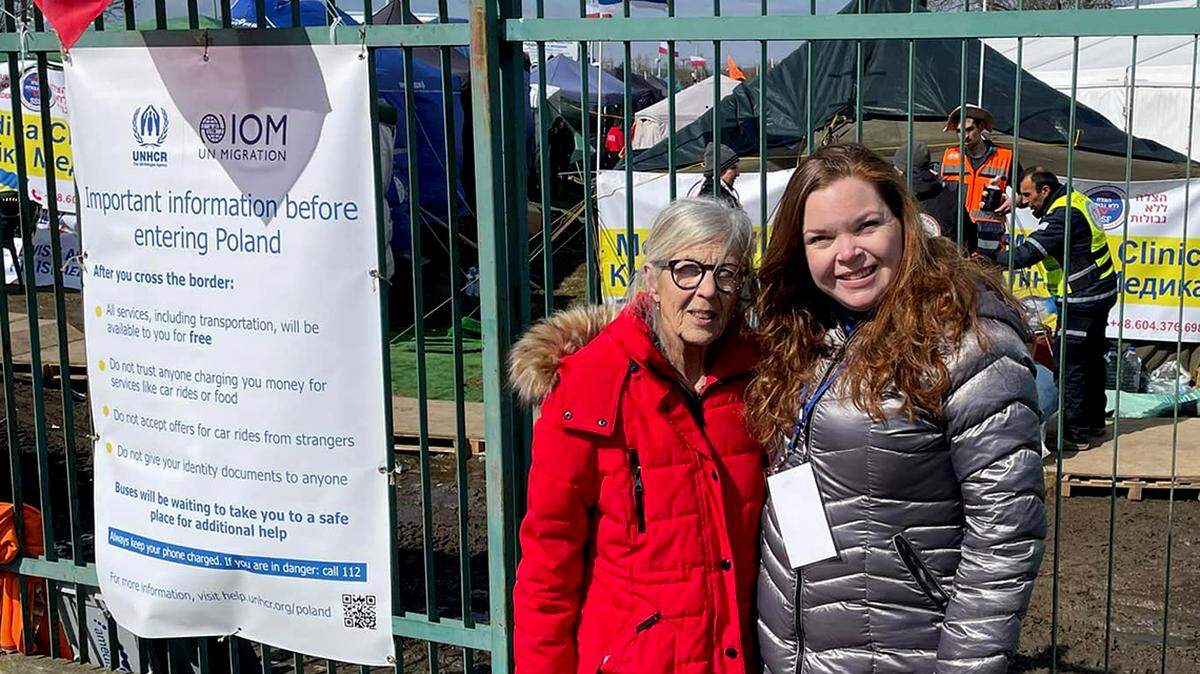
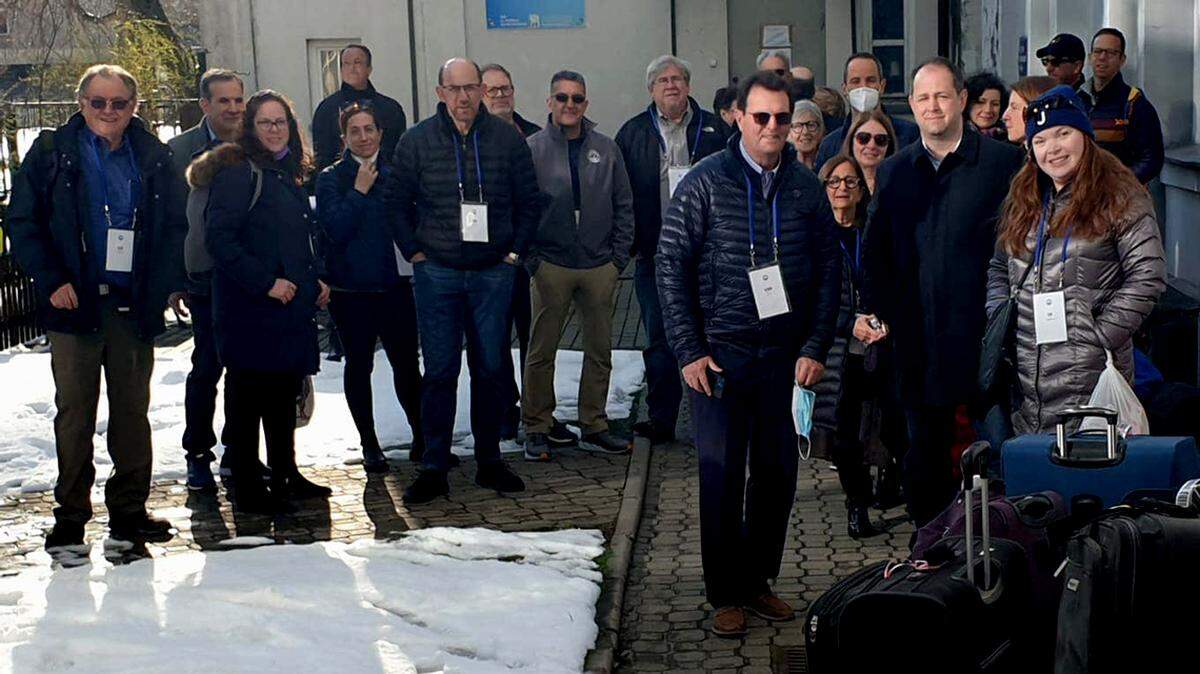
Local Jewish federation members spent the first week of April in the Polish village of Medyka, along the Ukrainian border, and other parts of Poland. They and other members brought more than 600 pounds of supplies to refugees fleeing Ukraine.
Lisa Long, the Youngstown Area Jewish Federation’s financial resource development director, said the federation raised more than $46,000 in one week to help refugees. Valley residents also dropped off first-aid supplies, over-the-counter medications and toys for children at the Jewish Community Center.
Long and Nancy Burnett, advisory board chair of the Jewish Community Relations Council, were invited by the Jewish Federation of North America to serve Ukrainian families starting over in a new country, Long said.
They shared their experiences in the war-torn country during a lunch seminar Monday at the Gypsy Lane center.
“We hauled the supplies ourselves and piled them up here at a synagogue in Warsaw [Poland] which were then sorted and sent to the refugee center or the border,” Long said.
Long said the Medyka border is one of eight entry points into Poland.
“We made it to the border crossing and children were getting warmth, food and crossing into somewhere safe,” Long said. “The border was making sure that people’s immediate needs were met. It was really cold, windy and quiet.”
From Feb. 24 to April 2, about 2.5 million refugees fled to Poland, Long said. During the Syrian refugee crisis in 2011, about 300,000 refugees fled to Europe over six months.
“Some are going back to Ukraine, starting new lives in Poland or going to the next country and working to make a living there,” she said.
Burnett said many refugees are reluctant to move too far away from the border because they want to go back to Ukraine once the war ends.
“[Refugees] have left their husbands, boyfriends, parents, grandparents. … They hope they can go back, but nobody knows,” she said.
Local Ukrainian awaits her family’s safety
Zina Lerman immigrated to Youngstown from Ukraine in 1992. She attended the community conversation on Monday to share her concerns for her aunt and cousin still living in the center of the country.
Lerman said she has no way to help them leave and is waiting for the federal Unite for Ukraine program — through which Americans can sponsor Ukrainian refugees — to help her family get to America.
“I talk to them every single day because you don’t know what will happen next. … I don’t sleep too much,” she said.
Lerman said first, they heard bombings near their home. Now, there’s a food shortage.
“The Black Sea is blocked, so now all shipments are blocked,” Lerman said. “There is no way I can help them to come here, so they are still waiting.”
Long said she works harder because she knows millions of Ukrainians do not get to go home to their families like she does.
“I get to go home, to my job, and my kids. … So many people can’t do that,” she said.
Burnett said she’s grateful for her “sheltered life.”
“I don’t have to worry about fleeing. I just have to worry about my dandelions popping up in my yard,” she said.
‘It’s a different life over there’
Lila, a vascular surgeon in Ukraine, lived a “comfortable lifestyle” with her husband and their two daughters and two dogs. But they were forced to flee their home with “what they could hold in their two hands,” Burnett said.
Instead of taking personal items, Lila grabbed her two daughters and left.
“This is a woman who used to wake up and go to the hospital to perform surgeries, yet on that morning she hid in her basement, grabbed her children, dogs and ran,” Burnett said. “We [worry] about what we are going to wear. … It’s a different life over there.”
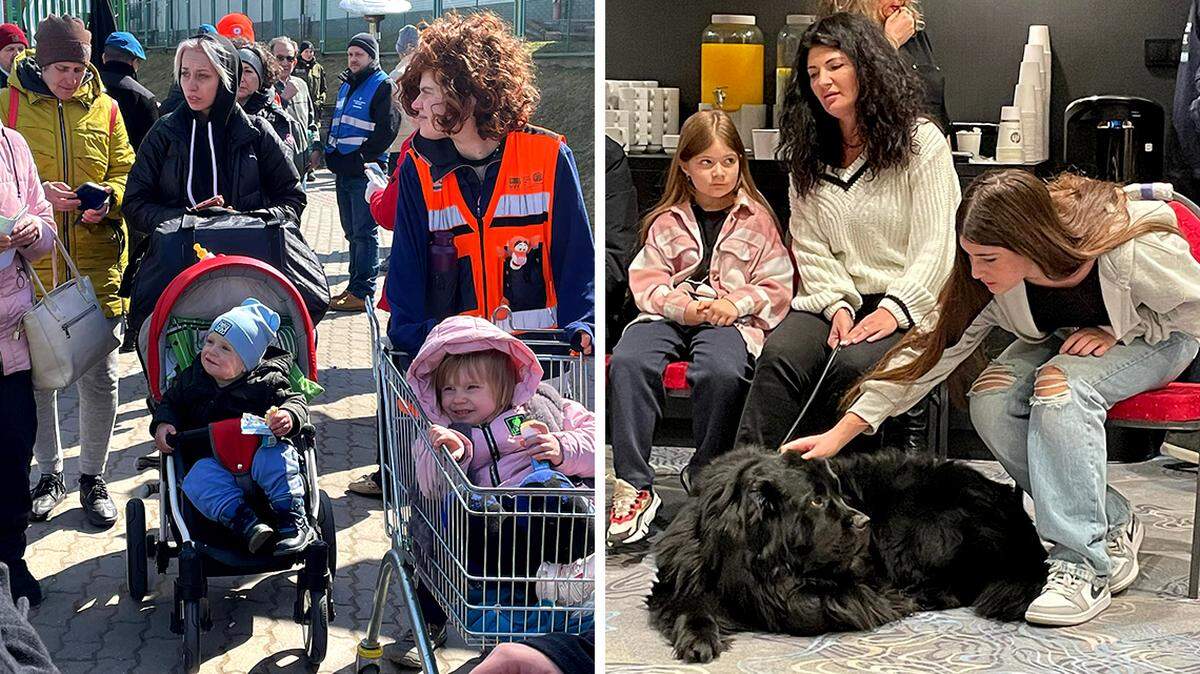
The Ptak Warsaw Expo center is 25 minutes outside of the Polish capital. Refugees are bused to the center for supplies and shelter. They are normally housed there for one to three days but some have been there much longer before finding a stable place to live, Long said.
“[Refugees] spend days [traveling] back roads trying to get to the border, and then [it’s] 72 hours on foot to the border,” she said. “Then it takes five or six hours to cross the border and get to a refugee center and just wait … to start a new life.”
Long said the refugee centers do not have electric lighting. Once it gets dark, it turns pitch black.
“It’s all sky light [fixtures], so it gets dark in there at nighttime,” she said.
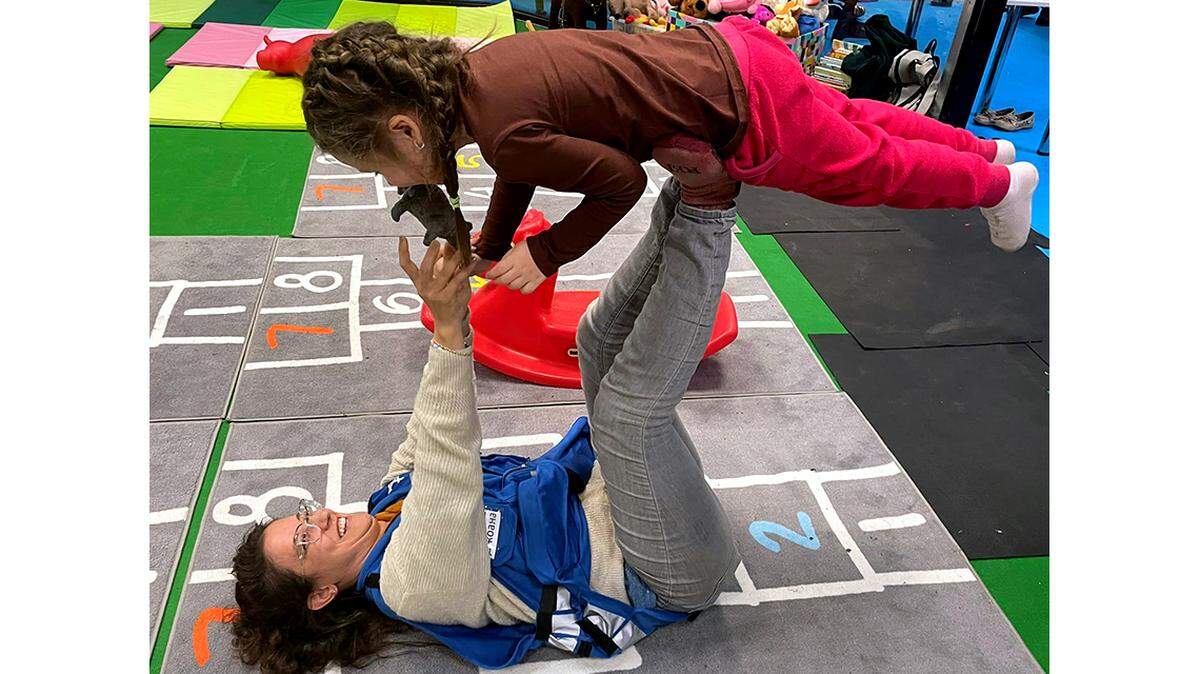
Dror Israel, an educational center in Israel, sent delegates to the expo center to help the child refugees feel some sense of normalcy. They serve 600 kids each day from morning to evening, Burnett said.
“You heard the noise and laughter [of kids] and that’s something we didn’t expect,” she said. “Those coming across the border were very confused and scared, but in those centers with the children, there was laughter.”
Long said The Jewish Agency for Israel helps people who identify in the Jewish community migrate to Israel. The agency runs six hotels in Warsaw, and most of their rooms are filled with refugees, she said.
“There are rooms filled with kids’ clothes, diapers, dog food and anything people might need,” she said. “Usually there are 3,000 Ukrainian [immigrants] to Israel in one year. There have been 2,000 in one month.”
The agency also opened a medical field hospital in Ukraine last month with 100 medical professionals, Long said. By the beginning of April, they had treated more than 1,000 people, she said.
“Of course [injury] has happened because of the war, but [it’s] also delivering babies, treating cancer and keeping up with treatments of what people were going through back at home,” Long said.
‘Do something to help one more person’
Jewish federations are asking for monetary support from community residents, leaders and elected officials, Long said. The national federation has so far raised about $40 million for Ukraine relief.
Long said each refugee has a story that is different from the other.
“What I’m fearful of is that people will become numb to this and jump to the next thing and think, ‘It’s just another war,’” Long said. “If all of us do something to help one more person, think of how that will add up.”
President Joe Biden announced the U.S. would take in 100,000 Ukraine refugees, and pledged $1 billion in humanitarian aid to European countries affected by the war, The New York Times reported last month.
Bonnie Deutsch Burdman, executive director for government affairs for the local federation, said it’s more important than ever to advocate for Ukrainian refugees.
“Together our voices need to be heard,” she said. “[The Jewish community] was very loud and strong in urging the administration to loosen up immigration legislation, and they heard the call.”
To contribute to the Ukraine Relief Fund, visit The Jewish Federations of North America website.