
‘END OF AN ERA’ | How mobster Lenny Strollo helped undo the Valley corruption he sowed
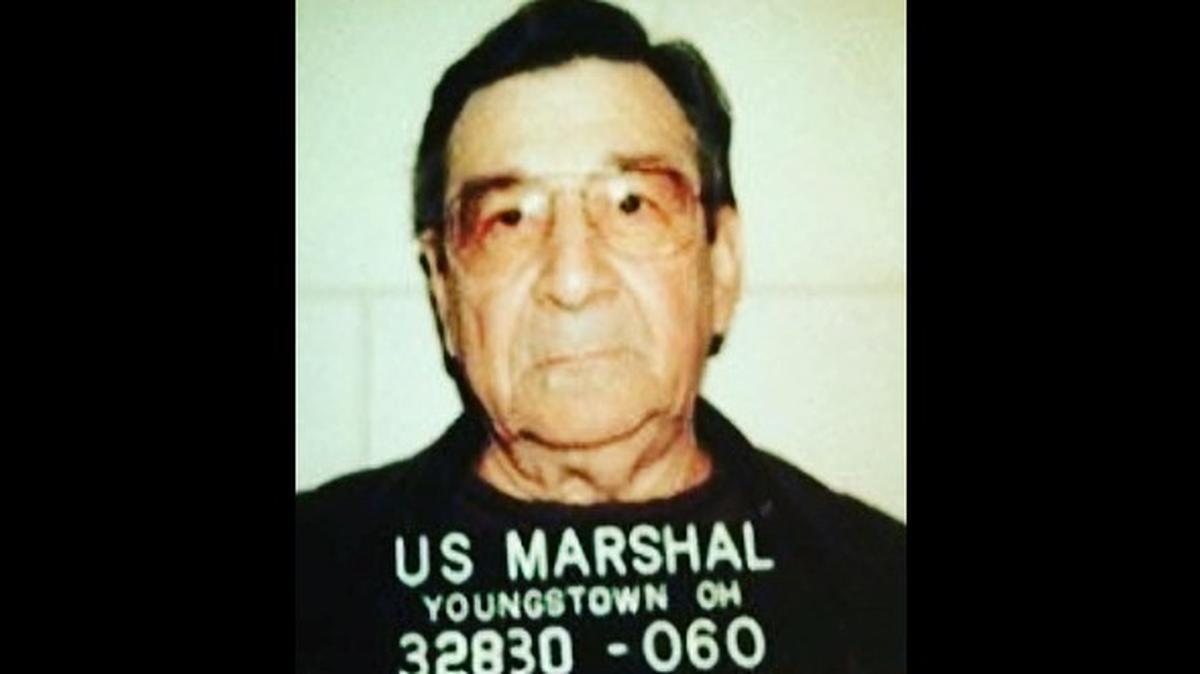
BOARDMAN — Some 20 years ago, Lenine "Lenny" Strollo was expected to end up the last mob boss to go down in Cleveland's federal court.
"Lenny Strollo is the last of the main characters in the long, sordid history of crime in the Valley. His first-person story deserves to be memorialized," Bertram de Souza, former Vindicator columnist, told Mahoning Matters.
The former organized crime leader, who faced 12 years in prison on federal and state charges including racketeering and murder and who stunned by breaking a mafiosi vow of secrecy to become a federal informant, has died at age 90.
Rossi & Santucci Funeral Home in Boardman on Wednesday confirmed Strollo's death to Mahoning Matters.
Strollo was a former Pittsburgh mobster "who ran the Youngstown rackets," according to Cleveland Scene. That included illegal betting, poker machines and drug trafficking, The Vindicator reported Wednesday.
In 1999, Strollo, at 68 years old, pleaded guilty to leading the Mahoning Valley's organized crime operations, to ordering hits on a rival mobster as well as Mahoning County Prosecutor Paul Gains and to bribing numerous local officials.
His prison sentence was ultimately shortened to 12 years after he became a deep federal informant, serving up information on several unsolved homicides and mafia activity in the Great Lakes region, The Vindicator reported in 2004.
His cooperation in public corruption investigations brought down two Mahoning County judges, as well as former sheriff Phil Chance, former prosecutor James Philomena — who admitted to taking mob bribes to fix criminal cases — and even the Valley's former congressman, James Traficant.
John Stoll, a retired FBI agent who lives in Poland, was involved in Strollo's arrest in the mid-1990s.
"We suspected all along. You'd hear police officers saying, 'Philomena's corrupt.' … But we had no way [to prove it]," he said in an interview with de Souza's Scribbler Publishing Group, released in July.
Strollo's information "opened the flood gates," Stoll said.
Video produced by Bertram de Souza, Cindi Rickard and Robert McFerren
Strollo was released from prison in 2008, according to WKBN.
He'd been whisked into the federal witness protection program and served at least part of his sentence in a prison in Phoenix, separated from other inmates, Stoll told de Souza.
By the time Strollo was released, there was no more fear of reprisal, as Pittsburgh's crime family had collapsed, Stoll said.
Authorities allowed him to return to his Canfield mansion, which he was permitted to keep, along with his "ill-gotten gains," said de Souza.
De Souza is a former Vindicator columnist who for years followed the local trail of public corruption that started with people like Strollo and led all the way to the U.S. Capitol.
Following Strollo's release from prison, de Souza sought him out, offering a private video interview about his life, to be released after Strollo's death.
Strollo reportedly rebuffed him, adding de Souza "owes me a lot of money for all those newspapers he sold writing about me."
One of Strollo's relatives, reached Wednesday by phone, declined to be interviewed for this story.
Strollo's come-up
Organized crime was a lifestyle Strollo started in his early teens, as a bag runner, according to de Souza. The business later expanded to include vending machines and gambling.
In 1990, Strollo pleaded guilty to running the largest illegal casino in the country — the city of Campbell's All-American Club — according to the FBI. He was sentenced to 14 months.
At the time, Strollo's fellow Pittsburgh soldier, Joseph "Little Joey" Naples, had command of the Valley rackets. He was shot dead in 1991, allowing Strollo to rise. Naples' murder remains unsolved.
Years later, Strollo turned the crosshairs on Mahoning County Prosecutor Paul Gains, who threatened to unseat the county's crooked top lawman.
In 1996, Gains was running for his first term in office against incumbent prosecutor Philomena, who ultimately admitted to accepting mob bribes to fix criminal cases in their favor.
Once people knew they could buy their way out of a murder indictment, "they freely opened fire," Gains said. The county's rates of homicides and felonious assaults skyrocketed in the years before he took office, he said.
On Dec. 23, 1996, Gains, having defeated Philomena the month prior to become prosecutor-elect, was ambushed by a gunman in the kitchen of his Boardman home. He was wounded by the would-be assassin but saved when the man's gun jammed.
Video produced by Bertram de Souza, Cindi Rickard and Robert McFerren
Gains on Wednesday expressed his condolences to Strollo's family.
"It's basically the end of an era," he said. "I'm glad that Mr. Strollo's organization was dismantled.
"I suppose you could say it made what I went through worth it, because a lot of people were dying back then."
The vow of silence
Mike Tobin, a former Cleveland Scene reporter who extensively researched Strollo's history in 1999 and later went on to work in the Cleveland U.S. attorney's office, said Strollo's case "was going to be, really, the last mob case in Cleveland. I think that was pretty well proven to be true."
The federal justice department, armed with the Racketeer Influenced and Corrupt Organizations Act of 1970 — which was designed to combat organized crime — made La Cosa Nostra, or the Sicilian Mafia, a primary target in Boston, New York, Cleveland and other hotbeds across the country.
"The members who had taken the vow of 'omerta' [the vow of silence] to never flip did, in fact, start taking plea deals," Tobin said. "I think the prosecutors very effectively used the threat of very long prison sentences against each other. That's part of how La Cosa Nostra fell apart."
A former federal prosecutor told Mahoning Matters that mob activity is virtually nonexistent in Ohio today, and federal law enforcement has since turned its attention to Russian and Asian organized crime syndicates.
Italian American organized crime outfits were the most influential and best organized from the 1930s to the late 1980s, said Mahoning Valley Historical Society Executive Director Bill Lawson.
During the zenith of mob activity, the furthest reaches of Pittsburgh and Cleveland outfits bristled in the Mahoning Valley.
While Cleveland mobsters ran labor unions from the shadows, steel towns like Youngstown were dens of vice, like gambling, prosecutors said.
Steel towns had well-paid mill workers who, after the shift bell, were eager to drink and play the tables. At the time, the city was big enough that betting rackets were lucrative, but small enough that they could be kept safe from law enforcement, prosecutors said.
In Youngstown, mobbed gunmen shot an attorney to get a trial continuance, rigged police force exams to favor officers they liked and were willing to get violent to protect their interests, which extended beyond gambling, they said.
"This is no man's land in terms of organized crime," Lawson said of Youngstown. Conflict between the organizations in nearby cities resulted in local violence — from shootings to bombings — and earned it the moniker "Crimetown, U.S.A."
"Youngstown has had 75 bombings, 11 killings in a decade, and no one seems to care," wrote John Kobler in that so-titled 1963 article in the Saturday Evening Post.
'The final curtain'
But by the 1990s, federal law enforcement "had the technology and policies and laws on their side — like RICO — to actually come after mafiosi and take them down," Lawson said.
As a result, the arrests accumulated at that time, and "Strollo got caught up on that net," said Lawson.
The violence of the 1990s "opened wounds in our city," Lawson said.
Youngstown and those who called it home struggled under the weight of the town's reputation for crime and corruption.
"It had a real negative effect on all of us," Lawson said.
The fact that people like Strollo agreed to be government witnesses "really spoke to the fact that organized crime families and associates knew they were in trouble," Lawson said, to such an extent that, in providing testimony, Tobin wrote Strollo "drew the final curtain on the fabled northern Ohio mob."
But when it comes to mapping the so-called "end" of organized crime syndicates in the Mahoning Valley, Lawson said, "there really is no 'end.'"
"They're still around, but the level of influence is not there. They have to operate even further below the surface," Lawson said.
This story was originally published May 20, 2021 at 4:00 AM with the headline "‘END OF AN ERA’ | How mobster Lenny Strollo helped undo the Valley corruption he sowed."