
Mahoning Valley schools will lose $11.6 million in state budget cuts
YOUNGSTOWN — Gov. Mike DeWine announced cuts to education subsidies in response to COVID-19's decimation of the state economy, and Mahoning Valley schools stand to lose big.
School districts in Mahoning, Trumbull and Columbiana counties will lose $11.6 million, according to a table released Wednesday by the Ohio Office of Budget and Management. Districts have less than two months — until June 30, the end of the state's fiscal year — to trim the fat.
The cuts are part of a $775 million reduction plan to balance the budget for fiscal year 2020.
The COVID-19 pandemic has caused a nearly $1 billion swing in state revenues. At the end of February, state revenues were ahead of estimates by about $200 million. In just two months, they're now in the red by about $777 million.
K-12 foundation payments amount to $300 million of the $775 million plan.
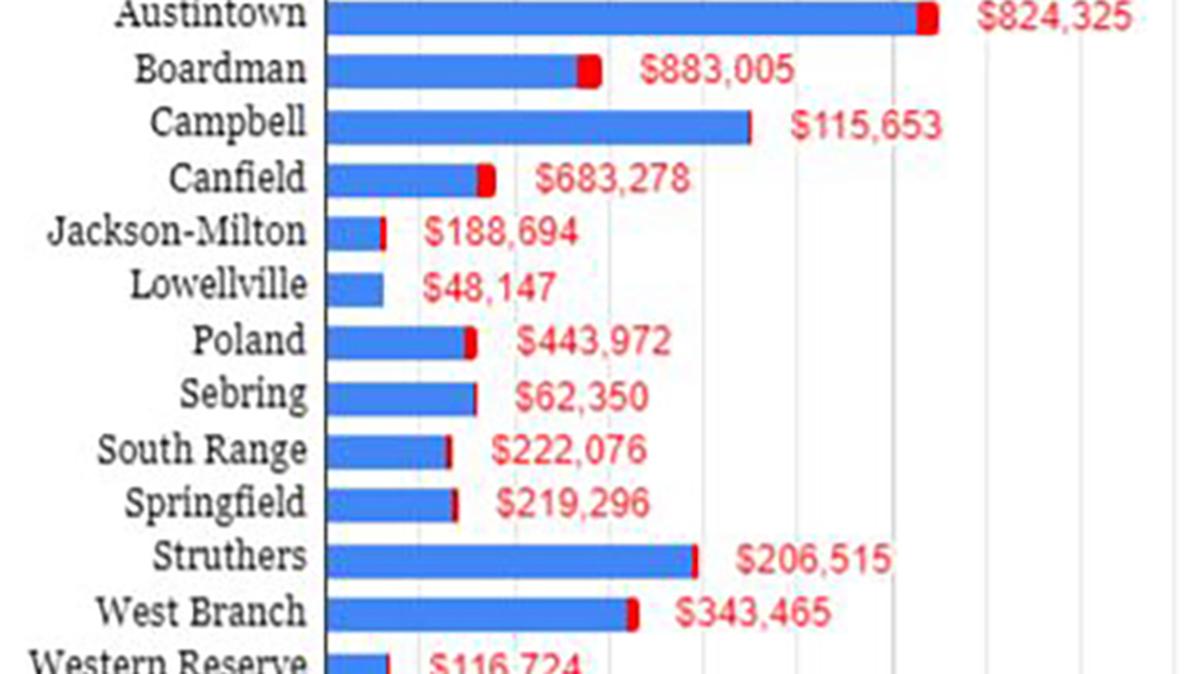
Poland Local Schools expected to receive more than $5.4 million in foundation funding for FY 2020. Superintendent David Janofa said the district is tasked with cutting nearly $444,000 from the operating budget over the next two months.
"That's a significant pinch," said Janofa. "When they're talking these kind of hits, yes, in the grand scheme it's still only $443,000, but the issue is we've already budgeted for those dollars. We've already basically allocated those dollars."
Districts are expected to execute cuts before the end of the fiscal year. If the state slashed budgets for the entire fiscal year, the district would have to trim $2.8 million of its $18.4 million operating expenses, Janofa said.
In terms of deciding where to tighten the belt, some of the decisions will be easy. For example, since students aren't traveling to school or visiting school buildings, the district is saving money on fuel and electricity.
But, Janofa said changes to operations due to coronavirus won't amount to the required reduction.
"In my opinion, just on knowing what came out today, we're not going to be able to add up to $443,000 with the savings that we've had based on how we're performing educational services right now," he said.
If the district is unable to cut $443,972 by June 30, "you cut into carry-over funds."
"Carry-over funds" includes money unspent at the end of the fiscal year.
"We've done a lot to try to turn the tide of our carry-over funds," Janofa said. "They have increased and we've made some reductions, but basically this cuts into our carry-over funds that we've worked so hard to build."
Austintown Local Schools Treasurer Blaise Karlovic said his district saw the pandemic cuts coming but was able to square away enough of a surplus this year to stave off deficit spending.
Though each public school district forecasts its finances five years at a time, "you don't forecast for epidemics like this," he said. But with school buildings closed down, that means bus fleets aren't running and personnel and utility costs aren't as demanding.
"There are some savings we were able to generate that we will continue to generate through June 30" — up to about $600,000, Karlovic said. "Is it enough savings to offset the total cut? No. But it does soften the blow."
Austintown is losing out $824,325 in payments for fiscal year 2020 — representing about 1.84 percent of its operating expenditures for the previous fiscal year — which will be spread out over the district's four remaining bi-monthly payments.
The district was slated to receive $21.7 million in foundation payments this year.
The total cut represents $185 less per pupil the district will spend. It projected to spend $4,860 per pupil this fiscal year.
Though Karlovic said the district isn't scrambling to balance its budget in the next two months, it's now bracing for what could turn out to be deeper cuts next year. He said he expects it to be a flat percentage across the board.
"We've been able to manage this through savings we've been able to achieve. Going into next year, they're going to cut again," he said. "We have to be very aware and expect the cuts are going to be bigger and deeper going into fiscal year 2021."
He warned adaptations to the coming school year proposed by Ohio Gov. Mike DeWine's administration — which would turn state schooling into a "hybrid" system, keeping remoted learning but bringing staggered groups of students back to classrooms a couple days at a time — could actually increase the financial burden on schools, with increased bus runs and twice-a-day cleanings.
Below are the reductions in state K-12 foundation payments facing each Mahoning Valley school district. View a chart by clicking 'Reduction chart'. Click here to view a full-sized version.
Source: Ohio Office of Budget and Management
DeWine said Tuesday the cuts represent a 3.7-percent decrease in state K-12 funding over last year. He expressed concern Tuesday that they would be most impactful to districts within poor communities.
According to the table released Thursday, the deepest cuts in the Mahoning Valley seem to target the most affluent districts, such as Canfield Local Schools, which is losing $683,278, or 11.2 percent of its total $6.05 million in foundation payments.
Boardman Local Schools would have received $9.74 million but is facing a 9-percent reduction of $883,005.
Janofa compared the cuts to ripping off a band-aid, and hopes its a one-time deal. He expects the plan to give DeWine room to analyze how the state's Rainy Day Fund can play a role in the state budget for the next fiscal year.
DeWine on Tuesday added Ohio will hold off on drawing from the state's Rainy Day Fund, currently sitting at about $2.7 billion, anticipating it will be needed to weather the next year or two.
"I have said it's raining. ... This rain is not a passing spring shower. It could be a long, cold, lingering storm. We should not use the Rainy Day funding until we have to."
Youngstown City Schools expected to receive more than $19 million in foundation funding for FY 2020. Per DeWine's plan, that number will be reduced by $862,222.
CEO Justin Jennings did not specify where the district would reduce spending, but said it will execute "across the board trimming."
"It's going to be difficult, because we have to cut programs and different things, but we want to make sure we're still able to educate our kids the way we need to," Jennings said.
This story was originally published May 7, 2020 at 1:41 PM with the headline "Mahoning Valley schools will lose $11.6 million in state budget cuts."