
‘No one advocating for them’: The stories of Ohioans who helped immigrants detained in Youngstown
YOUNGSTOWN — Though issues surrounding undocumented immigration are most visible at the U.S.-Mexico border, local volunteers shared their experiences in helping migrants who've passed through Youngstown, which only until recently held the highest number of detainees in the state.
Katie Salupo is a Youngstown resident who worked with immigrants placed in the Northeast Ohio Correctional Center. Many were asylum seekers who left their homes to find legal protection in the United States.
Shari Nacson, a clinical social worker from Cleveland, interviewed and evaluated asylum seekers at the privately operated prison. In 2018, there wore more than 200 immigrants detained there, according to the U.S. Department of Homeland Security. The prison had the capacity for more than 300 that year.
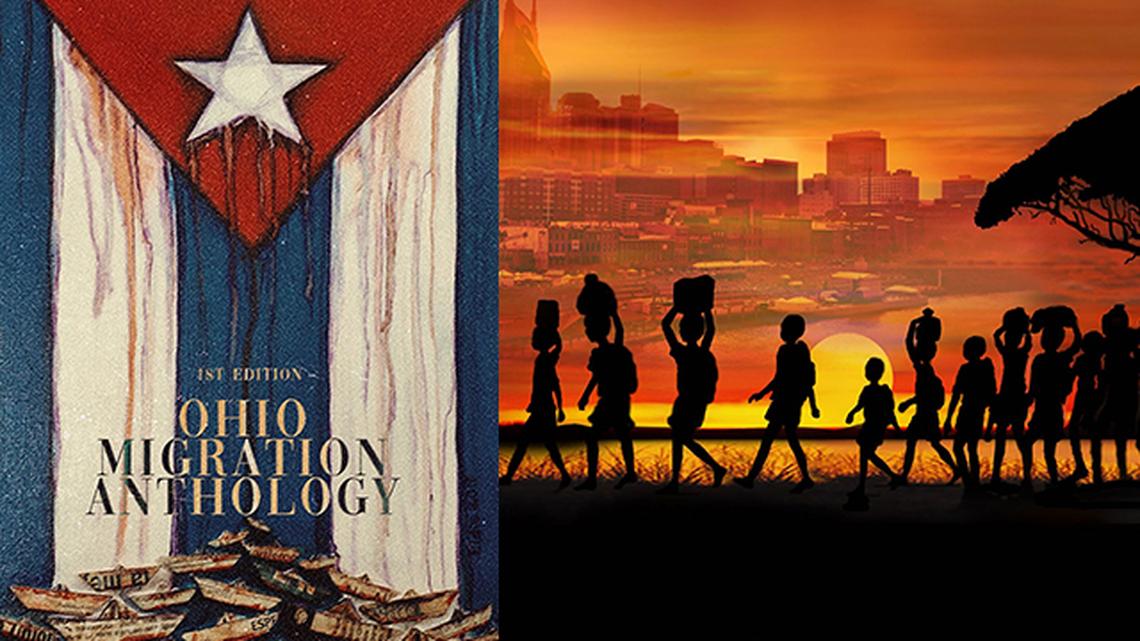
Salupo and Nacson's stories were featured in the Ohio Immigration Alliance's new book "Far From Their Eyes: Ohio Migration Anthology," which showcases paintings, poems, essays and short stories from Ohioans who have worked with migrants.
Immigration policy turns 'ugly'
Nacson said U.S. immigration policy started to "get really ugly" during President Donald Trump's administration, and at the time she noticed undocumented immigration was becoming a bigger problem.
There were more than 850,000 apprehensions at the U.S.-Mexico border in 2019, more than double from the prior year, according to a Pew Research study from 2020. Between 2013 and 2018, there were between 300,000 and 500,000 border arrests each year.
Pew attributes the sudden spike to the exponentially higher number of families crossing the border that year.
Though ICE arrests rose between 2016 and 2019, there were still only about half as many as during President Barack Obama's first year in office, the study shows. Though deportations also rose in the first half of President Trump's term, there were still about 20% fewer than at the height of President Obama's administration.
"It's policies, politics and money that take us very far away from humanity," Nacson said. "Our country has always wrestled with the volume of asylum seekers and there's not a single right way to manage any of it."
Brian Hoffman, executive director for the Ohio Center for Strategic Immigration Litigation & Outreach, said Youngstown's male-only prison once held the most immigrant detainees of any other correctional facility in the state.
"Between the Seneca, Geauga, Butler and Morrow county jails and NEOCC, [Youngstown's facility] had a far larger [immigrant] population," he said.
NEOCC began housing detainees in 2016, under a contract between United States Immigration and Customs Enforcement and CoreCivic, which operates the prison. The pact allowed immigrants to be held at the Youngstown prison for 72 hours before reuniting with family in the U.S.
But after they got out, they were often on their own.
"It's a worldwide crisis, and too many people are living in harm's way with not enough places to go to," Nacson said.
Immigrants had 'no one advocating for them'
When detainees left the Youngstown prison, all they had were the clothes on their backs, Salupo said.
Salupo said she spent many late nights at the Greyhound bus station in downtown Youngstown helping immigrants set out from Youngstown for states like New York or California, where they would reunite with their families.
Her work started in October 2017 when, at her friend's request, she helped an immigrant detainee locate the bus ticket provided by his Akron-based attorney. For two months, Salupo continued meeting with those immigrants every weeknight to supply them with backpacks filled with food, clothing, toiletries, cell phones and other traveling necessities.
She said once she realized the number of released immigrants who were being regularly dropped off from the prison to find their own way home, it was something she couldn't ignore.
"Normally they are dropped off at this bus station to fend for themselves with no one advocating for them," Salupo said. "I would let them use my phone to call their families and let them know that they were out and on their way.
"I didn't know that this was happening. … But, I would do it 100 times over again." she said. "There were these men being ditched there every day to fend for themselves."
Correctional facilities that house detainees only coordinate safe public transportation to the nearest bus station for detainees to travel to families across the country, according to a 2019 report from ICE. They also get one free phone call to make arrangements with their attorney or family members.
Salupo said some nights only one or two men would show up at the Greyhound station. On other nights, there would be nearly 20 men arriving at the bus station who needed help with tickets.
Salupo said she became overwhelmed. She started reaching out to community organizations like church groups to help supply donations. St. Christine's Church in Youngstown pointed her to some likely donors, she said.
Eventually, Salupo started training other Valley residents to go down to the bus station each night to hand out backpacks and help the men get a prepaid bus ticket from their attorney or family members.
"I asked [on Facebook] if there's anyone that would be interested in volunteering to help with immigrants one night a week, to reach out to me. … I got like 10 calls in the next two days from people who want to help."
At the prison, Nacson, a clinical social worker, met with a couple of detainees each day and wrote psychological evaluations that could help them make their cases for asylum. Those evaluations pulled their mental health records or known traumas. Detainees who suffered from trauma — especially at the hands of authorities — were often recommended to treatment, to better cope with prison settings.
"Everyone that I've met is sad about being separated from their home country and their family," Nacson said. "I think all of them wish there was a way that they could have stayed where they were."
Nacson said she strongly believes in self-advocacy in legal settings.
"People have to be able to have some way of advocating for themselves, despite the way the legal system works," she said. "I've seen how everything can change when clinicians are brave and speak in court and write reports."
Policy disputes continue
This past January, an executive order from President Joe Biden reduced the number of privately operated detention facilities, to decrease high incarceration levels. CoreCivic's contract with ICE for the Youngstown prison ended the following February.
"Privately operated criminal detention facilities do not maintain the same levels of safety and security for people in the federal criminal justice system or for correctional staff," reads Biden's order, which cites 2016 findings from the Office of the Inspector General.
Today, NEOCC no longer houses ICE detainees.
The U.S. Department of Homeland Security in September announced new immigration enforcement guidelines which would de-prioritize enforcement based on non-citizen status alone, and would instead focus apprehension and deportation efforts on those who pose national or public security threats.
Each non-citizen would be evaluated on a case-by-case basis.
On Thursday, Ohio Attorney General Dave Yost announced a new lawsuit to stop that new immigration policy, claiming it violates a federal law that requires ICE to remove non-citizens who have received a final deportation order to be removed from the country within 90 days. Attorneys general from from Montana and Arizona have also joined the suit.
There were more than 1.7 million migrants detained at the southwest border in fiscal year 2021 — an all-time record, according to Yost's office.
"Under the nonenforcement policy, ICE will no longer transfer most deportable migrants from local prisons to ICE custody when they are set to be released from jail," Yost is quoted in a news release.
This story was originally published November 19, 2021 at 3:52 AM with the headline "‘No one advocating for them’: The stories of Ohioans who helped immigrants detained in Youngstown."