
Can’t find baby formula? Here’s what pediatricians say you can do during the shortage
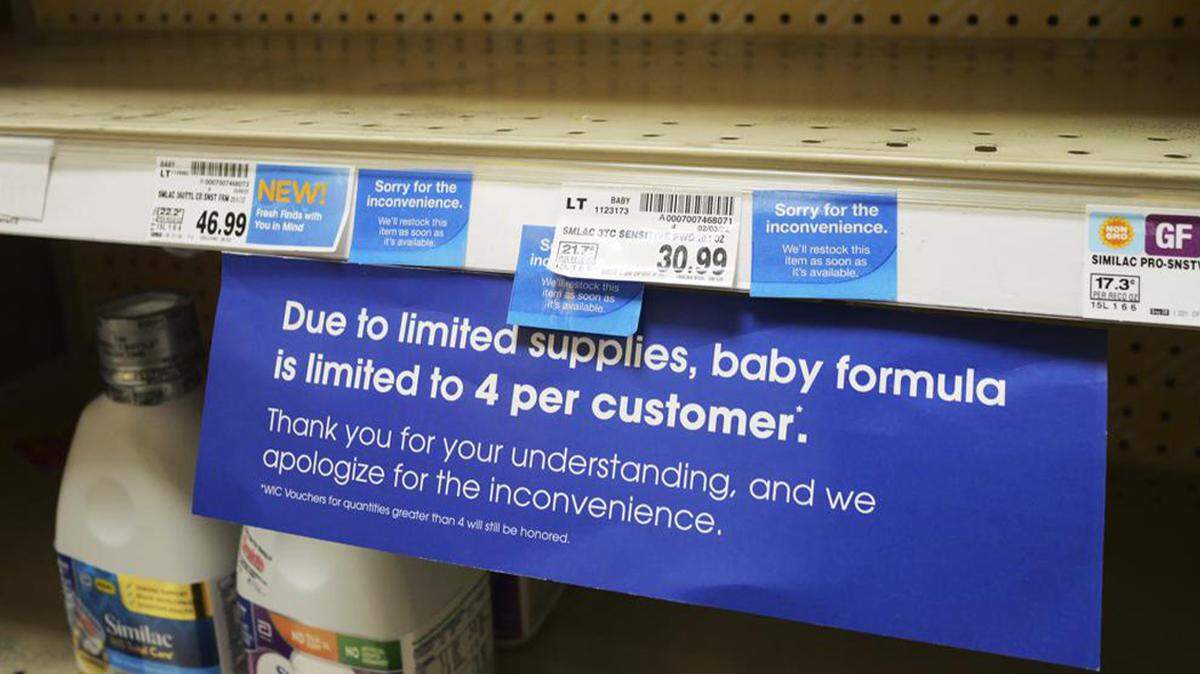
When Kayla Zurenko tried to buy infant formula for her 10-month-old twins this winter, she encountered empty shelves and repeatedly canceled online orders.
“Every time I was looking I was like, ‘Why is everything out of stock?’” she told McClatchy News.
Zurenko, a mother of four from southern Maryland, is one of thousands of parents across the country struggling to find enough infant formula for their babies amid a nationwide shortage.
The shortage is mainly due to the February shutdown of a production facility owned by Abbott Nutrition, one of the country’s largest formula suppliers. The plant was closed and products were recalled when two infants died and two others fell ill after consuming formula produced by Abbott, according to the Food and Drug Administration.
The shortage has worsened ever since, with the out-of-stock percentage for baby formula in the U.S. reaching 43% for the week ending May 8, according to Datasembly, a data collection and analysis company.
The shortage has caused many parents to take drastic measures to secure food for their infants. One Texas mother told NBCDFW that she has to regularly drive two hours round-trip to get formula for her child.
But pediatricians have recommendations for struggling parents. Here’s Akron Children’s Hospital Pediatrics’ Dr. Sarah Adams of Hudson:
Here’s what to do
When looking for formula, here’s what Adams recommends:
- Call your pediatrician’s office and ask if they can provide any from local formula representatives.
- Call local charities or the local WIC office (Special Supplemental Nutrition Program for Women, Infants and Children). Here’s where you can find the WIC office closest to you.
- Check smaller stores like pharmacies or “dollar” stores, rather than big box retailers like Target, which was hit especially hard by the Abbott recall, an Akron Children’s spokesperson said.
- Seek out formula online. But be sure to purchase non-individually packaged goods from “well-recognized distributors and pharmacies,” rather than auction sites or overseas retailers.
- Try switching to other formula brands or types of formula, but talk to your pediatrician first, especially if your baby needs hydrolyzed or amino acid-based formula.
- Check the shelf-life of the formula you still have and whether it’s on the recall list. After the recall, many parents threw out formula that was still good to use, a spokesperson said.
Here’s what NOT to do
- Doctors strongly advise against making your own formula. It most likely will not meet the nutritional needs of your baby, said Celina Cowan, Akron Children’s manager of nutrition services.
- Do not give milk alternatives to a child younger than 1 year.
- Do not use almond or plant-based milks, as they are low in protein and minerals.
- Do not give toddler formula to infants.
- Do not water down the formula — “it is dangerous and can lead to poor nutritional balance and serious complications,” Adams said.
- Do not use formula sold overseas, since it likely hasn’t been approved by the FDA.
- Try not to hoard formula. The American Academy of Pediatrics advises buying only enough formula for 10 days to two weeks.
- Don’t panic, Adams said. “Always talk with your pediatrician if you have concerns about your baby’s nutrition and feeding your baby,” she said.
Changing your baby’s formula
Those having difficulty finding the formula brand they’re used to shouldn’t be afraid to try a new one since all infant formulas sold in the U.S. must be approved by the Food and Drug Administration, said Dr. Mark Corkins, chair of the American Academy of Pediatrics Committee on Nutrition.
“The most highly regulated food in our whole lifespan is infant formula,” he told McClatchy News. “Nutritionally they’re all complete because that’s regulated by law.”
It can be scary to try a new formula after using the same one for so long, said Zurenko, who started her babies on formula after a bout with COVID-19 caused her to stop producing enough breast milk.
“When you’re a mom, especially a mom of twins, if you find something that works you stick with it,” she said. “My concern then becomes, ‘What if they have a reaction to that formula? Then what do I do?’”
Different formulas do contain different ingredients, Corkins said. For example, some have additives like probiotics and oligosaccharides — a type of carbohydrate chain — but all are safe and contain the nutrients an infant needs for development.
The main difference between brands has to do with their marketing, advertising and packaging, Dr. Aunchalee Palmquist, an assistant professor in the Department of Maternal and Child Health at the University of North Carolina Chapel Hill, wrote in an email.
“Healthy, formula-dependent infants can be fed with any brand of commercially available formula,” she wrote. “Formula should always be prepared according to the instructions and using appropriate sanitation and hygiene.”
A baby may have a mild reaction to a new formula or reject it because of a change in flavor, but most will adjust to it over time, Corkins said.
“Usually (the reaction) is going to be something mild,” he said. “It shouldn’t be something severe. If they’re having issues or having problems, (parents) may want to check with their pediatrician.”
Infants’ nutritional needs
Parents with infants 9 months old or older may be able to supplement their child’s nutrition with a toddler next-step formula if infant formula isn’t available, he said. Babies over the age of 1 year can start to drink cow’s milk.
What parents should not do, he said, is water down their infant’s formula or try to make it themselves at home.
For babies that aren’t breastfed, when formula is scarce there aren’t many options for alternatives, especially when infants have health conditions that require them to be on specialty formulas, Corkins said.
“All of us specialty nutrition docs are scrambling, doing all sorts of manipulations of similar formulas to make them work,” he said. “It’s been a crisis.”
Some infants with metabolic disorders or special dietary needs have ended up in the hospital with dehydration because their specialty formulas weren’t available and they couldn’t tolerate the generic kinds, he said.
While finding enough formula for her twins has been stressful enough, Zurenko said she’s especially worried about her 7-month-old nephew who needs a certain hypoallergenic formula.
Corkins said parents can reach out to their local Special Supplemental Nutrition Program for Women, Infants, and Children or pediatrician’s office to ask where formulas might be available in their area. Parents can also try to order online from reputable distributors like Perrigo, Mead Johnson and Nestle.
Watch out for counterfeit formula and scams
Counterfeit formulas sold online and in informal marketplaces should be avoided, Palmquist wrote.
“Formula should only be purchased from a reliable source,” she wrote. “The packaging should not be damaged. It should not be expired.”
Zurenko has been using her Facebook page to try to coordinate with other mothers and help share resources about where to find supplies. ‘Formula Finder’ Facebook groups have also popped up around the country.
On Wednesday, May 11, Abbott released a statement saying that it could restart production at its shuttered facility within two weeks, but it would be six to eight weeks before product would reach the shelves.
Corkins said pediatricians are worried that this shortage will lead to a nutrition deficiency in infants during their critical period of development.
“It’s very scary,” he said. “We hope this isn’t going to last too long. We do worry that there are going to be infants that are going to be affected by this.”
___
Mahoning Matters staff contributed to this report.