
Canfield native Rosie Jo Neddy returning to New York City stage
As legendary Steelers broadcaster Myron Cope might say: “Yoi and double yoi.”
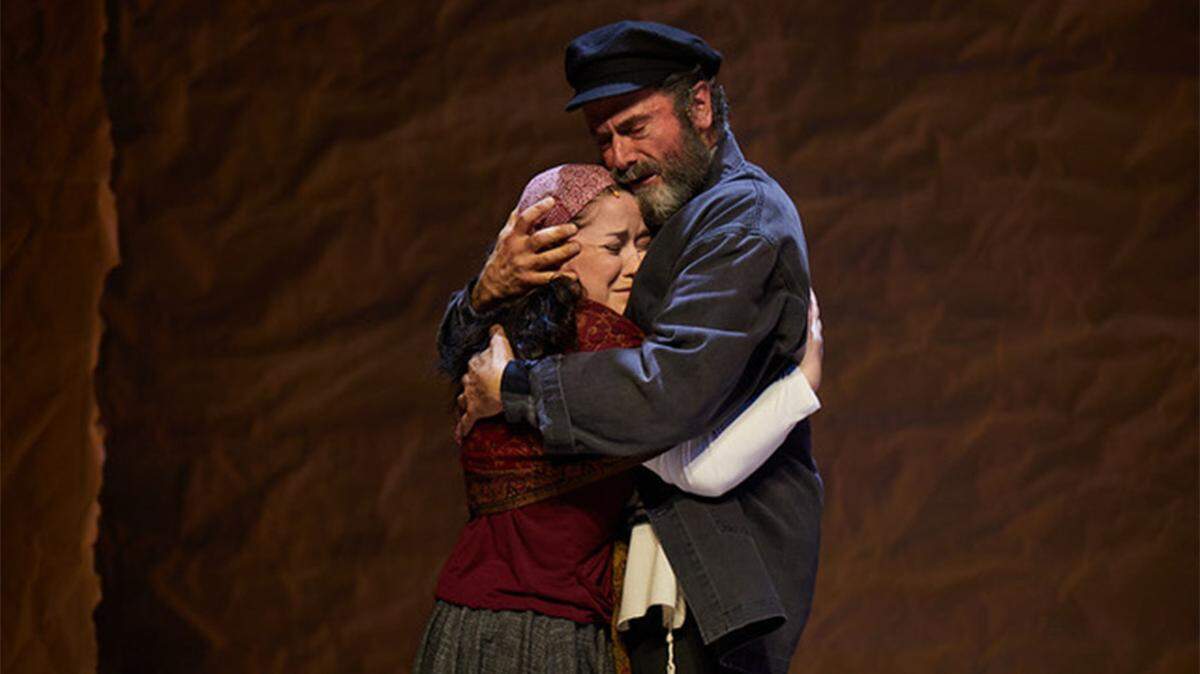
When “Fiddler on the Roof in Yiddish” is revived for a seven-week off-Broadway engagement this fall, Canfield native Rosie Jo Neddy will return to a New York City stage.
Asked if she felt relief or excitement that the producers wanted her to return, Neddy laughed and said, “A little bit of both. When you care so much about a project, you want to be a part of it.”
Neddy grew up performing with Easy Street Productions and Ballet Western Reserve, as well as in musicals at the Youngstown Playhouse, New Castle Playhouse and the Carousel Dinner Theater in Akron.
She graduated from Canfield High School in 2013. Shortly after graduating from Northwestern University in 2017, she moved to New York City.
“Fiddler on the Roof in Yiddish” was her big break. Neddy will reprise her role as Khave, one of the three daughters of the musical’s protagonist, when “Fiddler” opens in November.
A cast member when the show was staged in a Battery Park museum in Manhattan in 2018 and off-Broadway in 2019, her participation in the revival was announced Monday.
“We were always hoping that something else might happen,” Neddy said of a revival. “I’m really excited to do it again.
“I feel that so much has changed since the last time, both in the world and for me personally.”
Tony winner Joel Grey, who 50 years ago won an Oscar for Best Supporting Actor for Bob Fosse’s “Cabaret,” is the director.
“Fiddler” will be staged from Nov. 13 through Jan. 1 at New World Stages, 340 W. 50th St.
Don’t know Yiddish? No problem. The New York Theatre Folkbiene production has English and Russian supertitles displayed on each side of the stage.
Tickets are on sale at nytf.org/fiddler or at Telecharge.com (212-239-6200).
“Fiddler on the Roof in Yiddish” opened in 2018 at the Museum of Jewish Heritage.
In 2019, the production moved to Manhattan to Stage 42 where it ran for most of the year.
When coronavirus pandemic restrictions eased so children could return to school, Neddy resumed working with two nonprofits “that bring theater and dance into public schools throughout the city.
“I’ve been going to different types of school — elementary to high school teaching in-school and after-school programs,” she said. “It’s crazy to me that kids in New York don’t have access to the arts, so it’s important to me that I spend my time doing something that I feel is bringing some type of good to someone.
“But I’m excited to go back into rehearsals.”
They will begin in mid-October.
“It’s a story that I’ve known for so long,” she said of “Fiddler.” “I’m really excited to find out what the story feels like to me now.”
She’s not alone. Like Neddy, many of the cast members from the previous production are returning, including Steven Skybell as Teyve.
According to a news release from Broadwayworld.com, Skybell portrays the milkman navigating family, faith and changing traditions in the little Russian shtetl of Anatevka, which is located outside of Kyiv.
Zalmen Mlotek, the Folksbiene artistic director, told the website Forward that the musical has a renewed relevance owing to the war in Ukraine against Russia.
“Fiddler” ends (spoiler alert) with the Jews becoming displaced refugees after an edict from the czar forces them from their homes.
The Forward article said the 2018 production had a similar relevance because of the Tree of Life shootings in Pittsburgh’s Squirrel Hill neighborhood that October.
Neddy was a featured performer for years with Easy Street Productions’ annual Christmas show “Miracle on Easy Street” at Powers Auditorium in Youngstown.
While in elementary middle school, she twice played one of the orphans in Easy Street’s production of “Annie” featuring Todd Hancock and Maureen Collins.
Neddy described the “Fiddler” family as “very close. We’re very good friends as a company, and it’s really exciting to work with friends, especially when the project is something that means so much to all involved.
“I am really thrilled,” she said.
She feels artists, performers and athletes had to adjust when something so important to them was taken away.
“Anyone who did anything that they had to stop when the pandemic hit and anyone who for that thing for them was in some way tied to their identity probably had to take some time and discover who you are without that thing,” she said.
For Neddy, the challenge was “feeling like myself without performing.
“That has been really valuable work for me — I feel like I’ve grown a lot,” she said. “At the same time, I’m really excited to feel like myself again on stage.”
The lyrics and dialogue in this “Fiddler” are in Yiddish, not exactly a language you hear spoken every day on the streets of the Mahoning Valley.
Neddy says she was one of the few in the original cast with plenty of lines who had never worked at the National Yiddish Theatre Folkbiene. So how did she conquer that obstacle?
A month before rehearsals began, she took private one-on-one lessons a couple of times a week with coaches fluent in Yiddish.
“It was kind of like taking a language course backwards, from advanced level to beginner level,” she said. “We would start with my lines, with full sentences, and dissect them.
“I was taught what each word I was saying meant” as well as whether the words were nouns or verbs and what tense to emphasize.”
While grammar was important, she said a lot of the teaching was on the “actual sounds.
“A lot of sounds in Yiddish just don’t exist in English,” she said.
This story was originally published September 14, 2022 at 5:00 AM.