In Ohio, abortion rights fuel fight over ballot measures
By Belle Taylor-McGheeOhio Capital Journal
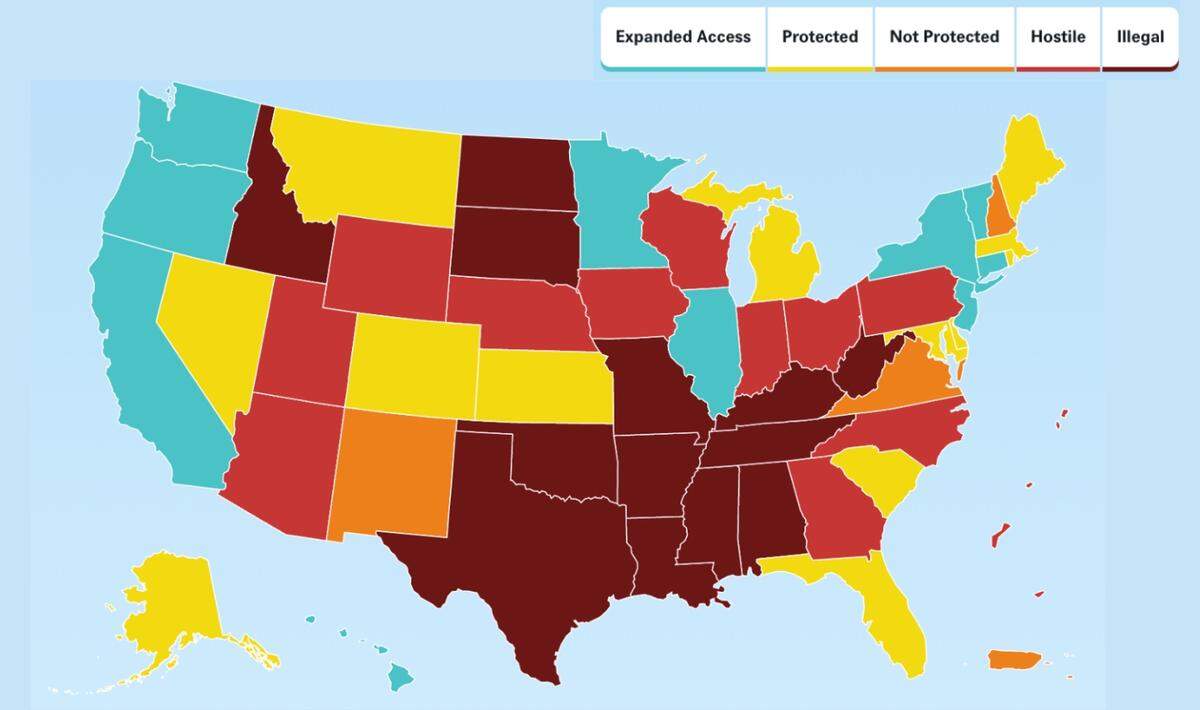
Nineteen states have passed laws banning or restricting abortion since the overturning of Roe versus Wade in 2022
Adobe Stock
When Kansas forcibly rejected an amendment this past August that would have removed the right to abortion from the state’s constitution, the country was stunned—and abortion-rights advocates were ecstatic, seeing in this victory a way forward to secure new and greater protections for abortion access and bodily autonomy by enshrining the right to abortion into state constitutions.
In the November midterm elections three months later, voters again sent a strong signal, not only that they disapprove of the Supreme Court ruling to overturn Roe v. Wade, but also that they are willing to cast their ballots to protect the right to abortion and reject attempts to take it away.
It was the collective moment post-Roe that gave abortion-rights advocates a real pathway to success, and it changed the trajectory, some would argue, of the reproductive health and lives of millions of women across the country.
J.J. Straight, deputy director of the LibertyDivision at the American Civil Liberties Union, said voters sent a clear message that abortion is a personal, not a partisan, issue.
“The common thread is that folks expect there to be legal access in their state to abortion, and we have seen that they are willing to show up and vote … to protect that right. And they also expect government not to be involved in that decision,” said Straight.
Analyzing votes state-by-state
Reproduction rights map, Ms. Magazine, Spring 2023 “After Roe Fell” / Center for Reproductive Rights
More than three-quarters (76.7 percent) of Vermont voters approved the Reproductive Liberty Amendment to the state constitution, which guarantees “personal reproductive autonomy unless justified by a compelling State interest.”
A decisive 66.9 percent of California voters amended the state constitution to protect the right to abortion and contraception.
A solid majority (56.7 percent) of Michigan voters approved a state constitutional right to reproductive freedom, including all matters relating to pregnancy, such as abortion and contraception.
Some 52.6 percent of Montana voters rejected a referendum that would have made an infant “born alive” at any gestational age a legal person, thereby criminalizing healthcare providers who do not make every attempt to save a fetus “born during an attempted abortion” (an unlikely occurrence).
A 52.3 percent majority of Kentucky voters rejected an amendment declaring that there is no right to abortion in the state constitution or any requirement for government funding of abortion.
Ballot measure battleground in Ohio’s upcoming election
“Kansas and Michigan were the biggest influencers, especially because Kansas is such a red state,” said Dr. Lauren Beene, executive director of Ohio Physicians for Reproductive Rights (OPRR), a nonpartisan coalition formed after Roe was overturned, representing more than a thousand doctors across the state. “If it can happen in Kansas, then it can happen in Ohio too.”
An onslaught of restrictive and punitive policies have threatened to ban abortion in Ohio, including the so-called heartbeat bill.
Now a law, but under a temporary court injunction, it requires the determination of whether there is a “detectable fetal heartbeat” before an abortion can be performed and criminalizes anyone performing or inducing an abortion after this point. (Note: Although what’s known as “cardiac activity” can be detected in a 6-week-old embryo, the term “heartbeat” at this stage is misleading. According to the American College of Obstetricians and Gynecologists, it’s not until around 17 to 20 weeks, when the four chambers of the heart have developed and can be detected on an ultrasound, that the term “heartbeat” is accurate.)
In response, OPRR and its coalition partners, under the umbrella of Protect Choice Ohio, are pursuing a citizen-initiated ballot amendment to the state constitution to protect the right to abortion.
But getting there will not be easy. Republican state lawmakers are already working to push through what appears to be an attempt to thwart the coalition’s efforts by passing a bill (HJR 6) to modify the requirements for the referendum and initiative process by raising the threshold to pass from a simple majority vote of more than 50 percent to a 60 percent supermajority.
The measure—which, in theory, could be the last ballot measure to require support from only 50 percent of voters to pass—would go before voters in a special election this August, and Republicans in Ohio have openly admitted that efforts to make ballot measures harder to pass are explicitly aimed at restricting abortion access.
Meanwhile, abortion opponent Dave Yost, the Ohio state attorney general, is fighting the legal challenges to the heartbeat law, arguing that the lower court erred when it issued a preliminary injunction.
“If our reproductive freedom amendment is on the ballot in 2023, we will need to meet the existing standard for passage: 50 percent plus 1,” Beene said. “If the amendment is not on in ’23 and the 60 percent [requirement passes], the repro-rights issue is dead because few ballot measures garner 60 percent of the vote. Ensuring that we are working under the current rules is just one of the many reasons we believe the amendment must be on in ’23. We just want our patients to be able to access necessary medical care.”
State constitutions help advance reproductive rights
According to Amy Myrick, senior staff attorney for judicial strategy with the Center for Reproductive Rights, a global human rights organization of lawyers and advocates that seeks to advance reproductive rights as fundamental human rights, all state constitutions provide extremely strong protections for the right to abortion—if the courts interpret them correctly.
“State constitutions broadly protect crucial rights, including liberty, equality and privacy, which we know encompass reproductive autonomy and our freedom to make deeply personal decisions about our own bodies, lives and futures,” Myrick said. “They will continue to be an important tool to restore or establish people’s fundamental rights.”
Upcoming court decisions will determine the fate of abortion rights in Kentucky; in Indiana and Utah, where near-total bans have been blocked from enforcement while legal challenges are pending (though Utah still has an 18-week ban in place); and in Georgia, where the state Supreme Court has reinstated an abortion ban despite a pending legal challenge.
While abortion advocates pursue legal, political and policy strategies to protect and secure the right to abortion, opponents persist in their efforts to make abortion illegal on all fronts, including ramping up attacks on medication abortions, which account for 54 percent of all abortions.
What is mifepristone?
Abortion opponents recently sued the Food and Drug Administration to take mifepristone, one of the drugs used in medication abortion, off the market.
If the Fifth Circuit ruling had gone into effect, access to mifepristone would have decreased significantly across the country. Such a ruling would end telemedicine abortion, which has expanded significantly since the FDA approved it in 2021. If anti-abortion advocates eventually succeed, abortion pills will no longer be available in anystate in the U.S., including where abortion is legal. According to Myrick, it would effectively be a nationwide ban.
“Eliminating access to mifepristone endangers people’s health and lives, but we will surely continue to see efforts to target medication abortion across the country,” Myrick said.

.jpg "Nineteen states have passed laws banning or restricting abortion since the overturning of Roe versus Wade in 2022")