
How Canadian wildfires impact air quality in Mahoning Valley
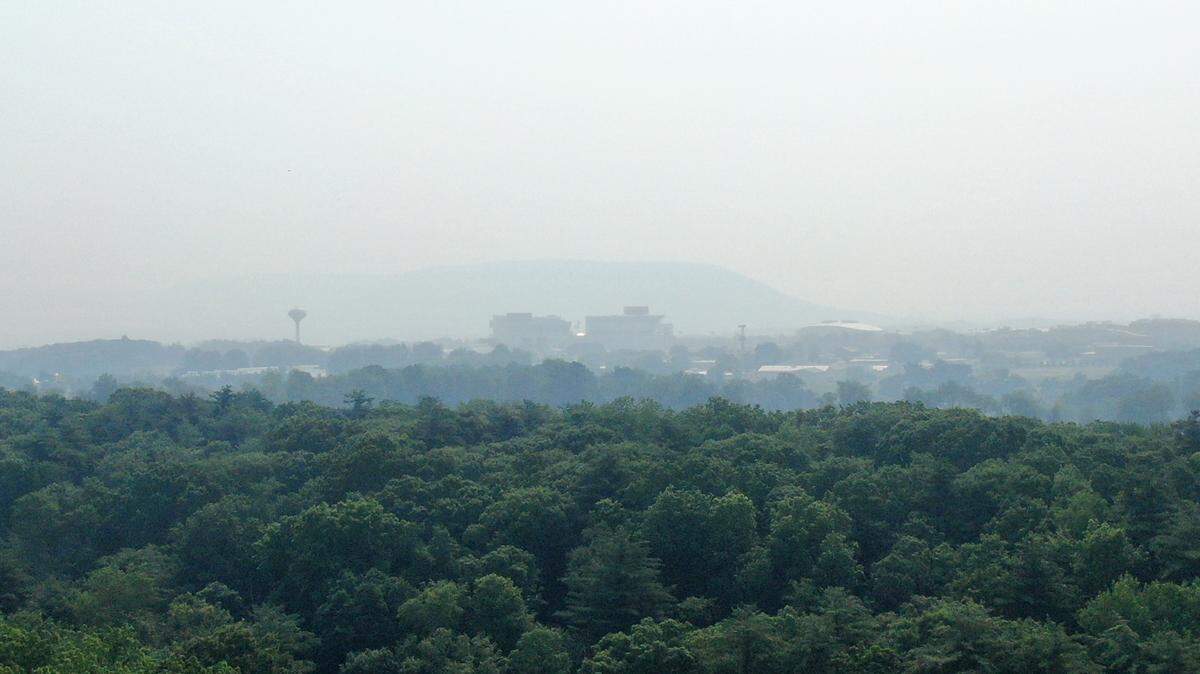
While hundreds of fires burn in forests near Quebec, Canada, smoke from the fires has been traveling into the United States for the past month.
According to Mahoning Valley Air, today’s air quality is unhealthy, and an advisory has been issued for the Youngstown-Warren area.
The “air quality index (AQI) levels are forecast to be 151 on Wednesday,” which is unhealthy for the general public.
Who is most affected by unhealthy air quality?
Tomorrow, the air quality is forecast to be better, around 119, but still unsafe for sensitive groups, which includes children, older adults, and people with lung diseases, such as asthma and chronic obstructive pulmonary disease.
Kids, who often are encouraged to go out and play, “are more susceptible to smoke for a number of reasons,” said Laura Kate Bender, the lung association’s national assistant vice president. “Their lungs are still developing; they breathe in more air per unit of body weight.”
What are Mahoning Valley residents seeing?
Kirk Lombardy from the National Weather Service in Cleveland explained how Ohio sees smoke from Canadian wildfires.
“This smoke is moving south out of eastern Canada from all the forest fires,” Lombardy said. “As the smoke is thickening, the sunlight in the morning in the evening passes through that layer of smoke. What it does is it filters out all the different colors in the spectrum as they’re coming through but only allows the red and oranges to pass through, and that’s what we’re seeing. During the mornings and evenings, the light rays are passing through a much longer distance of the smoke rather than if it was overhead.”
The smoky conditions are combined with pollutant carryover daily, resulting in unhealthy AQI levels on Wednesday and harmful AQI levels for most sensitive groups on Thursday.
How long will it last?
“There’s this low-pressure system around the area now, but we’re expecting the system to kind of settle in over the area over the weekend. So I think as that gets in here, it’ll cut off some of the flow and hopefully clear things up a little bit,” said Lombardy. “What we need is a big area of high pressure, say, like off the Atlantic Coast work and push the air back north. Keep it out of the out of the area.”
According to climatologists, the atmospheric conditions in the upper Midwest create dry, warm weather. The warm weather made it possible for small particulates to travel hundreds of miles from the Canada fires.
“It’s a good example of how complex the climate system is but also how connected it is,” said Trent Ford, the state climatologist in Illinois.
“It’s a good time to put off that yard work and outdoor exercise. If you go out, consider wearing an N95 mask to reduce your pollution exposure.
Today, it’s recommended to stay inside, keeping your doors, windows and fireplaces shut.
“If you have filters on your home HVAC system, you should make sure they’re up to date and high quality,” Dr. David Hill, a pulmonologist in Waterbury, Connecticut, and a member of the American Lung Association’s National Board of Directors said. “Some people, particularly those with underlying lung disease or heart disease, should consider investing in air purifiers for their homes.”
AP contributed to this story.
----------------------------------------------------------------------------------------
(EDITOR’S NOTE: Get the latest Mahoning Valley news in your email inbox weekday mornings. Sign up here for our free daily newsletter.)
-----------------------------------------------------------------------------------------
Here’s how you can support Mahoning Matters.
-----------------------------------------------------------------------------------------
Follow Mahoning Matters on Facebook, Twitter and LinkedIn.
This story was originally published June 7, 2023 at 11:56 AM.