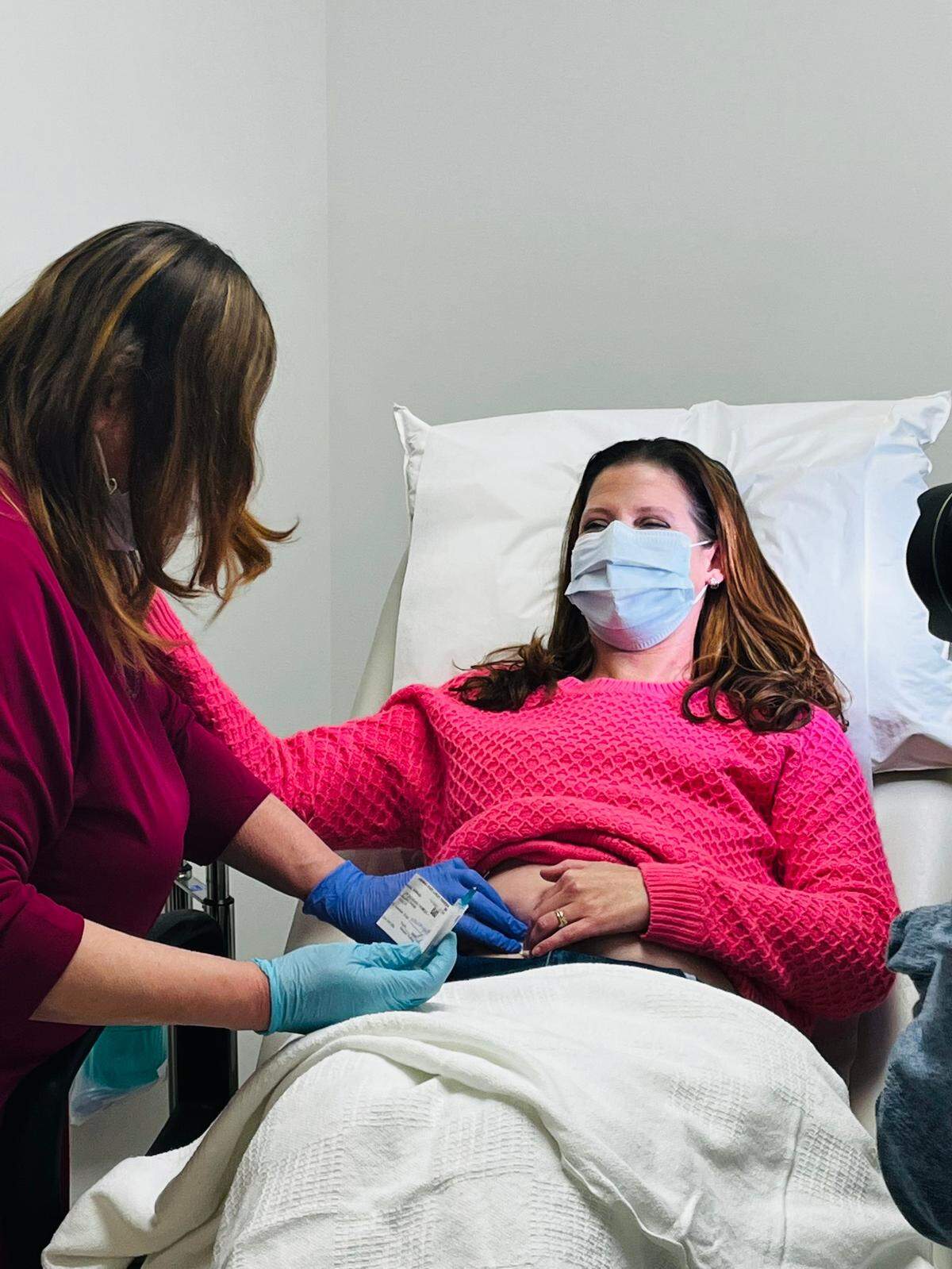
Meet Jennifer Davis from Lisbon: She’s the first in the world to receive breast cancer vaccine
By Kelcey NorrisMahoning Matters
Meet Jennifer Davis from Lisbon, first in the world to receive breast cancer vaccine
Jennifer Davis
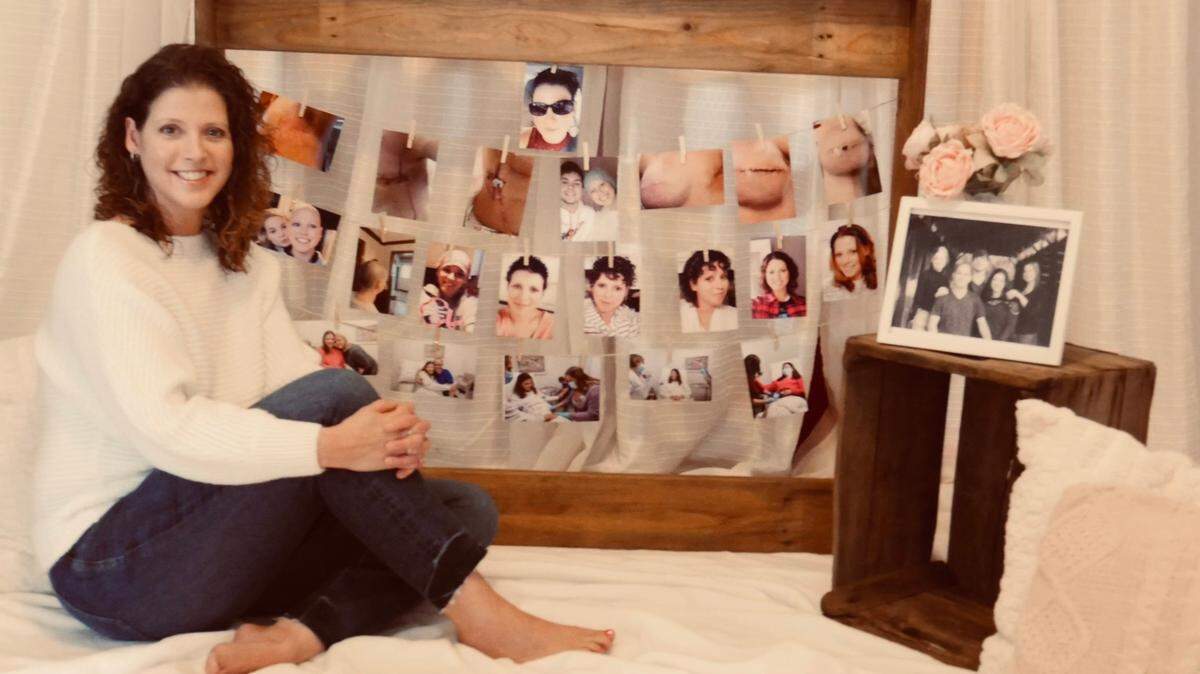
Jennifer Davis is a mother of three kids and a nurse in Lisbon who survived triple-negative breast cancer almost five years ago.
She’s also making history as the first person in the world to receive a vaccine for breast cancer.
We had the opportunity to meet Davis and ask about being the first to participate in the clinical vaccine trial and one of the Cleveland Clinic physicians treating her, Dr. Amit Kumar.
Diagnosis and treatment
Meet Jennifer Davis from Lisbon, first in the world to receive breast cancer vaccine Jennifer Davis
Davis was diagnosed with triple-negative breast cancer in 2018 at 41 after finding a lump.
She began treatment at Cleveland Clinic, a facility she trusted. He was a two-hour drive from her residence in Lisbon. Davis went to multiple physicians for treatment and help with her diagnosis.
“As women, we know our bodies the best,” she said. So, there’s nothing wrong with getting a second opinion, there’s nothing wrong with advocating for yourself that if you feel something isn’t right, ask those questions, and I think it’s important to ask about trials,” Davis said.
Dr. Kumar explained what triple-negative breast cancer means.
“We classify breast cancers specifically based on the certain proteins that exist on the cancer cells, and those proteins include receptors for estrogen and progesterone, which are hormones,” said Dr. Kumar. “And typically, most breast cancers have one or more of those proteins on the surface of their cells, and based on what they have on the surface, they classify the cancer that way. However, about 15 percent of breast cancers have none of those proteins, so they’re negative for the hormone receptors. So we call that type of cancer triple negative breast cancer.”
Research shows triple negative is the most aggressive, with the fewest treatment options and the highest recurrence rate.
At Cleveland Clinic, Davis underwent a rigorous treatment plan, including chemotherapy, a double mastectomy and 26 rounds of radiation.
She was cancer free after the treatment but spent every morning worrying about cancer returning, which Dr. Kumar explained is a common anxiety.
“Then post treatment, even if a woman is cancer free, every day she wakes up thinking, ‘Is my cancer going to come back?’” said Dr. Kumar. “You wake up and you have a pain somewhere in your body, you think ‘What if the cancer has come back? Or is it because I pulled a muscle or something?’ There’s a tremendous amount of anxiety related to that, so if we can show this vaccine in the larger, larger patient studies that we’re planning works, then we would just like to be able to give women a couple of shots, and that’s it. You don’t have to worry about it. That would be pretty amazing.”
Learning about the breast cancer vaccine study
Meet Jennifer Davis from Lisbon, first in the world to receive breast cancer vaccine Jennifer Davis
Davis went into the doctor’s office for follow-up treatment after radiation. He asked about clinical trials for breast cancer vaccines.
“I had heard about the vaccine, and had asked about it, and heard it just wasn’t quite ready for the human phase yet. But it fell into place perfectly. I went in for an appointment, and my nurse practitioner said that it was ready,” said Davis.
“I had to at that time be cancer free, so we did a lot of testing and that all came back great,” she continued. “I was able to apply and be accepted into the trial, and then found out that I was going to be the first person to receive it. So it was it was something that I really didn’t twice about. A lot of people ask me, you know, ‘Were you scared? Were you nervous?’ And for me, thinking about my cancer coming back, every single day, it was something that I just wanted so badly something to kind of put my mind at ease. Then on a grander scale, you know, if this worked, what it would do for the world. 15 percent of breast cancer is a lot of women, I was excited to take it.”d. 15 percent of breast cancer is a lot of women, I was excited to take it.”
How does a vaccine for breast cancer work?
The vaccine was conceived 20 years ago through pre-clinical research led by the late Vincent Tuohy, Ph.D., the Mort and Iris November Distinguished Chair in Innovative Breast Cancer Research at Cleveland Clinic’s Lerner Research Institute.
“Our clinical trial was focused on triple negative because it is the most lethal form,” he said. “We will [still] have to prove this through additional clinical trials, we believe that this vaccine is going to prevent other types of cancer, breast cancer as well.”
“It’s a ubiquitous protein that’s produced at high levels when a woman is lactating, it’s only produced in the breast, and only when a woman is lactating,” Dr. Kumar said. “However, it was discovered that when cancer cells arise, specifically triple negative breast cancer cells, but also other breast cancer cells, those cells are also producing this protein, even though the woman is not lactating.”
Dr. Kumar explained the hypothesis from Dr. Tuohy: “If we could teach the immune system to destroy cells making this protein after a woman has decided she’s no longer going to have children, or at an age when she no longer is able to have children, then when cancer cells arrive, the immune system, which has been properly vaccinated, will destroy those cells....What we want to do is train the immune system. So when those cells arise, the immune system will destroy those cells so they never have a chance to become a tumor.”
If breast cancer develops, the vaccine is designed to prompt the immune system to attack the tumor and keep it from growing.
“The doctors have been studying this for 20 years, and they hadn’t seen any significant side effects or anything upon administration of the vaccine. And then they also they saw no recurrence. In this data released in April, it’s had a 100% success rate. I’m feeling positive about this,” Davis said.
The study is still in the first phase of testing.
“Now at this point, we’ve only vaccinated 15,” said Dr. Kumar. “When we go into phase two, we’ll do a few 100 women, again to verify safety and evaluate some levels of efficacy. And then ultimately, there’ll be a phase three study, which will involve 1000s of women, so stay tuned.”
What is the future of the breast cancer vaccine?
Researchers hope the vaccine will one day be available to not only survivors of triple negative breast cancer, but all women.
“Eventually, the vaccine, we feel, will be useful for women like Jenni, who are worried about recurrence,” said Dr. Kumar. “In the United States, there are 3.8 million women who are breast cancer survivors. Then eventually, we want to be able to offer it to women who are not cancer survivors, who’ve never had cancer, but are concerned about breast cancer in the future. So that opens up the opportunity for pretty much every woman in the world.”
Davis said she’s felt no long term side effects from participating in the study and is hopeful that her experience will help others.
“The vaccine has really put all of that in the back of my mind; it’s not the forefront like every morning when I wake up. That’s not what I’m thinking about,” she said. “I’m back to work and I go on a lot of trips with my family and get together with my friends and my mindset shifts on what’s important.”
Davis provided some advice for other people battling cancer.
“Be an advocate for yourself; you know your body the best,” she said. “Look into trials and things that are on the horizon that you might be able to get into, not only to help yourself, but to help others. Have hope: I’m a big believer, and I think that it got me through a lot. Cancer is not easy, it’s terrible, and you’re allowed to go to those places in your mind that are not the greatest and that are scary and fearful. But I always just tried to myself, like to tell myself, you can go to those places, but just make sure you don’t stay there. But just don’t allow yourself to stay in that place. Find yourself a support system. Find a team of doctors that you can trust and just put it in their hands.
“Another thing is the internet. [Sometimes] it’s wonderful, it’s what we all do, we all look up everything. But really, it can really put you in a terrible place, especially with anything life-threatening like cancer, because the first thing that pops up are all the statistics. And a lot of this is just statistics are not correct. But even the ones that are correct, even just reading that one time, that’s gonna stick in your mind. So find a team that you can trust and just put it in their hands. And I was lucky enough to have all of that.”

.jpg "FullSizeRender[5][1][2][2][1] (1).jpg")