
Zoom Town Boom Town: How to rebuild America’s heartland via the Remote Revolution
.jpeg "1978 Wakefield Avenue in Youngstown’s Brownlee Woods Neighborhood")
Be inspired! Life is full of challenges, but that makes it worth living.
I am here as a builder of houses and a rebuilder of dreams. A former Navy Seal and Yale University graduate who served in the Navy’s Construction Engineering Battalions as a “Seabee.”
Before all that, I was just an average “Joe” from Youngstown, Ohio. A skinny kid with a higher purpose who wouldn’t give up. And like Youngstown and many other American communities, I had an undying desire to rise above any obstacle and be all I could be.
So let me start with a story
It was a cold Sunday morning during the early days of the Covid-19 lockdown. I was driving on Wick Avenue in Youngstown, Ohio – a former steel manufacturing mecca that had been left to die since World War II – when I saw something I would never forget.
Standing in the rain outside a half-renovated building was a nicely dressed man holding a set of blueprints. He was pointing and discussing what appeared to be a rebuilding project. At that time, the powers that be had deemed the construction industry essential to our national economy, and as he kept working, I realized I was witnessing a glimpse of Youngstown on its way to newfound glory.
My hometown and, many of America’s heartland cities that once lost their “best and brightest” to greener pastures now have a chance to reclaim lost prosperity. Suppose we combine the unique upshot of the Covid lockdown with courageous vision and positive thinking. In that case, our economic renaissance can and will become a reality. It is time to imagine Youngstown as a Zoom Town Boom Town.
Remote working is here to stay. According to projections, 25% of all professional jobs in North America will be remote by the end of 2022, and remote opportunities will continue to increase through 2023. Remote options leaped from under 4% of all high-paying jobs before the pandemic to about 9% at the end of 2020 and more than 15% today.
“This change in working arrangements is impossible to overhype. As big as it is, it’s even bigger than people think,” said Ladders CEO Marc Cenedella, who says it’s the most significant societal change in America since the end of World War II.
“Hiring practices typically move at a glacial pace, but the pandemic turned up the heat so we’re seeing a rapid flood of change in this space. It’s really rather amazing,” said Bryan Robinson, Ph.D., in a recent Forbes.com article.
Yes, doing business during the Covid lockdown fundamentally transformed the modern workplace. Communities that have experienced decades of the proverbial “brain drain” need to take note. Zoom calls and home companions barking at a FedEx delivery are worthy tradeoffs for unreasonably high rent and big-city dehumanization.
The table is set for a Middle America comeback
Let’s not forget, from the promise of Plymouth Rock to the Great Migration of the early 20th century, Americans have always sought a better life for themselves and their families—it’s in our Pilgrim DNA. Undoubtedly, the transient tendencies of our upwardly mobile population are as American as coming home for the holidays.
And people always want a better deal.
Here are the facts.
Most large cities are experiencing unprecedentedly high housing costs, unmanageable property taxes, terrible traffic, and horrific crime rates pushing people to recalculate where to live.
According to a recent article at SBSun.com, Kenneth P. Miller asserts that in addition to median home value, other factors increase the desire to leave one place for another:
A glance at the price of a gallon of gas, a utility bill, or a tax bill in California compared to Texas or other states makes one wonder if the premium is worth paying.
Although California is a natural paradise, it also is plagued by three various forms of social disorder, including, in many places, crime, drug paraphernalia, vandalism, and scandalous levels of homelessness.
Fundamental change often starts with pain in the pocketbook. The global pandemic exposed just how fragile the world’s supply chains are. Look to the local grocery store or car dealer and see the uncomfortable results. The “push” to find a better deal is honest and relentless. Fortunately, with every push comes a pull.
By dramatic contrast, smaller, often forgotten cities like Youngstown provide an affordable alternative to those feeling the squeeze of big-city insanity.
Certainly, the most attractive “pull” factor of Middle America is the low cost of living. So let’s crunch some numbers. A $300,000 home in Northeast Ohio can be valued at well over $1 million with identical specs elsewhere. Taxes, utility bills, gasoline, parking, and everyday amenities are much cheaper in the Midwest. According to
Bestplaces.net, the calculated difference in the overall cost of living between Los Angeles, California, and Youngstown, Ohio, is approximately 65%. In Youngstown, housing costs are nearly 80% less, and property taxes are nearly 75% less. These numbers reflect the answer - pay less, get more.
In short, our country is poised for a significant reset. As a result, many less densely populated regions of America have a golden opportunity to experience an economic equalization of epic proportions.
My old hometown is suddenly in the sweet spot
But the allure of a better life is about more than bank statements and recovering from the Covid lockdown. Many intangible factors are playing into the places to which we are drawn. Let’s dive deeper. The aging baby-boomer population and the projected shortage of healthcare professionals will also cause the younger generation to rethink where to call home.
“The number of health care workers needs to increase dramatically to meet the demands in coming years. .. by 2025, projections indicate a shortage of more than 400,000 home health aides and 29,400 nurse practitioners.” Furthermore, the over-65 demographic will increase by 48% by 2032,” said a Duquesne University study, 2022
Being connected to something more significant than ourselves is vital to our overall emotional and mental well-being. Communities like Youngstown embody a noteworthy depth of family relationships and collective relevance. It is about more than caring for your aging loved ones.
These are the “Legacy Cities” that formed the foundation that America was built upon. Their contributions have been enormous, and it is time to give back.
The history, cultures, traditions, and natural beauty are just a few factors that draw people together in a smaller town. In The Celebration Chronicles, sociologist Andrew Moss tells the story of a fantasy town the Disney corporation built near Orlando, Florida.
It was intended to reflect the characteristics of a tight-knit community, with all the charm and convenience of a smaller town—like a reincarnated Mayberry. Builders even erected a statue of a fake founder in the town center.
Oddly enough, the shoddy construction caused by unrealistic deadlines brought the town’s residents together.
The collective discomfort from leaky roofs and broken air conditioners created an esprit de corps—a call to arms.
Selfless and meaningful bonds developed in a similar fashion to the strong connections and mutual respect forged between military veterans when fighting a common enemy as one cohesive unit.
But we don’t need corporate America to create fake Mayberry. Mid-sized cities all across America already embody the perfect imperfection we desire— the battlefields are plentiful, and the call for troops is already real.
Youngstown does not need a fake statue in Town Square or newly minted antique homes to create a sense of community. We already have it. We need to recognize the good bones of the spaces surrounding us, shake off the rust, and reveal the shiny steel beneath the surface.
“If you build it, he will come”—famous words spoken by that mystical voice to Kevin Costner in the movie Field of Dreams as he walked through that idyllic Iowa cornfield. Much to the dismay of family and friends, Costner’s character listens to the unseen voice to plow under his corn crop to construct a baseball field and create a place where past failures can be made right.
For him, it provides a way to reconcile with his late father. His father’s spirit comes back in physical form within the confines of this faith-filled space to play catch with his son again. It allows forgiveness and closure to their regrets—and we all can relate.
Field of Dreams amends generational gaps and unresolved tensions so that life can progress while still having respect for the past. - Jordan Williams, ScreenRant.com
This invaluable notion that sacred ground provides a place to reconcile the work of previous generations with the work yet to be done not only prevents small-town living from becoming a relic of the past -- it also provides an opportunity to become our future’s shining city on the hill. And we do not have to rely on blind faith to walk the path to prosperity because the new workplace environment has already shown us the way. Remote work for companies that improve their bottom line by allowing us to live in places where we will be happier - this is a win-win.
This is the essence of the Zoom Town Boom Town. We are creating a space for generational reconciliation, a deeper connection to what matters, a higher standard of living, and a new reality for communities like Youngstown and others across America.
This time, we will rebuild it, and they will come back.
But what does all this have to do with me? I am here as an agent of optimism and action. The resilient, industrious nature of the average Midwesterner is anything but average. Suppose we can hear and heed the pull of the opportunity provided, listen to the voices speaking to us now, trust in the future, and summon the strength to lead the way. In that case, we can be part of the change we wish to see.
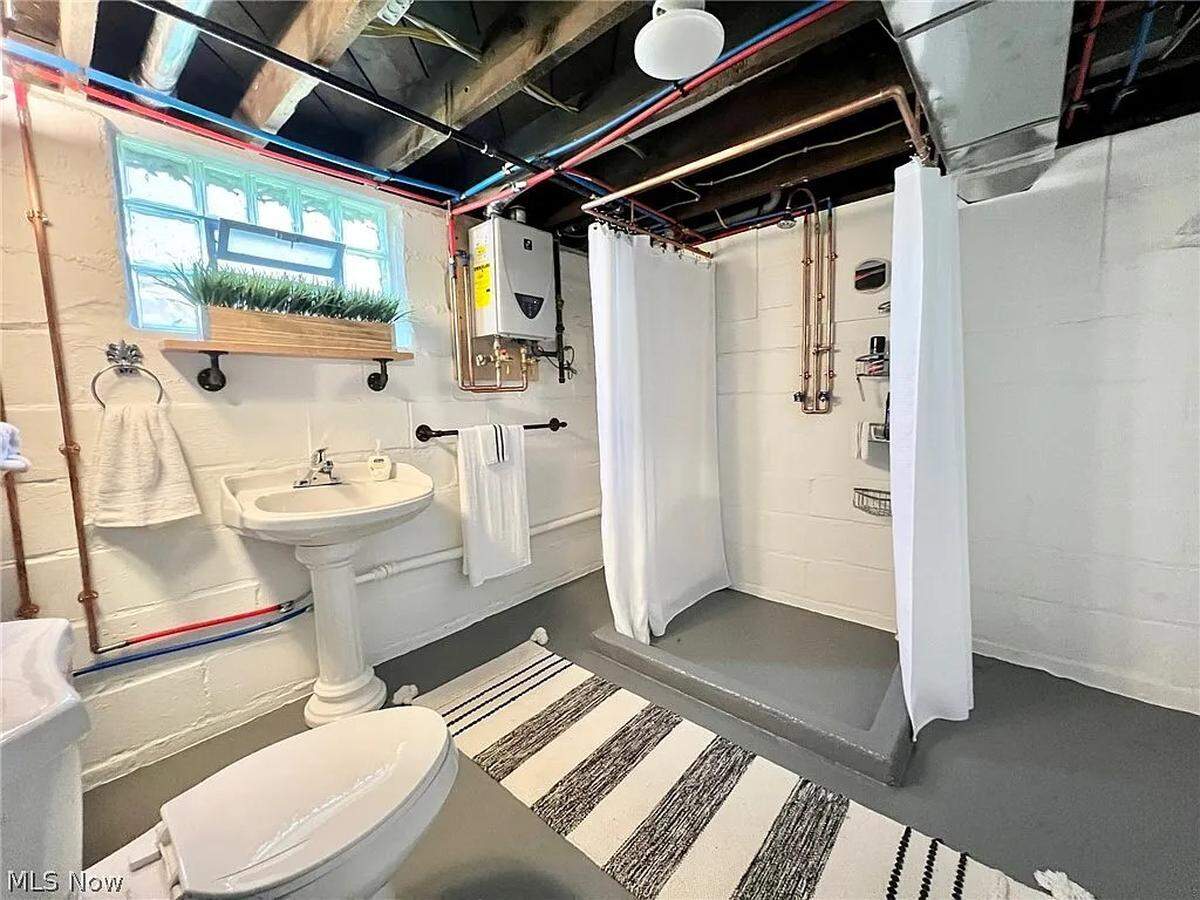
Enter 1978 Wakefield Avenue in Youngstown’s Brownlee Woods Neighborhood. This is the field I have been charged to plow. When you look at the big picture, property values in cities like Youngstown have been undervalued for far too long. My cold Sunday-morning moment inspired me to resurrect a historic home nearby. Here is an excerpt from its recent listing:
Pretty Much Perfection
Come home to Brownlee Woods and be part of something special! Nestled away in one of Northeast Ohio’s most charming neighborhoods lies the million-dollar home you’ve always dreamed of, but for a fraction of the cost! Take advantage of America’s beauty and ditch the traffic with a short country drive to numerous farm-fresh markets, world-class healthcare, major universities, and cheap golf with some of the best courses in the country. Chestnut trees line the boulevard as numerous amenities are a short walk away. Get plugged into the acting studio, Neighborhood Association, Fall Festivals, Christmas Dinners, and 4th of July Parades. Feel safe with a nearby fire station and dedicated community police officer. Your new home is in America’s heartland, where the birds sing proudly, people safely walk their dogs, and baby strollers rule the sidewalks. Welcome home!
1978 Wakefield is a microcosm of America’s heartland. Its description comprises more than impersonal facts and statistics—more than square footage, number of rooms, roof age, and the laundry room on the first floor. The intangible characteristics are what give the space its powerful impact.
The home’s relationship with the natural environment sets it apart from others.
Because of its southern orientation with thirty-five oversized windows, each sun-drenched room creates a warm emotional reaction you immediately feel. From sunrise to sunset, as the sunbeams slowly wrap around the home’s exterior and highlight every interior space uniquely, a curious sense of tranquility envelopes you and creates a sense of sanctuary, you will treasure.
The promise of the care we put into this home - along with our desire to rebuild this hidden gem of Youngstown - is echoed in the poetry of Louis Zlotkin:
I Still Believe in Youngstown
And all the good folks there.
Though mills are gone
The show goes on
Because of those who care.
I Still Believe in Youngstown
They’re shopping everywhere.
Some stores are out
But there’s no doubt
Most stores still get their share.
They’re Giving It A Face Lift
With hopes and dreams anew,
Cause all around
They’re breaking ground
For other buildings too.
I Still Believe in Youngstown
With all its faults, I swear.
There’s much to do
But we’ll pull through
Because of those who care.
- Louis Zlotkin, 1985
I am not the only one who still believes in Youngstown
I am not the only one who still believes in Youngstown.
Courage and vision are what I saw on that cold, wet Sunday morning as it dawned on me the individual holding the blueprints was local builder Dominic Marchionda.
What makes his standing more noteworthy is his belief in Youngstown before the opportunities provided by the freedom to work remotely.
Marchionda believed in Youngstown before it was cool to believe in Youngstown. And despite risking life and limb navigating through political tripwires and minefields, he has become the most influential property developer Youngstown has experienced in a generation.
Others possess that same warrior spirit.
Julius Oliver recently built a 4,000-square-foot home on the lower end of Youngstown’s First Ward near the Mahoning River to motivate others to invest in at-risk neighborhoods.
Jim Tressel helped transform Youngstown State University (YSU) into a place to live and not just learn.
Others include Ian Beniston and his merry band of neighborhood crusaders, who have raised more boats with their tidal-wave intensity than any other.
Meshel, McNally, McCarty, Mcarthy, Swierz, Smith, Carter, Raymond, Brown, Palumbo, Danyi, the Stone Fruit Coffee Company, Wendy P. and her team of Aces, Voltage Valley champs like Rivers and Verb.
Barack Obama helped facilitate a federally-funded additive manufacturing lab promising to transform Youngstown from a steel town to a twenty-first-century tech hub.
The list of action-oriented believers includes everyday people who, despite facing daunting odds and the onslaught of constant negativity, often possess the power to affect change on the grandest scales. They are the unlikely heroes who seek neither glory nor gold.
As a SEAL, I had the rare privilege to work alongside some of the best warriors. Yet a ten-year-old Iraqi boy gave me the most significant inspiration during my darkest time. I watched him run through machine gun fire numerous times to help protect his family and support our coalition forces while carrying the soccer ball he wanted to protect. In addition to being a sweet young boy, he was one of the most courageous individuals I ever met.
The basic difference between an ordinary man and a warrior is that a warrior takes everything as a challenge, while an ordinary man takes everything either as a blessing or a curse. - Don Juan, “Tales of Power “
The lifeblood of America flows through the heartland, and thanks to the not-so-average Midwesterner and the freedom to work remotely, cities like Youngstown, Ohio, are now poised for a new economic reality. Like the ingredients for making steel, our new normal is a confluence of three core components. Our essential ingredient — the iron ore — is the new freedom to work from where we choose. Our catalyst — the coal that fuels change — is the conviction that drives us to further economic growth. Our purifying agent — the limestone flux - like our shared goal of a better life for us and our children — is the inspiration that is passed to others who will continue rebuilding for generations to come.
This once-in-a-lifetime opportunity for meaningful economic and cultural progress is knocking on our front door as we can now attract nicely paid professionals to a new and better existence. Let the steel shine brightly and build on, for our work here is not done.
We shall not cease from exploration
And the end of all our exploring
Will be to arrive where we started
And know the place for the first time.
–T.S. Eliot, “Little Gidding”
---
Joe Metzger grew up in Youngstown, Ohio and graduated from Boardman High School. He earned a Bachelor of Arts degree in American Studies at Yale University with an emphasis in politics and American communities. Metzger joined the U.S. Navy as a construction engineer (Seabee) and became a SEAL and Army Ranger qualified. He has extensive experience in contracting and construction management. Metzger has served as the President and Vice President of the Brownlee Woods Neighborhood Association. He is a current member of Youngstown’s 7th Ward Citizen Coalition. He can be reached at joseph.metzger@gmail.com.
This story was originally published August 14, 2023 at 4:00 AM.