
Study seeks participants to examine health impact of East Palestine disaster
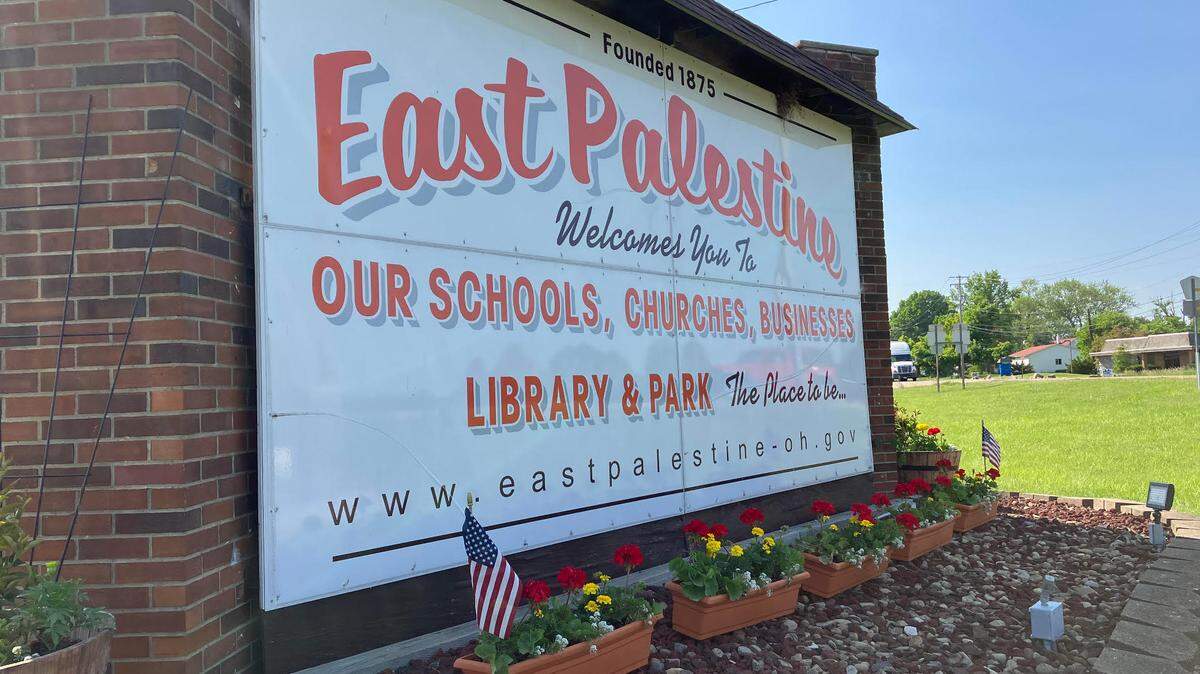
Researchers in Ohio are working on a new project looking at the health impacts of the February East Palestine train derailment.
The Healthy Futures Research Project is seeking participants from the area who were subjected to chemical exposure in the aftermath of the train accident.
What will the East Palestine study include?
The team from Case Western Reserve University will look at short and long term health issues, including screening for cancer, as well as metabolic and autoimmune diseases.
Dr. Fredrick Schumacher, associate professor at Case Western Reserve University and lead researcher, said the team will measure DNA damage to examine health impacts over the longer term.
“We’ve got a lot of personal stories, things that affected them directly at the moment of either the burn or the initial exposure, you know, skin irritants, and difficulty breathing, and others,” he said. “And now, we just want to kind of get an objective biomarker, such as the DNA to look at that long term risk.”
The study is still enrolling. To learn more, visit healthyfuturesresearch.org.
The Feb. 3 accident and subsequent burn-off released multiple hazardous chemicals into the air. Schumacher added conducting health impact studies on chemical exposure is complicated in this instance by the number of chemicals involved.
“The problem that we saw with measuring one chemical is you have to kind of then know which chemical to test for,” he explained. “And then you don’t understand necessarily the effects if they’re put into a mixture. And then you may not even understand the effects when they’re put into a mixture and only partially combusted versus fully combusted.”
What part does cancer play in the study?
Schumacher added often times people see cancer as an endpoint, when a person either develops a tumor or they do not. But he said researchers are now looking at disease risk as a spectrum where risk profiles change with the level or frequency of exposure.
“So if you kind of think about every time you do something from smoking, to not exercising, to eating poorly, you’re kind of raising that risk for disease. So we’re trying to understand if we can begin to measure that spectrum so that we then can maybe develop interventions that would allow people to go back the other way, “ he continued.
Researchers are also assembling a Community Advisory Board to help with participant recruitment and advocacy efforts.