
Gov. Mike DeWine announces new technology to warn drivers about dangerous traffic jams
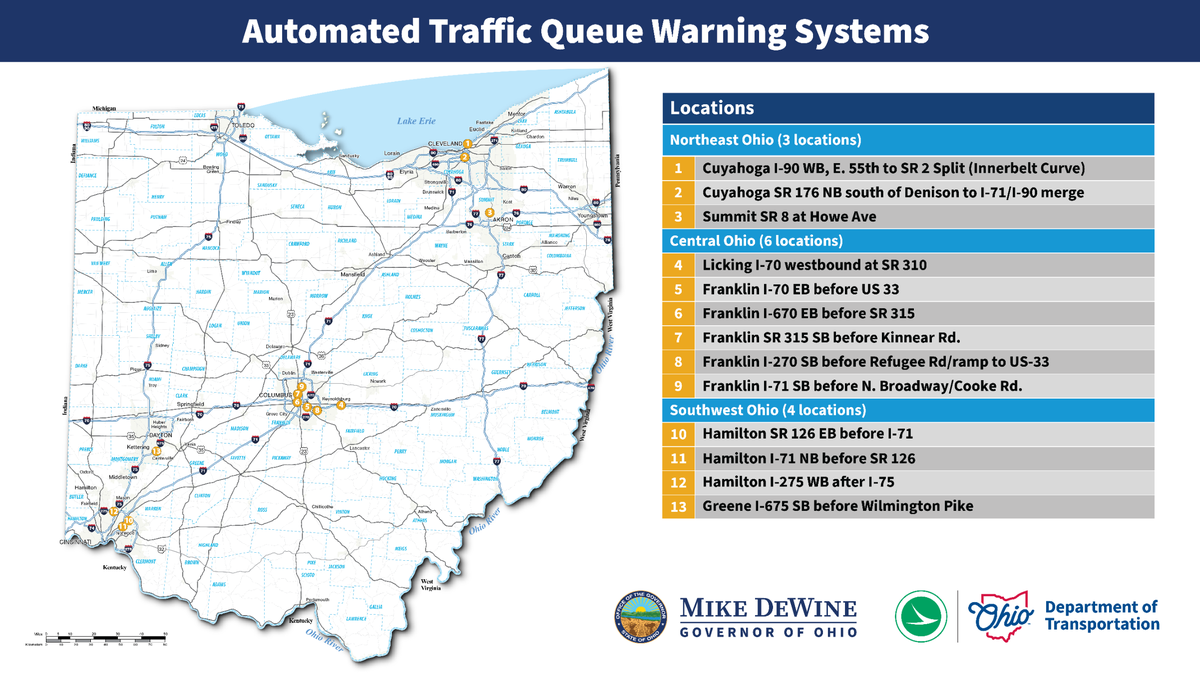
Ohio Gov. Mike DeWine and the Ohio Department of Transportation announced a new addition of 13 updated warning systems being installed at congested highways across Ohio.
It’s an initiative to prevent dangerous highway accidents like the fatal chain-reaction crash last year in Licking County involving a charter bus carrying students from Tuscarawas Valley Middle-High School.
The crash killed six people, including three students: John W. Mosely, 18, Mineral City; Jeffery D. Worrell, 18, Bolivar; Katelyn N. Owens, 15, Mineral City; Dave Kennat, 56, Navarre; Kristy Gaynor, 39, Zoar; and Shannon Wigfield, 45, Bolivar.
The first new warning system was installed this week on I-70 westbound at State Route 310 in Licking County near the site of the crash.
“I’m incredibly proud of the efforts our team has made to ensure Ohio is leading the way when it comes to deploying these new resources,” said ODOT director Jack Marchbanks. “These new warning systems, combined with Ohio’s toughened distracted driving laws, will surely save lives.”
How does the new warning system work?
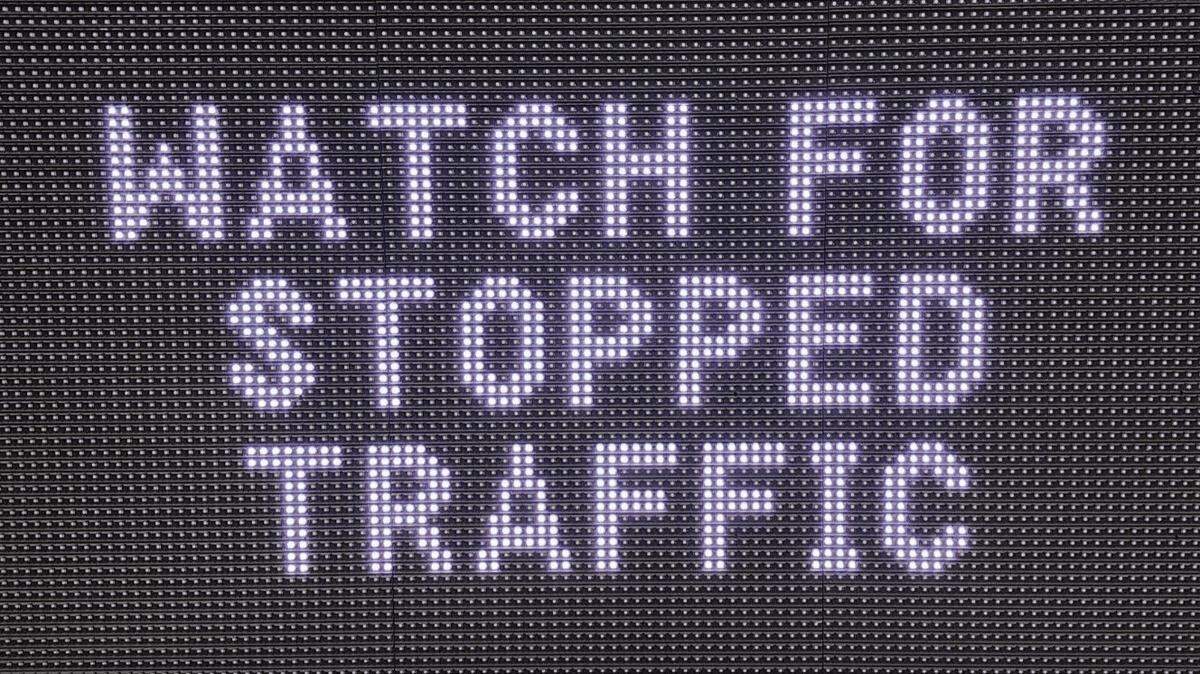
According to Gov. DeWine’s office, when the new cameras at these sites detect slow or stopped traffic, they will automatically trigger a message board a few miles away to turn on.
It’ll have a message ready to go to alert drivers of the upcoming traffic hazard coming up ahead.
Alerts will also be pushed to OHGO and other traffic apps.
“As technology continues to evolve, we’re always looking for new ways to help prevent serious and fatal crashes on our highways,” said DeWine. “Although we’re confident that these warning systems will help prevent crashes, there is still no substitute for safe driving. For these signs to be effective, drivers must be paying attention.”
Goal: Reduce number of end-of-queue highway crashes
According to ODOT, the new warning system is designed to reduce the number of crashes caused by slowing or stopped traffic, which is called end-of-queue.
End-of-queue crashes start when drivers fail to recognize slowing or stopped traffic on the highway, resulting in high-speed collisions with vehicles at the end of the slow-down.
Once the technology is installed at all 13 sites, ODOT anticipates it will help reduce these rear-end crashes by at least 16%, which equates to a reduction of around 1,400 crashes.
ODOT said the system will be fully up to date and operational in two years.
CONNECT WITH US
DAILY NEWS EMAIL ► https://www.mahoningmatters.com/customer-service/newsletter-signup/
FACEBOOK ► https://www.facebook.com/mahoningmatters
TWITTER ► https://twitter.com/mahoningmatters
YOUTUBE ► https://www.youtube.com/@mahoningmatters2814
INSTAGRAM ► https://www.instagram.com/mahoningmatters
SUPPORT US ► https://givebutter.com/vNfzEW