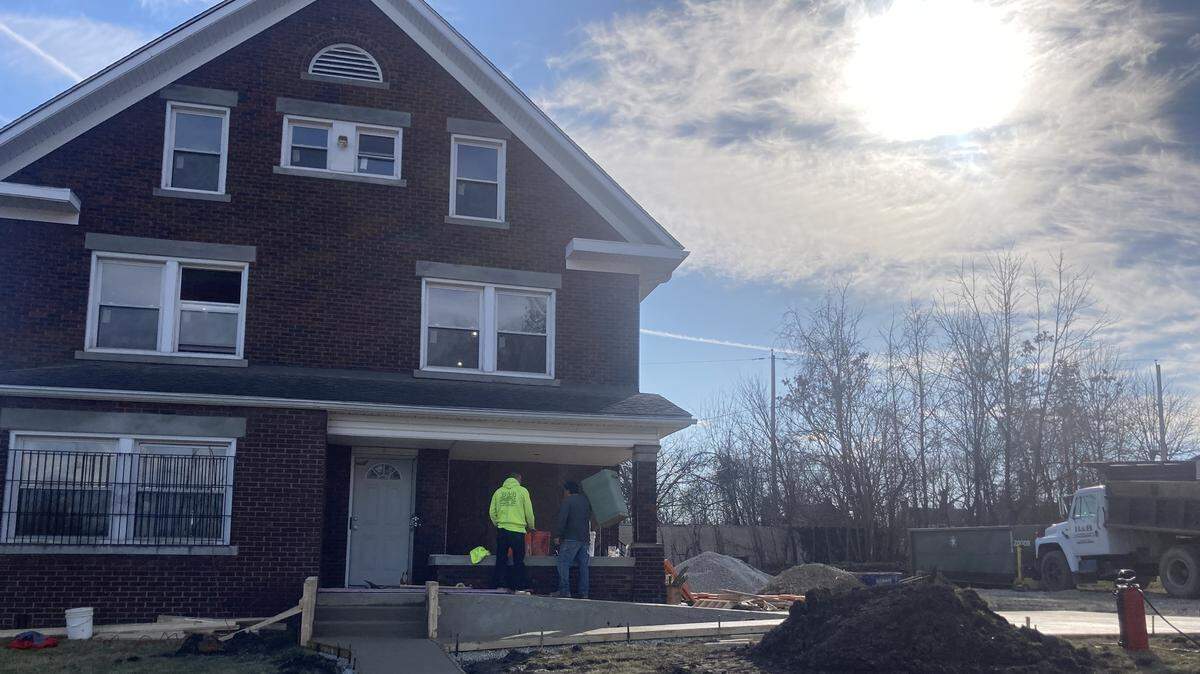
The YWCA Mahoning Valley is rebuilding its newest housing property on the north side of Youngstown on Illinois Avenue. It’ll be transformed into six apartment units to provide affordable housing in the area.
YWCA Mahoning Valley
As the prices for almost everything go up, the average American’s confidence in successfully owning a home one day is decreasing.
“If anyone is in the market for buying a house, you’ll realize how difficult it is and how expensive it is. Home prices and mortgage rates have both gone up. For anyone to be able to afford a house in Ohio, it’s really difficult,” said Ohio Treasurer of State Robert Sprague.
Finding affordable housing
Access to affordable housing means the price of renting your space takes up around 30% of your income each year.
That means not all of your paycheck goes to housing; there’s 70% left over for utilities, health bills, food, gas, leisure, savings, and everything in between.
In one-on-one sessions, Viglio goes through this explanation of expenses with residents seeking affordable housing.
“Through the free HUD-approved housing counseling program at YNDC, I work with my clients on their individualized budgets to help them better understand their expenses when compared to their incomes. With this information, a work plan is built to tackle these issues over time,” he said.
After meeting with Youngstown residents seeking homes in the area, Viglio said he feels the consensus is people do want to own their own homes.
According to the World Populations Review, Youngstown resident’s average yearly income is $46,244 for 2024.
According to Zillow, the average rent price for Youngstown each month in 2024 was $850, which is lower than the state’s average of $1,250.
In 2024, Youngstown will be the number one metropolitan area in Ohio for fastest-growing home sales prices, according to Redfin.
Youngstown home prices increased 67.4% compared to 2023, selling for an average of $130,000.
Twenty percent more homes are being sold in Youngstown this year than in the competitive market last year.
Ohio Homebuyer Plus Savings
Ohio has made new efforts to make future home ownership more affordable and realistic.
According to the treasurer’s office, an Ohio buyer today would have to have almost 50% more income to buy the same house as they would have been able to buy before COVID-19.
“That’s how much the home prices have increased,” Ohio Treasurer Sprague said. “What’s the state doing? We’re helping people start saving and realize their dream of home ownership. When people buy a home in Ohio, they’re investing in the state of Ohio. When people buy a house in the Mahoning Valley, they are investing in the Mahoning Valley.”
Sign up for Mahoning Matters newsletters
Keep up with our daily Mahoning Matters news coverage of the Mahoning Valley, Ohio, Pennsylvania, the U.S. and world. Sign up here for our newsletters.
“You can find the list of participating financial institutions online. Find one of the credit unions, local banks…All you have to do is walk in and open an account to start saving for your down payment, closing costs on your home in Ohio,” he said. “When you put money in these accounts, you get interest and an additional interest of 2.5%, more return to grow your savings faster.”
According to the Ohio Homebuyer Plus Savings program, users must spend money on housing or construction within five years of opening the account.
“There’s no risk to you. It’s the best investment you can make in Ohio for you and your family and your future. We know it’s going to make a difference in our local communities,” said Sprague.
(left) Ohio Treasurer of State Robert Sprague; Youngstown Neighborhood Development Corporation housing counselor Alex Viglio; Youngstown Mayor Jamael Tito Brown
Guy Coviello, president and CEO of the Youngstown/Warren Regional Chamber, shared some of the top priorities for housing in 2024.
The Youngstown/Warren Regional Chamber prioritized economic development work over the years but realized they created more jobs than the community could fill.
Donate to our Journalism Impact Fund
In collaboration with the Community Foundation of the Mahoning Valley, we've created the Mahoning Matters Journalism Impact Fund – an innovative and community-centered approach to funding local journalism. To make a one-time or monthly tax-deductible donation to the Mahoning Matters Journalism Impact Fund visit CFMV’s donation page.
“Growing the housing stock is right behind growing the population in terms of priorities for this community,” Coviello said.
According to World Populations Review, the city’s overall population has been declining at a rate of -0.05% annually.
Youngstown Mayor Jamael Tito Brown said the city’s Office of Economic Development is working to improve residents’ homeownership access.
“We are at a point right now, not just in Mahoning Valley, but in the city of Youngstown, where we’re moving in the right direction. In all aspects,” he said. “The problem we often find is individuals tell me, ‘Mayor, I love the neighborhood. I love where I live, but the housing stock’s not there, or I need to improve the property where I’m at right now, but my value is not there.’”
The Mayor said they’ve implemented down payment assistance programs and sought ways to reinvest in current housing.
“There’s also individuals who are already living in their communities,” he said. “We want to do more investments. If you don’t have a home, let’s get you in a home. If you’re in the home already, let’s figure out what can we do to help you improve upon the property you live in.”
He said they’re working to improve the city’s quality and quantity of homes.
“We want to make sure that no matter what, if you were a buyer or renter, that you would have a great home, good quality home,” he said. “We put an incentive in for landlords to help locally and they’re investing in our community and putting in these quality homes.”
Millennial homeowners are climbing to the top, making their dreams come true in the country, particularly in Youngstown.
In 2022, according to USA Today, Youngstown was listed as one of the top ten cities in the country for millennial homeowners.
“It’s very important for us because millennials are the core of our current and future workforce. That demographic is making decisions of permanence to live in this community,” said Coviello.
The average millennial transitioned from renter to owner at 34 years old, later than their parents and grandparents.
It’s a sign that trends are shifting. While achieving the dream of home ownership is still possible, it might take longer than generations before.
‘Moving in the right direction’
The YWCA Mahoning Valley’ unveiled its newest housing property last month. It’s a historic property being rebuilt to become six new apartment units on the north side of Youngstown on Illinois Avenue.
Once construction is complete, it’ll be able to house between 12 and 24 residents or students, according to Leah Merritt, who is the president and CEO of the YWCA Mahoning Valley.
“Housing is one of our major program areas at YWCA,” Merritt said. “Attaining this property was an opportunity for growth in this area as there are many people seeking stable and affordable housing.”
The Mahoning County Commissioners funded the project.