
Butler Institute of American Art offers a unique collection — and it’s free to check out
The Butler Institute of American Art has been a center dedicated to displaying exclusively American art to the Mahoning community since 1919. The institution retains the mission to continue to learn about, appreciate, and preserve art at all chances while giving the community free exposure to all of it.
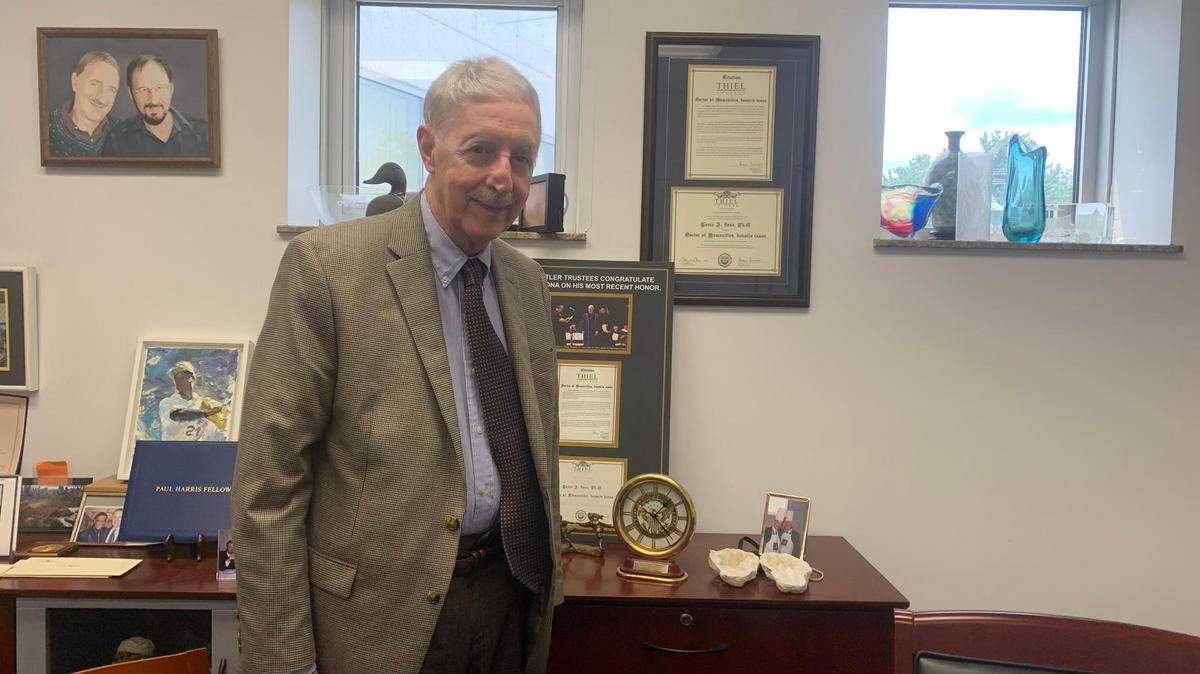
With such a mission it’s only right that Butler Institute would be led by longstanding Youngstown State University professor Dr. Louis Zona, who took on the role of executive director in 1981.
History and culture of Butler
When asked about how the museum compares to the other major ones in the more populated northeastern cities like New York and Boston, Zona emphasized how Butler specializes in the collection of American art and uses it as a timeline for our history.
“Well in terms of our collection, we stand out. I always tell people that walking through Butler’s gallery is like walking through America’s art history,” Zona said. “Over the years we’ve added dramatically to the collection, particularly with works of the 20th century.”
With over 22,000 relics and artworks that reflect each period of the nation’s extensive history, the museum continues to remain one of the few dedicated exclusively American art collections in the country.
“We are truly blessed in Ohio to house such a significant collection of art,” Zona said. “We’re all proud of our collection. I believe that when people come to see the collections, they come to realize how important it is culturally.”
Background of Dr. Zona
Dr. Louis Zona was born in New Castle, Pennsylvania just before the end of World War II. He recounted that he experienced the post-war evolution of art in an American society that was experiencing both economic and social changes that would last for decades to come.
“What came across to me was the creativity of so many Americans, particularly with abstract expressionism who worked in the 20th century who were all about emotion,” Zona said.
Zona also discussed the various artists of that time such as Barnett Newman and Alfred Leslie, who set the groundwork for this form of art. Zona described it as changing the way people perceived art and that abstract expressionism is the kind of art that is the “heart and soul of America”.
Why free admission and what does the future hold?
“We work real hard to raise funds to keep admission free and it pays most of our bills, but we still need to raise funds every year to keep our doors open,” Zona said. “We take pleasure in raising the money knowing that the community is appreciating it. Many people assume that we are struggling but we aren’t struggling.”
The Butler Institute of American Art takes pride in its efforts to support the community’s access to the museum and continues every year to extend that mission. Zona mentioned that a big part of what they stand for can be found on a sign above Butler’s entrance that reads pro bono publico, a Latin phrase that translates to “for the public good.”
“We want to continue to work hard to keep the doors open for the community,” he said. “We’re also working hard on building our African American collections. We’ve had many great artists of African American art within our collection already, and we’re continuing to build it.”
Butler institute is also looking for those in the community who may be seeking to help contribute to the cause through becoming volunteer tour guides. For details view their official press release and contact the institution.