
What vaccines are recommended for Ohio students? Here’s the list for back-to-school
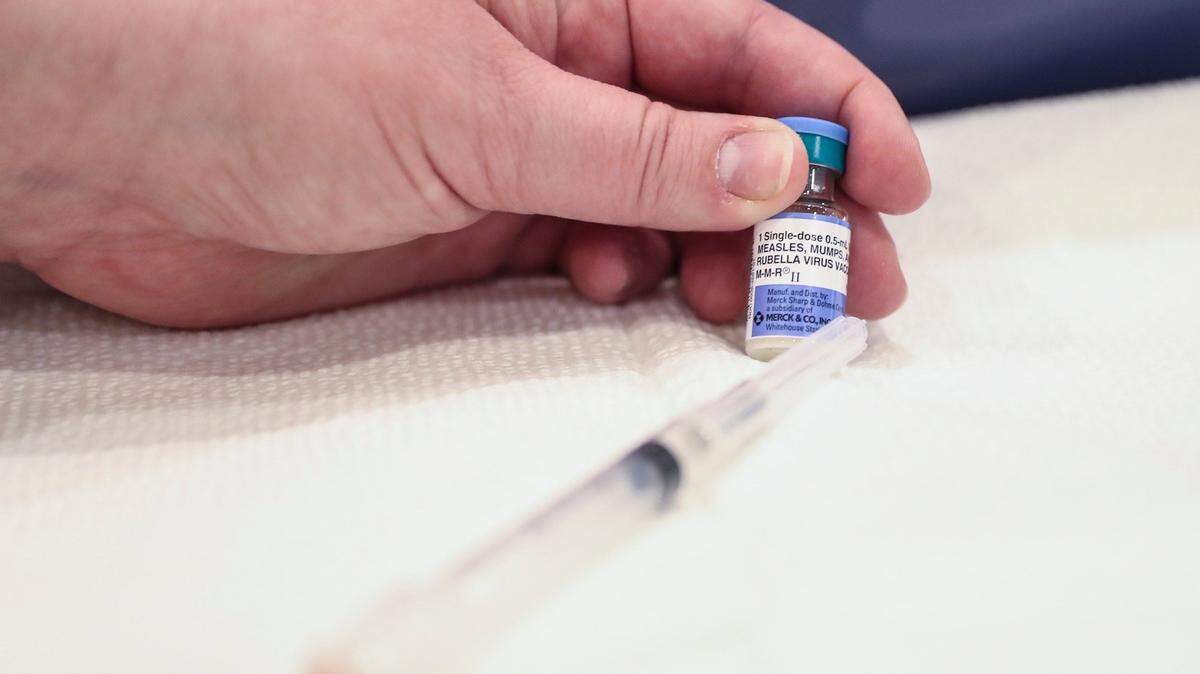
With summer in full swing, the first day of school is approaching sooner than some students may be anticipating.
The Ohio Department of Health wants to keep children safe and parents in the know for the upcoming back-to-school season, like planning a safe route to school and especially doctor’s appointments for updated vaccines.
ODH immunization recommendations for 2024 -2024 school attendance
ODH recommends all kindergartners are vaccinated with:
Two doses of MMR or MMRV to protect against measles, mumps, rubella and varicella (chickenpox)
Three or more doses of IPV vaccine to protect against polio
Three doses of hepatitis B vaccine
Four doses of DTaP or DT (diphtheria,tetanus and pertussis)
Check the specific guidelines for how long doctors recommend waiting in between the doses.
Concerns about Ohio’s rate of childhood vaccinations
Dr. Bruce Vanderhoff, director of ODH, said the percentage of kindergartens who are up to date on all recommended vaccines has slipped from 86.5% in the 2022-2023 school year to 86.2% in the 2023-2024 school year.
Before the pandemic, the number of kindergartners in Ohio fully vaccinated at the beginning of the school years was almost 90%.
There was “a big drop in 2020 to 2021,” according to Dr. Vanderhoff, where 86.5% of kindergartners got all the recommended shots.
From 2021 to 2022, it dropped slightly to 85.6%, before increasing in 2022 to 2023 to 86.5%.
“We were hopeful that rates would continue to rebound and perhaps get back soon to pre-pandemic levels, which were close to 90%, but that just hasn’t happened,” said Dr. Vanderhoff.
This past school year, it went back down to 86.2%.
“Our children, when they are out in the world, are not inside of a environment that is going to be free of these viruses that we know are circulating worldwide, because we live in a worldwide community, and it takes very little in this era of airplane travel for a virus to move from one part of the world to another and expose our children,” said Dr. Vanderhoff.
It’s not just happening in Ohio, but nationwide.
Why should we want those rates to be higher?
Dr. Paul Offit is nationally renowned immunologist and the director of the Vaccine Education Center at Children’s Hospital of Philadelphia.
“You really need immunization rates in the mid 90% range so there’s enough of the population that’s vaccinated so that you really can’t get spread from one to the next.
Dr. Offit said not everyone can be vaccinated.
“There’s millions of people in this country who because they’re immune, suppressed for their cancers or but a lot of diseases can’t be vaccinated. They depend on those around them to be vaccinated,” he said.
Measles is ‘most contagious of the vaccine-preventable diseases’
“People aren’t afraid of these diseases anymore,” Dr. Offit said. “Take measles, which is the perfect example, and one unfortunately, we’ve had to experience in Ohio. People forget measles. It’s the most contagious of the vaccine-preventable diseases, and therefore it is the canary in the coal mine. Whenever you see any sort of erosion vaccine rates, it’s meat measles that you see. And I think people forget measles.
Before 1963 when the vaccine became available, measles put 48,000 children into the hospital every year.
“Measles was a bad disease. People were scared of measles, and I think we’re not as scared now, which is unfortunate,” said Dr. Offit. “I hope we don’t have to remember this disease by seeing it again.”
Vaccine exemption in Ohio is not risk-free option
“But the good news is that these vaccines are highly effective. They are very safe. They’ve been used for a very long time, and the I think the best step that a parent can take is to her child vaccinated with the age appropriate recommended vaccines,” said Dr. Vanderhoff.
Ultimately, it’s up to parents to make individual decisions about whether or not to get vaccinated.
Some parents choose vaccine exemptions for personal, religious or medical reasons.
Dr. Offit said he wants people to understand there are no risk-free choices.
“A choice not to get a vaccine is not a risk-free choice; it’s a choice to take a different risk,” Dr. Offit said. “When parents come into my office and are hesitant, the first thing is trying to figure out what it is that they’re concerned about. Often there’s data to sort of answer that concern.”
According to Dr. Vanderhoff, exemptions among incoming Ohio parents of kindergartens have “increased fairly significantly in recent years.”
“As a state, we set expectations around the vaccines, and we do recommend the national list recommended childhood vaccines, but...what that means is that for our schools, they’re really still completely reliant upon the parental decision regarding these vaccines,” said Dr. Vanderhoff.
Myths about vaccines and autism debunked for years
Dr. Offit emphasized the importance of stopping the spread of misinformation about vaccines like MMR.
“Once you’ve rung the bell, it’s almost impossible to unring it,” he said. “The false ‘MMR, measles, mumps, rubella vaccine is a cause of autism’ story is a perfect example.”
The misinformation started in 1998 in Great Britain when an article was published linking a handful of children who got the MMR vaccine and also developed autism.
“That only proved that MMR vaccine doesn’t prevent autism; it only prevents measles, mumps and rubella infection,” Dr. Offit said. “Not that the vaccine causes autism. Nonetheless, it took off.”
Thousands of parents heard the misleading story and chose not to vaccinate their children.
Hundreds were hospitalized, and about four children died of measles in England unnecessarily because of this sort of false fear,” Dr. Offit said. “Within within weeks, there were studies that started to be done to answer the question, Are you at greater risk of getting autism if you’ve gotten the MMR vaccine or not?’”
Dr. Offit continued by saying that study of the link between vaccines has been done “18 times in seven different countries on three different continents, costing tens of millions of dollars.”
“In every case, there’s no evidence that the MMR vaccine causes autism,” he said. “Most parents of children with autism now understand that, but still, there’s a solid 10 or 15% who thinks that the vaccines may cause it.”