Mercy Health Youngstown celebrates expansion of care in $20 million Neuro ICU
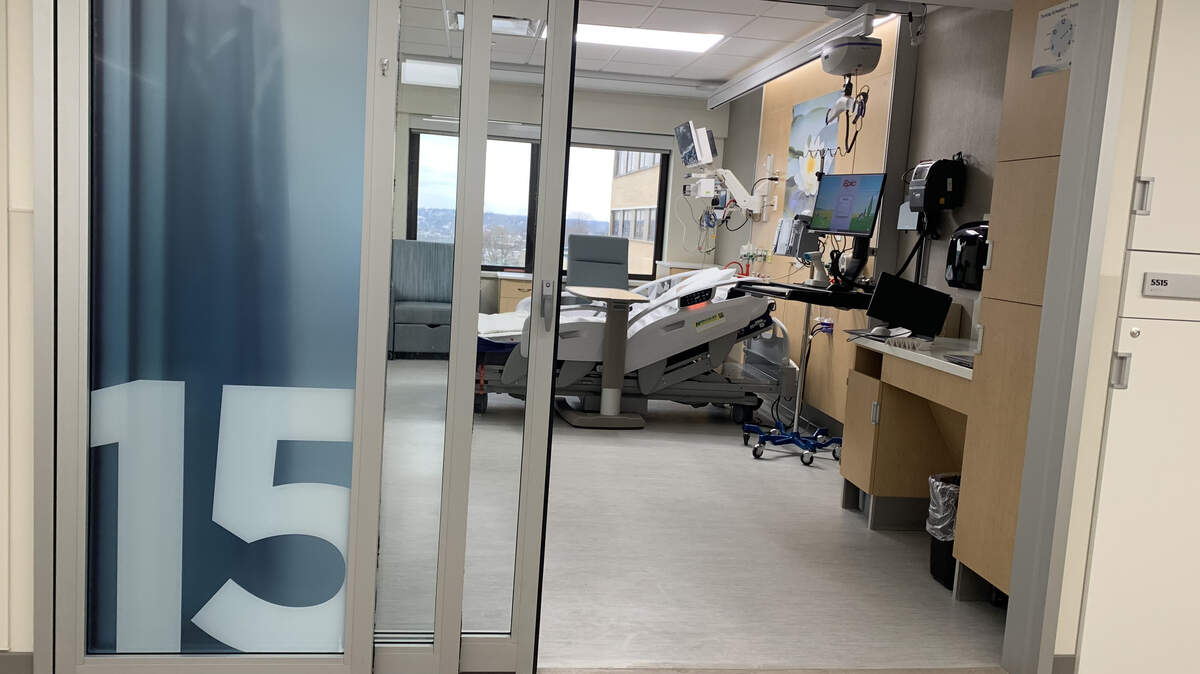
A new and expanded intensive care unit at a local Mercy Health hospital is designed to enhance caregivers’ capacity to deliver timely and advanced neurological treatment to an expanding population.
Officials at Mercy Health’s St. Elizabeth Youngstown Hospital came together on Jan. 5 to celebrate the completion of the $20-million neurointensive care unit, a level-one trauma center on the fifth floor.
The Neuro ICU unit expanded from four beds to 16 beds each in private rooms. The rooms have new, state-of-the-art equipment for healthcare providers to care for patients recovering after a stroke, complex brain surgery and spinal surgery.
Kathy Harley, president of Mercy Health’s St. Elizabeth Youngstown Hospital, said the expansion project has been part of their strategic plan for close to three years.
“With the aging population and poor socio-economic areas in Youngstown, it's hard to get to the hospital, it's hard to get to the doctor to keep your care up to where it needs. We see a lot of [patients] for neurovascular, neurosurgical and neurology needs, because we have a lot of people suffering with those in this community,” she said. “This is going to hopefully help us treat all of them.”
Before the Mercy Health Rehabilitation Hospital opened, this part of the hospital’s fifth floor previously served as the rehabilitation unit.
“This was one of the larger spaces in this hospital, which was great because it afforded us the amount of rooms that we needed to build,” Harley said. “We opened the rehab hospital at the end of November in 2024. In 2025, we started the deconstruction of the current unit to reproduce this beautiful unit. It’s multidisciplinary, so we have neurologists, neurosurgeons and neurointerventionists coming together in a team approach to give the best care that they can to these patients.”
Crews came in and stripped the entire unit down to bare concrete, walls and ceilings for the new unit. They implemented a clinical design guided by staff input for safety and efficiency, including headwalls and workstations.
“Every [room] is private, built by code to be bigger because of all the equipment and all the needs of the patients,” Harley said. “It is a lot to do something like this inside a hospital, because we’re still running day-to-day operations all around us. We had a really good construction crew that did an excellent job; they cared about the cleanliness, they cared about the noise level. That’s always very important when you’re doing construction inside a hospital.”
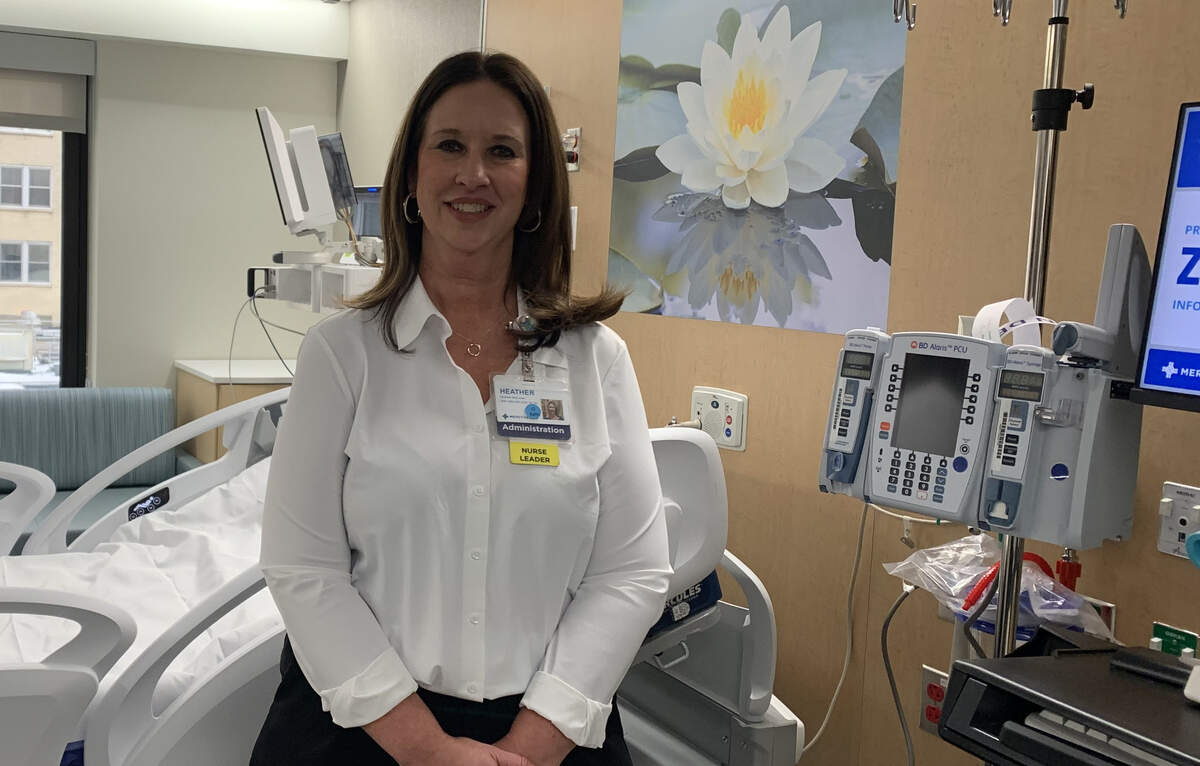
Heather McCowin is the Chief Nursing Officer at St. Elizabeth Youngstown.
“The neurointensive care the nurses offer is a one-to-one or two-to-one ratio for those critically ill patients, which is amazing care for our patients that need it the most,” McCowin said. “[We have the] opportunity to serve more [patients] and keep them all in one area in the larger neuro intensive care, isolating those neuro patients with our team that specializes in that care.”
There’s also a dedicated family space to provide support for patients’ loved ones during their visits.
Martin Tursky is the Chief Operating Officer for Mercy Health in Lorain and Youngstown.
“The major investment we’ve made in our service lines is in the neuroscience program,” he said. “We have two new neurointerventional radiology suites. A lot of our patients who have strokes will then go to the acute rehab hospital that we built with Lifepoint. You can see that the investment has covered numerous steps within the neuroscience treatment plan. It means a lot for this community, because when you have a stroke or need neurosurgery, time is of the essence.”
He said it’s important to have higher level services available so that people can stay in the community and receive neurointensive services instead of having to travel.
“Whether it’s a heart attack or a stroke, they’re very time-sensitive, and you need to be able to get into those services to get treated right away in order for you to have the best possible outcome you can have,” Tursky said. “My job is about coming in and helping us to support the community and to make Mercy Health the best that it can be to the benefit the community. This is a pure example of that, and around a service that is really, really needed.”