On-site historic auto repair shop coming to Warren’s Packard National Museum
The volunteers at Warren’s National Packard Museum who gingerly take apart historical cars and put them back together will soon be working out of a new repair shop as part of an upcoming expansion, according to the executive director of the museum.
Mary Ann Porinchak has been the executive director of the National Packard Museum since 2000, a non-profit first established in 1990 to preserve the family’s legacy in Warren.
“We want to tell the stories. That’s our big thing. We’re the storytellers,” she said. “If you see this car out on the street, it’s not telling you its significance.”
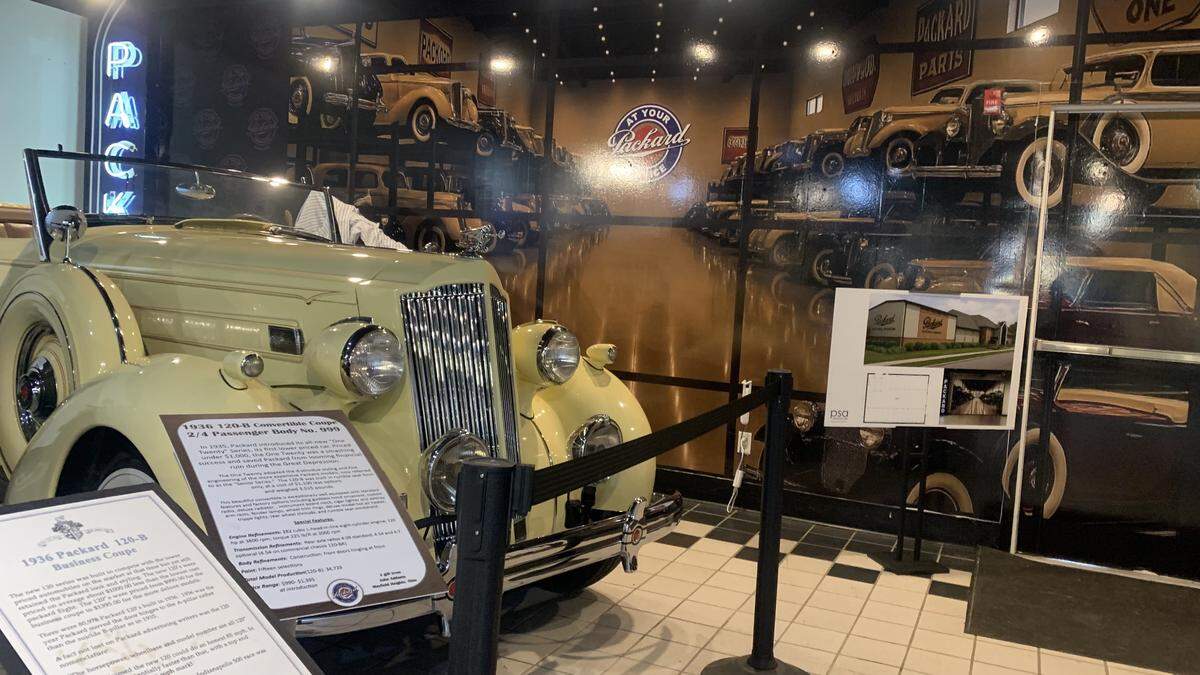
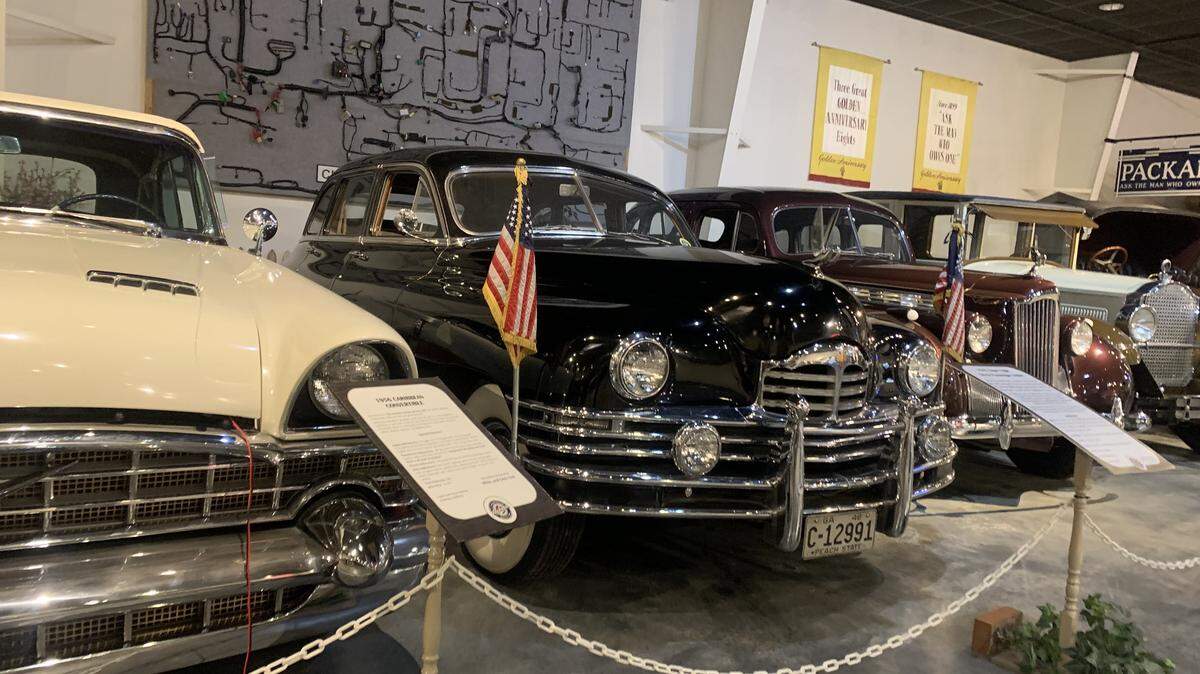
The National Packard Museum houses restored Packard automobiles and rotating educational displays about the history of the local Packard family who started the Packard Motor Car Company.
The first Packard automobile was built in Warren in November 1899 by brothers James Ward Packard and William D. Packard.
Throughout the 26 years Porinchak has spent at the museum, the facility itself has grown, and the collection expanded to include more automobile industry artifacts, from marine engines to motorcycles.
“We need storage space for cars that are being donated, because that’s the biggest questions we get: How many cars do you have? Where are they?” Porinchak said. “We have 34 cars in the gallery between the two spots, and six more cars awaiting arrival. The people who own those cars are holding back, waiting for us to do this, so that they know that their car has space to be here.”
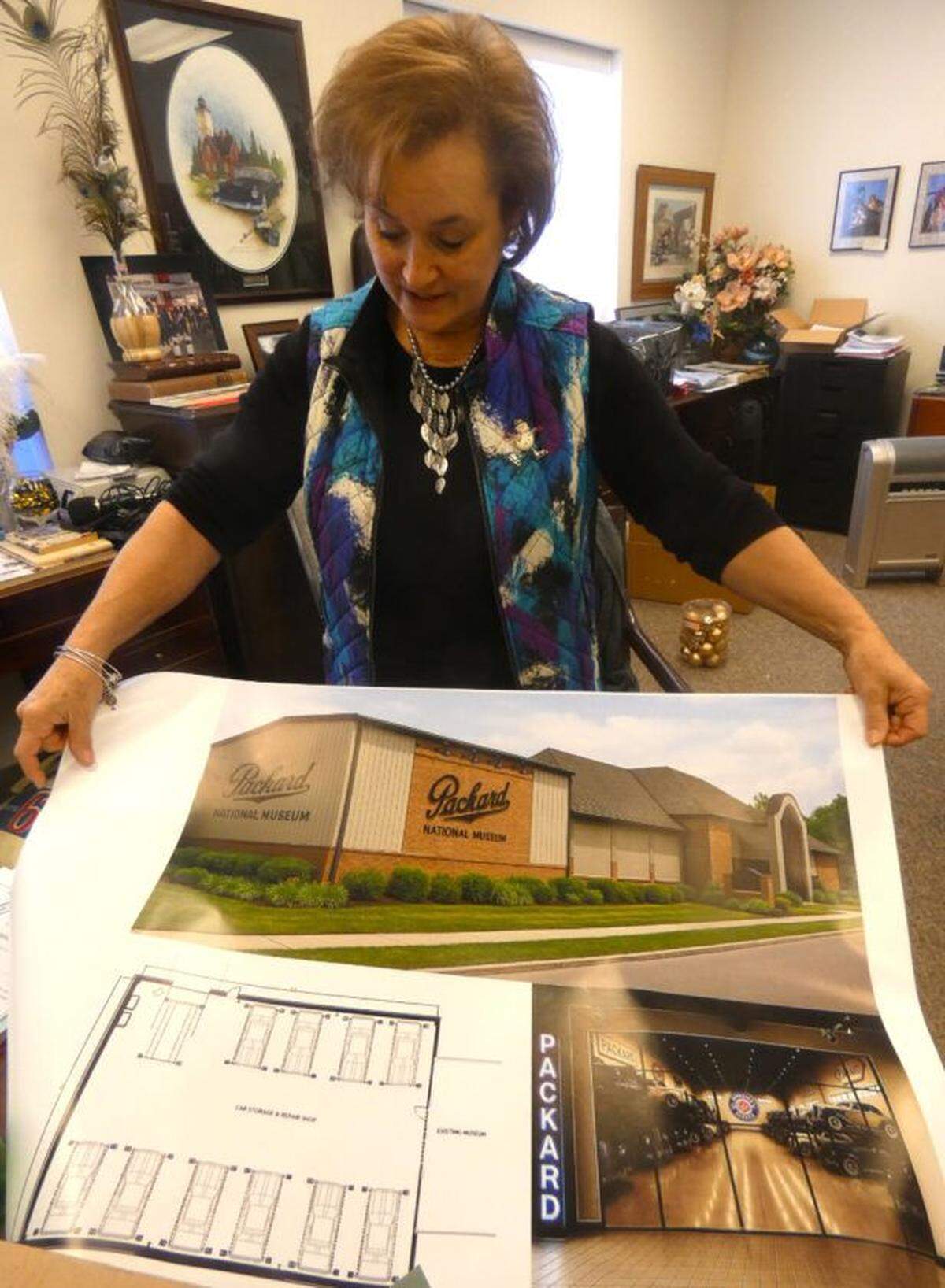
The inspiration for the on-site auto repair shop came when Porinchak was visiting the Fountainhead Antique Auto Museum in Alaska.
“They have this huge mechanics bay and storage area where you can walk up and watch the guys working on the cars, and you can see everything that’s in there. I thought, ‘That’s a great idea.’ People will be able to walk up to the glass and see all the vehicles in there on the lifts, and you can see they’re stacked two-high,” she said.
The addition will provide the volunteers with a “larger, more convenient workspace,” according to Porinchak.
“What those guys are doing is a huge, huge contribution to this museum by volunteering their time,” Porinchak said. “They all have very specific skills and all work together really well. There’s a guy that does transmissions, a guy who does gas tanks, a guy that does radiators and a guy that does body stuff. For every $1 we raise, volunteers can contribute $2 worth of service.”
This year marks the 26th year of the museum’s motorcycles display exhibit, featuring 30 historic motorcycles to view.
Porinchak said adding the motorcycles exhibit completely flipped the museum’s admittance statistics that are based on age, and the concept has spread to other museums.
“We started doing the exhibit before it was acceptable to put motorcycles in a car museum,” she said. “Our admissions were solidly two-thirds senior citizens. This exhibit brought in more younger people, and then my colleagues across the country followed suit with their own annual motorcycle exhibit.”