
This is how much more than minimum wage Ohio renters must earn to afford a two-bedroom
Renting isn’t just expensive, it is out of reach for many working individuals. To rent a two-bedroom unit in Ohio, you need to earn almost four times the minimum wage.
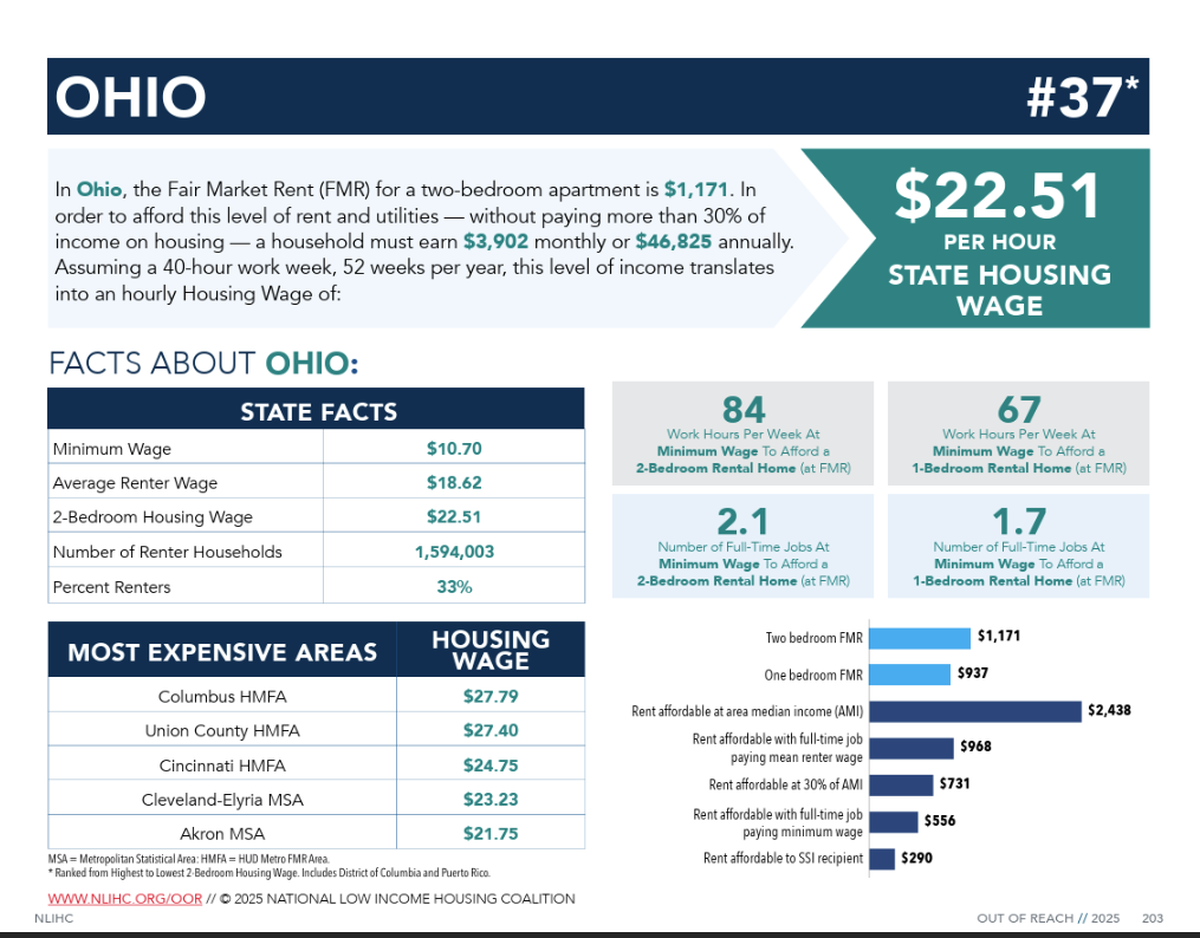
According to the National Low Income Housing Coalition’s 2025 Out of Reach report, an Ohio renter needs to earn $22.51 an hour to afford a two-bedroom at fair market rent without spending more than 30% of their income on housing.
The gap between what renters earn and what rent costs has grown 148% since 2020.
What this means for Ohio renters
This data reveals what many renters already know. The widening gap between wages and costs reflects an impossible financial situation for many Ohio workers.
Looking at the Fair market rent (FMR,) for Ohio and the National Low Income Housing Coalition (NLIHC) the data paints a picture about the current rental housing market.
The data for Ohio:
- FMR for a two-bedroom is $1,171/month
- A household must earn $46,825 annually, or $3,902/month
- A minimum-wage worker would need to work 84 hours per week, or hold 4.1 full-time jobs
- The average renter wage $18.62/hour
What does “living wage” really mean?
MIT’s Living Wage Calculator offers larger context for Ohio workers. It calculates the costs of each basic need that go into estimating the living wage and can vary by location and family size.
A single adult in Ohio needs to earn $21/hour to cover basic expenses without children and one-child households must make $38.16/hour.
The required annual income for a two-adult household with only one child is $43,674, yet the median household income is $71,389. This leaves only a few hundred dollars surplus for expenses.
Average cost of expenses:
- Food: $9,715
- Child care: $14,287
- Medical: $8,981
- Transportation: $12,824
- Internet and mobile: $2,021
What can renters do?
If you’re struggling to find affordable housing in Ohio, there are resources to help:
- 211 connects Ohioans with emergency rental assistance, utility help and housing navigation
- COHHIO’s Local Services Finder helps locate housing support by county
- HUD’s rental assistance finder can locate federally subsidized units near you
- Section 8/Housing Choice Voucher programs
These numbers suggest a growing housing crisis for Ohio workers. Wages haven’t kept pace with rent increases even though the minimum wage just recently went up.
For the 1.58 million renters this means full-time work no longer guarantees stable housing and can lead to overcrowding, longer commute times or cutting back on other expenses, often necessities.
This story was originally published May 15, 2026 at 6:00 AM with the headline "This is how much more than minimum wage Ohio renters must earn to afford a two-bedroom."