
As tariff delay expires, Ohio businesses expect to charge more
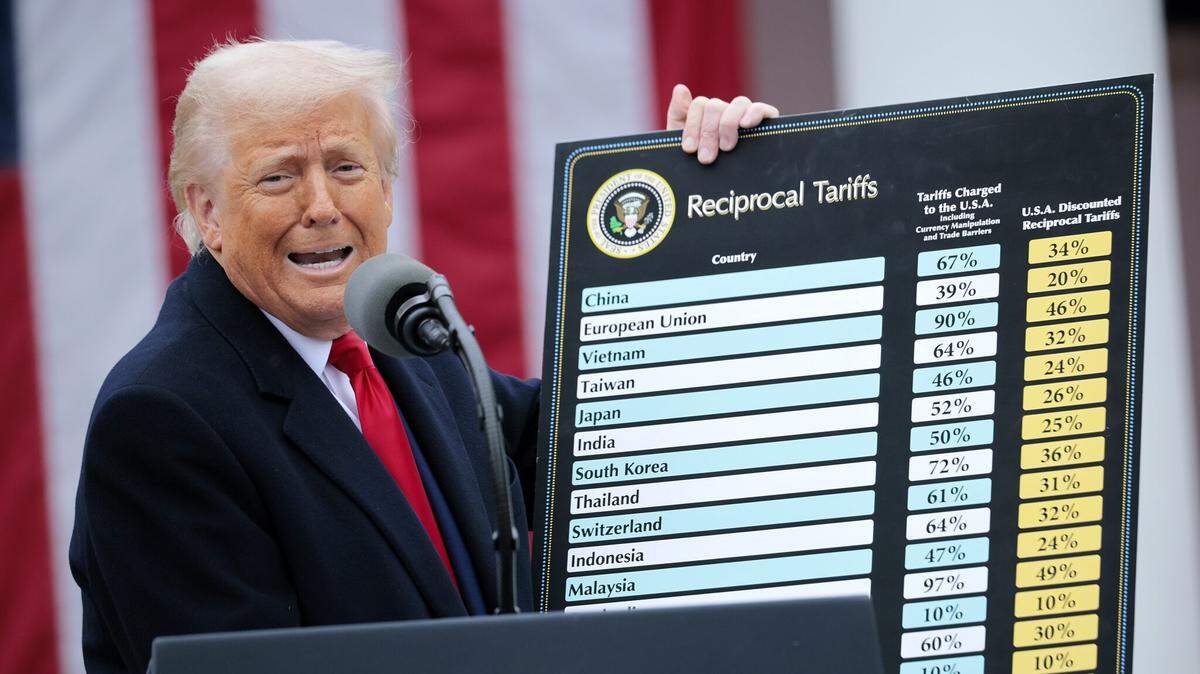
The pause President Donald Trump put on sweeping tariffs is due to end July 9 and when it does, Ohioans can expect higher prices at the cash register, according to a survey conducted by the Federal Reserve Bank of Cleveland. So can consumers in surrounding states, it said.
Tariffs — which are taxes on imports — affect various sectors of the economy differently. Retailers who participated in the survey were the group that said it was most likely to pass on increased costs from Trump’s tariffs.
A full 90% said they expected to raise prices in the next six months. Seventy two percent of manufacturers and 71% of construction businesses said the same. Minorities of professional-services firms (43%), financial-services firms (38%), and freight carriers (20%) said the tariffs would increase their costs enough to force them to raise prices.
After taking office, Trump announced tariffs on almost all of the country’s trading partners. Then in early April, he said he would delay most for 90 days to give time to negotiate what he saw as more equitable deals. Very few deals have been completed with the 90-day deadline set to expire next week.
Trump said that even without deals in place, he’s not interested in extending the deadline beyond July 9.
“We’ll look at how a country treats us — are they good, are they not so good — some countries we don’t care, we’ll just send a high (tariff) number out,” the Associated Press quoted Trump as saying on Fox News Channel’s “Sunday Morning Futures.”
For businesses and customers in the region represented by the Cleveland Fed, tariffs are a serious matter, the report shows. The Cleveland Fed represents Ohio, western Pennsylvania, eastern Kentucky, and the northern panhandle of West Virginia.
Eight times a year, the agency conducts its Survey of Regional Conditions and Expectations. The great majority of respondents to the May survey didn’t see Trump’s tariffs as helping their businesses.
Seventy percent said they’d have a negative impact on their businesses over the next six months and 20% said they’d have no impact. Just 9% of businesses said the Trump tariffs would be good for them over the short term.
How negative businesses were about Trump’s tariffs was related to how dependent they are on imports.
Retail, the sector that overwhelmingly said it would raise prices, said it got 27% of its inputs from overseas. That was followed by manufacturing, at 18%, construction, at 14%, freight, at 8%, businesses and professional services, at 6%, and financial services, at 2%.
Even though businesses in the financial services sector aren’t worried that the Trump tariffs will push their input costs up, they have another worry: that people will have less money for them to manage. Ninety percent of firms that responded said the tariffs would decrease demand for their services over the coming six months.
More than half of businesses in every sector said they expected demand for their goods and services to decrease. And, compared to the February survey, the businesses seem more pessimistic generally.
“More firms were expecting to decrease employment, capital spending, and inventory levels than increase them because of higher tariffs. The share of firms expecting to decrease employment rose to 32 percent compared to 22 percent in our February survey,” the report said.