
As Ohio loses jobs, unemployment goes down. What’s going on?
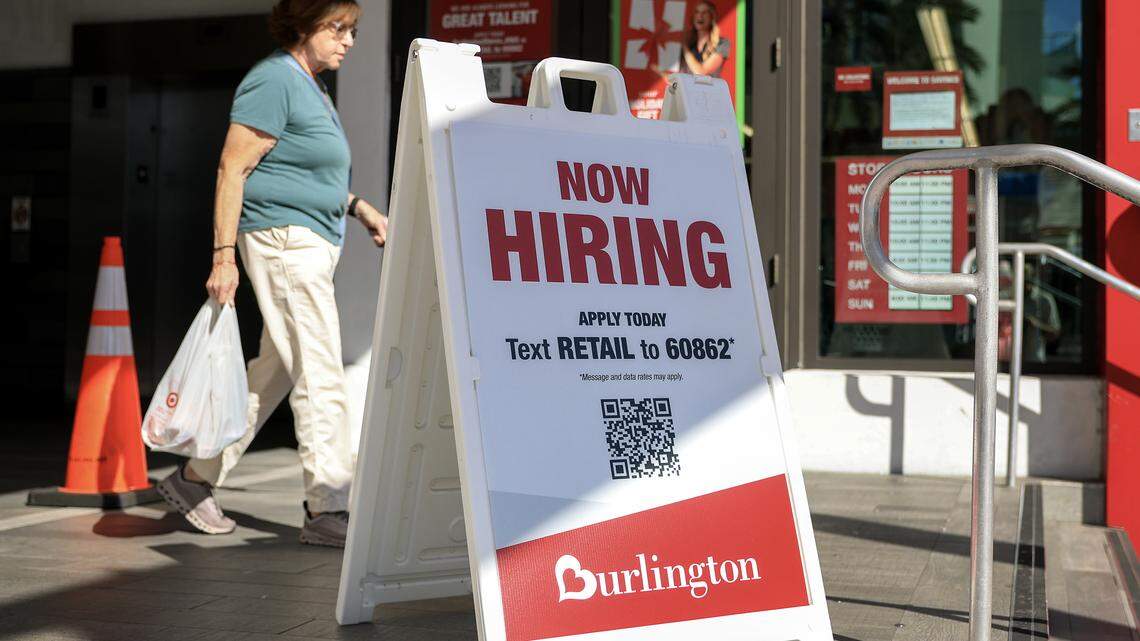
Ohio lost 5,400 jobs in February, yet somehow the unemployment rate went down.
The reason is not encouraging, according to Policy Matters Ohio. The two seemingly contradictory things happened because people left the workforce and therefore weren’t counted as unemployed, it said in a statement that was released last week.
An estimated 2,000 Ohioans exited the labor force.
“February’s job losses reinforce the stalled growth that we’ve observed through 2025,” Molly Bryden, a researcher with Policy Matters, said in the statement.
She said the government shutdown will delay Ohio’s March jobs report until next month. And the national jobs report for March was stronger than expected, so Bryden said that could bode well for Ohio.
However, she noted, “Ohio’s economy may be more vulnerable to economic turbulence generated by federal policy decisions; we still lag most states in job growth following the COVID-19 pandemic.”
Job losses in the public sector were disproportionately large, with 3,600 eliminated in March. Bryden said part of that is due to cuts to services by the state and federal government.
“Ongoing efforts to slash federal funding — largely targeting key public assistance programs, like (the Supplemental Nutrition Assistance Program) and Medicaid, along with public education funding — could be straining state and local budgets,” Bryden said.
Ohio’s anemic job growth comes after years of tax cuts and other programs favoring the wealthy that were sold on promises that they would grow the economy. Despite the failure to live up to their billing, Republican lawmakers continue to propose tax cuts the benefits of which would flow disproportionately to the wealthiest Ohioans.
Bryden referred to one such cut when she said they’re sapping the state’s ability to address the weak jobs picture. In 2025, the GOP-led legislature passed a “flat” tax that costs the state about $1 billion a year and 40% of the benefit flows to people making over $1.8 million a year.
“Ohio faces huge constraints on raising adequate state revenue due to changes in tax policy under Ohio’s operating budget for FYs 2026-27, which disproportionately favor the highest-income households and wealthy corporations,” Bryden said. “Tightened state and federal spending can destabilize local governments’ budgets, while amplifying public sector employment impacts, which has further implications for the availability and delivery of key public supports for Ohio’s working families.”
With 4.3% unemployment, Ohio in January was in a six-way tie for the 21st highest unemployment. That looks like a big improvement over last May, when the Buckeye State had the fifth-highest unemployment.
But Bryden said the underlying story isn’t so happy.
“Lower unemployment, driven by a shrinking labor force, is hardly something to celebrate,” she said. “Ohio’s labor force participation rate still hasn’t recovered to pre-pandemic levels. The exodus of working Ohioans from the labor force has serious implications for our long-term economic growth and could be an indication that Ohio lawmakers’ pro-business posturing isn’t conducive to an economy that works for Ohio’s working families.”