
Ohio Supreme Court reverses PUCO decision, finds utility resellers are utilities under state law
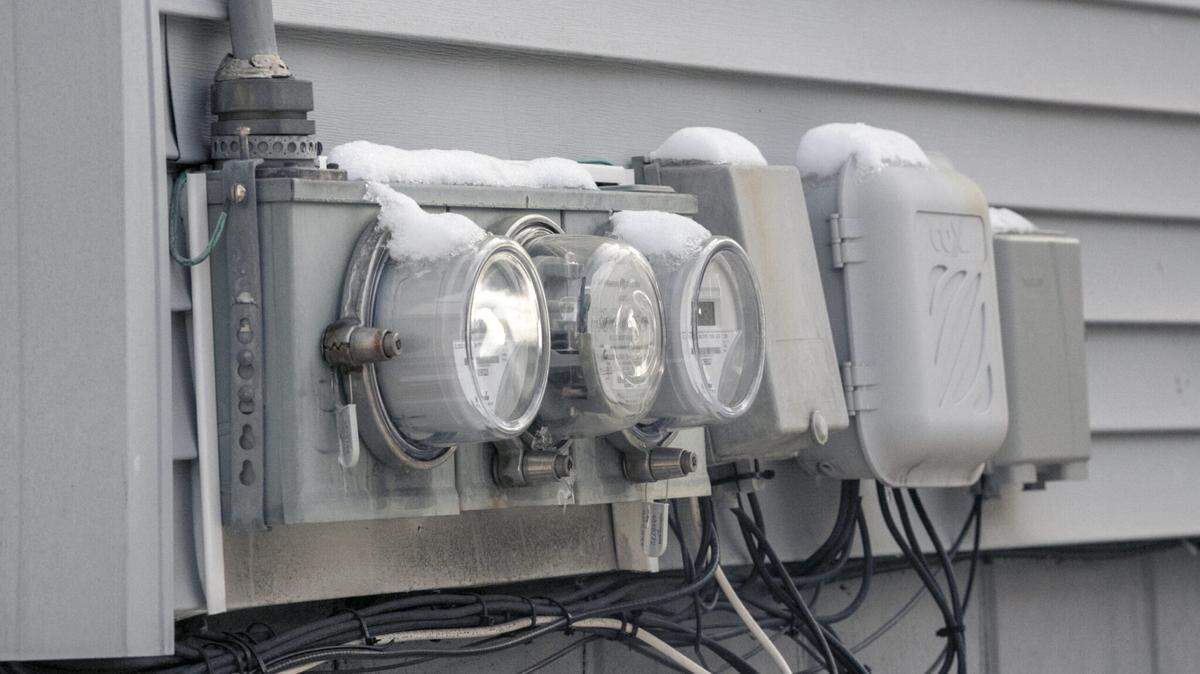
The Ohio Supreme Court has waded into a dispute over submetering — dealing a blow to the third-party companies managing electricity service and billing at some apartment complexes.
Submetering companies make money on the difference between wholesale and retail energy costs. They buy in bulk at a lower rate and then sell it on at the higher retail markup.
As the court noted, the companies have developed into sophisticated service providers —providing and maintaining the physical equipment on-site, reading customers’ meters, and billing for power use.
“From the tenants’ perspective,” the court wrote, the submetering company is “for all practical purposes the supplier of their electricity.”
The court decision reversed a 2023 finding by the Public Utilities Commission of Ohio. The commission determined the submetering company National Energy Partners is not a “utility” and thus doesn’t fall within its jurisdiction.
To meet that definition, the company must be “engaged in the business of supplying energy” to Ohio consumers.
The commission found NEP was providing power to the landlords rather than the tenants. And in managing the day-to-day delivery of power, the company was simply acting as the landlords’ agent instead of supplying energy itself.
The court wasn’t having it.
“As a matter of plain English, this reading of the statute is self-evidently wrong,” the opinion stated. “There is little question,” the court went on, that NEP is in the business of providing power.
The case now returns to the PUCO for further hearings.
Still, the majority seemed reticent to make the ultimate decision. The opinion noted the court reversed a similar decision previously, and urged lawmakers at the time to clear up state law.
“The General Assembly has not done so,” the court explained, so it was left to decide how to handle the issue.
“But of course, whatever this court decides, the General Assembly retains the ability to legislatively determine PUCO’s jurisdiction over submetering companies,” the justices added.
Lawmakers have started work on legislation to rein in submetering companies, with two measures working their way through the general assembly.
Backers of those proposals had differing reactions to the state supreme court decision, but they agreed there is more work for lawmakers to do.
The Ohio Supreme Court opinion
There’s some justification for the PUCO’s reluctance to consider NEP a utility.
Landlords sometimes fill a role similar to a submetering company by splitting up the cost of power or water among their tenants.
Does that make the landlord a utility, too? State regulators and courts have agreed that it does not, and the PUCO relied on that implied landlord-tenant exception when it made its decision.
“The flaw in that analysis,” the majority opinion stated, “is that it does not necessarily follow that because landlords may fall outside PUCO’s jurisdiction, that NEP does as well.”
The justices reasoned that a landlord passing on utility services to tenants is ‘incidental’ to their core business. But the same can’t be said of NEP.
The company purchases $8.5 million in wholesale energy a year, the court noted, and served as much as 1.75% of AEP Ohio’s residential customers.
Similarly, the court brushed aside the idea that NEP was merely operating on the landlord’s behalf.
NEP’s contracts depict it as the landlord’s “agent and authorized representative,” and state that the landlord “take(s) title” to the energy arriving at the master meter.
After the initial complaint was filed with state regulators, NEP updated its contracts ascribing ownership of its onsite equipment to the landlord.
“The mere recitation of words like ‘agent’ and ‘take title’ does nothing to alter the relationships in this case,” the majority wrote.
“Rather than rely on the labels that NEP has chosen, we should look at the economic realities of NEP’s business model.”
Regardless of the contracts’ framing, the court wrote, the landlords have no control over the power flowing to their tenants and no role in billing for that service.
Lawmakers’ reactions
Ohio state lawmakers are working on two separate proposals clarifying how regulators should treat submetering companies.
On the one hand, Ohio state Reps. Tex Fischer, R-Boardman, and Sean Breannan, D-Parma, want them to be treated as utilities.
On the other, Ohio state Rep. David Thomas, R-Jefferson, and state Sen. Andrew Brenner, R-Delaware, would impose significant restrictions, but stop short of classifying submetering companies as utilities.
In a press conference, Rep. Brennan praised the decision as “a huge victory for Ohio consumers.”
He explained people who wind up getting electricity from a submetering company lose out on payment assistance programs, shutoff protections, and the ability to shop for different providers
“The court made it clear,” Brennan added, “if you’re supplying electricity to Ohio consumers, you are a utility, and you must follow the same rules as any other utility.”
Brennan said the court’s ruling “vindicates” the bipartisan measure he introduced with Fischer. That measure has so far failed to gain traction.
Rep. Thomas, meanwhile, has successfully moved his “happy medium” proposal through the Ohio House, and it’s currently awaiting hearings in the state Senate.
“This is one of the problems when there’s no legislation, there’s no actual code on this,” he said.
“The Supreme Court was kind of legislating from the bench — which I don’t like — but they essentially had to do that because the legislature hadn’t acted.”
Thomas contends going as far as Brennan and Fischer propose — treating submetering companies as utilities — would effectively end the practice.
“And that that was never my intent,” he said. “My goal was, okay, this is a legitimate business practice that has good potential, but it needs a lot of safeguards.”
Thomas’ proposal bars submetering companies from charging customers more than the standard retail rate.
It also imposes restrictions on utility disconnects, requires the companies to provide alternative payments plans, and accept payment from utility assistance programs. Thomas believes that’s enough to protect consumers.
“How I describe it,” he said, “we’ve essentially turned the industry on its head, but we haven’t killed it.”
Following the Supreme Court decision, though, Brennan warned that proposal is a “dead letter.”
Prior to the decision, he explained, lawmakers could portray Thomas’ bill as providing important protections where none currently existed.
Now that the court has directed regulators to take an even harder line on submetering companies, it’s harder to make that argument.