
Ohio’s most populous county sees 43% increase in unsheltered homelessness, according to report
Franklin County’s annual Point-in-Time Count identified 2,587 people experiencing homelessness — a 1.2% increase from 2025.
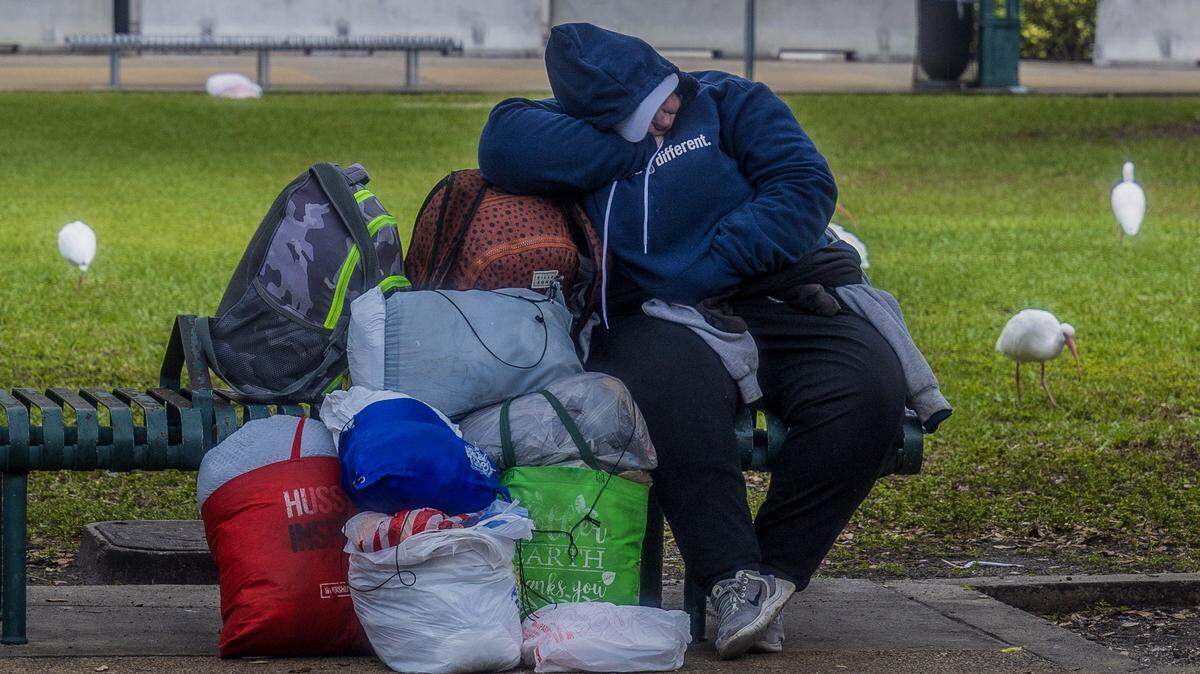
Sheltered homelessness decreased by 8% with 165 fewer people in emergency shelters and transitional housing, but unsheltered homelessness increased 43% — from 455 in 2025 to 651 in 2026, according to the point-in-time count.
“We’re seeing more people forced to live outside in encampments and cars and places that are never meant for human habitation,” said Columbus City Councilmember Tiara Ross.
Point-in-Time counts are one-night estimates of sheltered and unsheltered people experiencing homelessness that are conducted nationwide in partnership with the U.S. Department of Housing and Urban Development. Franklin County’s count took place in January.
“If people are outside on our cold days, then what we suspect is that that is an under count,” said Community Shelter Board President and CEO Shannon TL Isom.
“There’s even more people that are outside on our cold days.”
Last year’s point-in-time count took place during a storm, which Isom said is part of the reason why there was an increase in unsheltered homelessness this year.
“When we were counting, it was during a winter storm last year … and we were able, because of hotels and motels, to have people gathered, so we ended up counting them as sheltered when, otherwise, like this year, they would have been outside,” Isom said.
Franklin County is projected to see a 68% increase in unsheltered homelessness by 2028.
“We know from both local data and predictive modeling that without additional investment, you will see this trend continue … and that’s a hard truth that we have to sit and grapple with,” Ross said.
Chronic homelessness increased 16.4% and people with severe mental illness experiencing homelessness increased 42%, according to the report.
People experiencing homelessness with HIV/AIDS increased 75%, people with chronic substance use experiencing homelessness increased 53%, and survivors of domestic violence experiencing homelessness increased 32%, according to the report.
Family homelessness went down 3.8%, parenting youth homelessness decreased by 40% and no parenting youth were identified as unsheltered, according to the report.
“You will not see children in Franklin County ever unsheltered, we immediately have flex space for that,” Isom said.
There were 96 veterans experiencing homelessness, one less than last year, according to the report.
A little more than half of people experiencing homelessness were men (58%), 41% were women, and 1% is non-binary. 54% of people experiencing homelessness were Black, 33% were white, 9% were multi-racial, and 1% were Hispanic, according to the report.
Franklin County is Ohio’s most populous county with 1,356,303 people, according to the U.S. Census Bureau.
“There is no debate that our city is on an upward trajectory, but that does not mean that everybody is able to participate in that upward trajectory,” said Michael Wilkos, chair of the Columbus and Franklin County Continuum of Care.
People living in Franklin County need to be making at least $27.79 an hour working a full-time job to be able to afford a “modest” two-bedroom apartment — more than $5 higher than the state average, according to a report last year by Coalition on Homelessness and Housing in Ohio and the National Low Income Housing Coalition.
The Community Shelter Board and the Columbus and Franklin County Continuum of Care recommend expanding housing-focused system-funded street outreach. Franklin County currently has four outreach workers.
They want to scale up hotel options as a bridge toward permanent housing. 44 people living outside moved into permanent housing from Dec. 1, 2025 to March 31 with Winter Warming Center funding.
Hotel use year-round would permanently house 200-300 unsheltered people experiencing homelessness.
“It is imperative that we have housing as the solution, not just sheltering,” Isom said. “People in this community should be able to skip over a shelter bed to get into housing.”
The Community Shelter Board and the Continuum of Care wants to get three hotel-based non-congregate shelter sites, which could reduce family homelessness by 48% by 2028.
“We know that diversion programs that prevent people from entering shelter in the first place works,” Ross said. “We know that rapid re-housing moves individuals and families quickly back into stable housing works. We know that permanent, supportive housing that pairs housing with services for those with highest needs work.”
There were 11,759 people experiencing homelessness in Ohio in 2024, according to the latest U.S. Department of Housing and Urban Development Homelessness Assessment Report.