
Ohio Republicans trying to get voter photo ID on the ballot, enshrined in state constitution
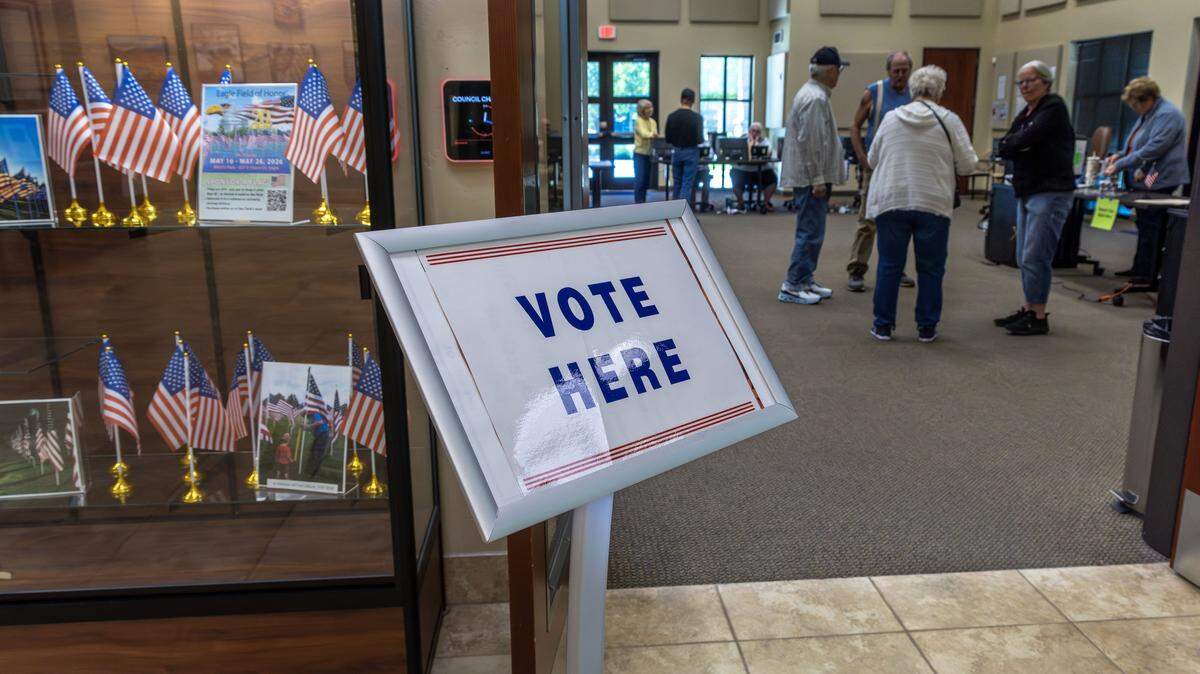
Ohio Republican lawmakers are trying to get a constitutional amendment on the ballot that requires voters to show photo identification in order to vote.
Lawmakers in the Ohio House and Senate introduced joint resolutions this week to enshrine voter photo ID laws into Ohio’s constitution.
House Joint Resolution 9 was introduced by Ohio Reps. Adam Bird, R-New Richmond, and Heidi Workman, R-Rootstown.
Senate Joint Resolution 10 was introduced by state Sens. Jane Timken, R-Jackson Township, and Theresa Gavarone, R-Bowling Green.
“This is about fair and free elections,” Timken said. “Voters need to know that when someone goes to vote, that it is the actual person who is registered to vote, and we do that by photo ID. This is overwhelmingly supported, not only by Republicans, but Democrats.”
The Pew Research Center showed 83% of Americans support requiring photo identification to vote.
“If you want to rent a car, you want to go to a hotel, get on an airplane, you need to show photo ID,” said state Sen. Kristina Roegner, R-Hudson.
“If you want to buy alcohol or even certain medicines, you need a photo ID. It makes all the sense in the world that when we’re talking about something as serious and as important as the integrity of our elections, that it would also require a photo ID.”
If an Ohio voter is unable to provide a valid photo ID in person on election day, the joint resolutions would allow a voter to cast their ballot provisionally and provide photo ID at the board of elections by the deadline for their ballot to be counted.
The resolutions require three-fifths approval to be placed on the November ballot.
“I think the voters will decide that they want to protect it,” Bird said. “It’s wildly popular.”
Ohio law already requires citizens to provide photo identification before voting thanks to a bill the lawmakers passed in 2022 and took effect in 2023.
“We have some of the most restrictive election laws,” said state Rep. Phil Robinson, D-Solon. “This legislation is unnecessary.”
A valid photo ID includes an unexpired driver’s license, state ID card, a passport, a U.S. military ID card, an Ohio national guard ID card, or an ID card issued by the U.S. Department of Veterans Affairs.
Ohio Senate President Rob McColley, R-Napoleon, said he hopes to pass the Senate’s resolution either June 10 or June 17.
“(The joint resolutions are) in response to some voter integrity concerns that have been happening nationally,” McColley said.
McColley is running for the job of lieutenant governor in November, alongside Republican governor candidate Vivek Ramaswamy. Ramaswamy has said Ohio must enshrine voter ID in the state constitution.
“Voter confidence in our election system is lower than it’s been in a while, and I think it’s important that we offer the voters the opportunity … to decide for themselves whether they want to put this in the constitution, offering it the highest possible level of protection to secure the system that they have in place to secure the fundamental right of voting … for generations to come,” said McColley.
Hawaii and Virginia had voter photo ID requirements laws, but those laws were repealed.
“When you see these kinds of examples happening in other states, it becomes imperative that we protect photo ID in Ohio by placing it … in the Constitution,” Bird said.
Ohio Attorney General Dave Yost brought forth six indictments for voter fraud in 2024 after receiving 600 referrals of alleged voter fraud from the Ohio Secretary of State. The indicted were accused of voting at least once between 2008 and 2020 despite not being U.S. citizens then.
“Election fraud is so very rare,” said Ohio Senate Minority Leader Nickie Antonio, D-Lakewood.
“I think this is an attempt by the Republicans to have an election go their way, because without doing something extraordinary like this, rather than just appeal to the voters on the basis of their policies, they’re actually limiting the amount of people that can vote because they see that as their path to winning.”
Robinson worries these joint resolutions could potentially take away early voting or mail-in ballots.
“I don’t see how that helps Ohioans be able to have their voice heard at the ballot box,” he said.
McColley, however, said there are no plans to get rid of early mail-in voting or absentee voting in Ohio.