
PA agencies will monitor water quality after Ohio train derailment. How to test yours
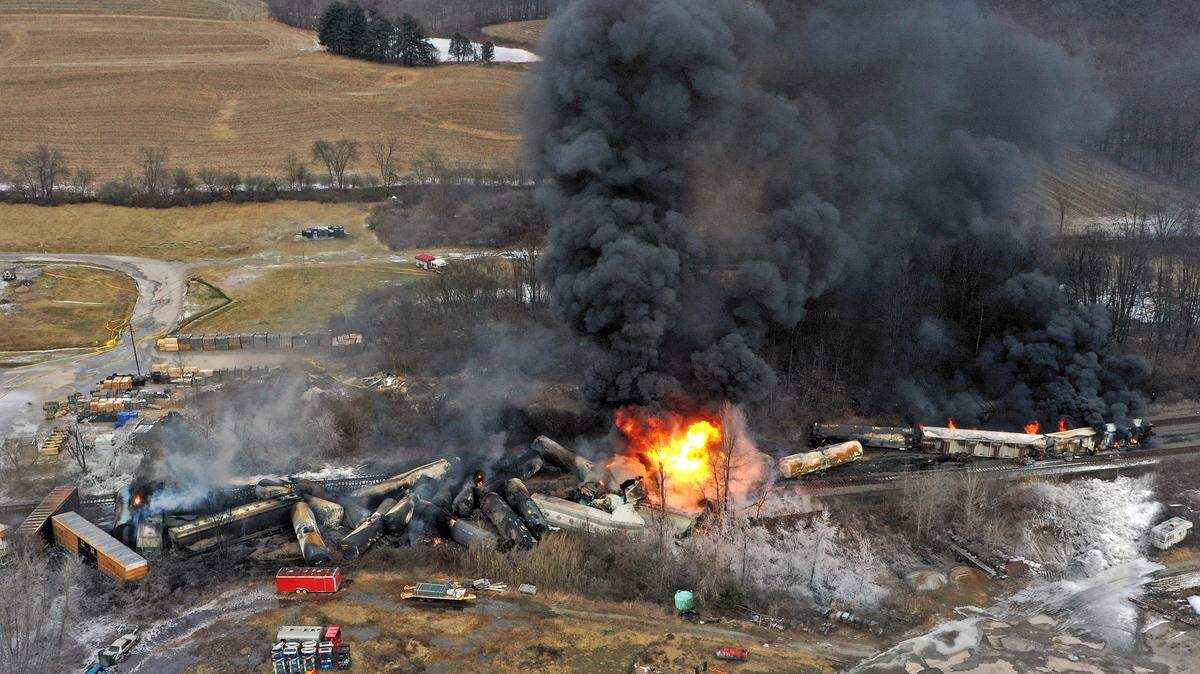
Pennsylvania has not yet observed any concerning air or water quality readings following a hazardous train derailment on Ohio’s eastern border, according to the commonwealth’s environmental officials.
Thursday, the Pennsylvania Department of Environmental Protection (DEP) said it will begin conducting independent water sampling to monitor contamination risks related to the Feb. 3 train derailment in East Palestine, Ohio, less than a mile from the Pennsylvania border. Extensive testing is expected to help the department anticipate potential long-term impacts on local water sources.
“My administration is taking steps to independently verify the safety of Pennsylvanians’ water — and will continue to do so in the months to come,” Gov. Josh Shapiro said in a statement. “As we work to learn more about this incident and hold Norfolk Southern accountable, the Commonwealth will also lead the way so that Pennsylvanians are aware of and protected from any threats to their safety and resources that may arise. Our independent testing will ensure the data we are receiving is accurate and timely so we can partner effectively with local communities to provide the information Pennsylvanians need and deserve.”
DEP officials will collect independent samples from sites established by Norfolk Southern, the railway company whose 50-car train derailment led to the spill of hazardous chemicals and a controlled release of vinyl chloride, a known carcinogen. For at least six months, the DEP’s Bureau of Laboratories will examine those samples in addition to others collected within a 2-mile radius of the derailment site.
Additionally, the DEP said it’s working with the Ohio Environmental Protection Agency, the Ohio River Valley Water Sanitation Commission, the U.S. Environmental Protection Agency and Norfolk Southern’s contractor, CTEH, to review sample information for nearby surface water sources. Data collected from nearby locations before and after the controlled burn of hazardous chemicals is available online, according to the EPA.
“Keeping Pennsylvanians safe is our top priority,” Rich Negrin, the DEP’s acting secretary, said in a statement. “Leading our own independent testing now will give us a necessary baseline so that we can track any changes to Pennsylvanians’ water in the months ahead. We will continue to do our part to test the water to determine the impacts of this train derailment, and keep Pennsylvanians informed and safe.”
If you’re concerned about water quality in your area, here’s what you need to know.
Water testing resources in PA
The DEP encourages periodic water testing for all sources in Pennsylvania, even without an inciting incident like a hazardous train derailment.
The department lists the following general guidelines for periodic water testing:
- Test your water every year for total coliform bacteria, nitrates, total dissolved solids and pH levels.
- If you suspect other contaminants, test for those too.
- Always use a state-certified laboratory that conducts drinking water tests.
- Since some contaminant testing can be expensive, spend some time identifying potential problems.
Drinking water testing is best conducted through laboratories certified by the DEP. The department’s website maintains running lists of laboratories that can conduct chemical contaminant testing and those that specialize in bacteriological testing.
You can also purchase your own bacterial test kits from the DEP’s regional offices.
While the EPA does not regulate the private wells that provide drinking water for more than 23 million households, it does maintain information on best practices for well testing. Guides listed on the agency’s website have aggregated information on water well testing, potential contaminants and general safety tips.
Commonwealth residents near the Pennsylvania-Ohio border are encouraged to contact the DEP Southwest Regional Office at 412-442-4000 for more information about well testing.
Pennsylvania’s Maximum Contaminant Level (MCL) chart lists notable chemicals that are analyzed in common water tests, as well as the appropriate levels for the commonwealth’s regulated public water systems. Those with results higher than the listed limits should install a water treatment device to treat their wells’ specific issues.
According to the DEP, groundwater near the derailment site flows westward and is not expected to carry potential contaminants toward wells in Pennsylvania. Additionally, the commonwealth’s geologic landscape is dominated by subsurface layers of sandstone, which slow the spread of surface contamination to groundwater. As a result, water testing will continue for at least six months.
Impacts from Ohio derailment
While residents within 2 miles of the train derailment — including 22 homes in Pennsylvania’s Beaver County — were briefly required to evacuate or shelter in place while Norfolk Southern conducted a controlled burn of dangerous chemicals, those orders have been lifted. Nonetheless, the derailment’s aftermath still presents concerns for those living along the border.
Specific resources for those located within the derailment’s immediate proximity are available online in a digital guide prepared by the DEP and Pennsylvania’s Department of Health. The packet answers frequently asked questions and provides links to available toxicologists and poison control centers that are assisting residents along the border.
So far, the EPA says it has not found any concerning readings in the area that would prompt major health concerns.
“Due to the short duration exposure from this incident, health effects from long-term exposure are not expected to occur,” Pennsylvania’s health and environmental agencies wrote.
States to the west, including Kentucky, West Virginia and Ohio are expected to test their own water supplies and study the potential effects of the derailment. Much of the focus is placed on the Ohio River, which provides drinking water for more than 5 million people.
This story was originally published February 17, 2023 at 2:25 PM with the headline "PA agencies will monitor water quality after Ohio train derailment. How to test yours."
%202.JPG)