
Q&A with Dr. Kravec | If Ohio reopens too soon, “We will absolutely have a major problem”
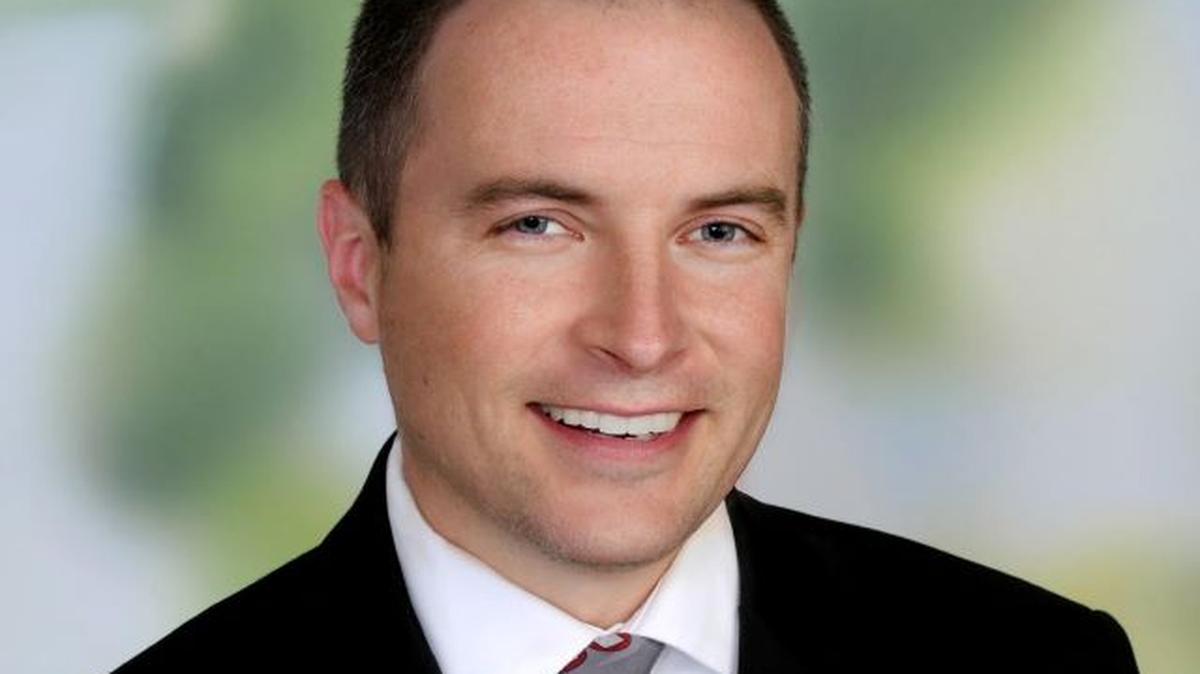
YOUNGSTOWN — Mahoning Matters caught up with Dr. Jim Kravec, chief clinical officer at Mercy Health to discuss the most pressing topics regarding COVID-19 in Ohio, including the data on nursing homes released Thursday.
The Ohio Department of Health released a list of long term care facilities with positive coronavirus cases. According to the list, there are a total of 73 cases at 13 facilities in Mahoning and Trumbull counties.
We will continue to seek out experts who can help us protect ourselves and our families during this unprecedented health crisis. Please send additional coronavirus questions to news@mahoningmatters.com.
Mahoning Valley nursing homes
MM: What does the new data from nursing homes tell us about Mahoning County's high death rate? What are your theories about why Mahoning County has the most deaths of all Ohio counties?
JK: I still think age. I mean, if you look at our deaths — and Ryan Tekac sends this out — the patients do tend to be older. Just because they don't come from nursing homes, we're still seeing it in the community — older people in the community. I don't think the nursing home data gave us any big new information. It didn't show anything. It showed that certain nursing homes have it. It is not at all a reflection of the nursing home quality.
It's a community-spread [disease]. Older people at home in the community are affected by this. I think it's an older population, but I do think maybe people are not following exactly as they should be with the social distancing. I think that's really the take-home message: Stay home, and do not interact with people to get something like this. I think that's where I'm seeing it.
I was asked this question the other day: Is our high death rate, because we're not doing standard of care? Fair question, but I can honestly say that we are doing standard of care. I'm encouraged by the communication and collaboration between the health systems. I have daily communication with the Cleveland Clinic, Summa, Salem, Trumbull, Akron General about how we're all doing; how we're handling any new treatments. I have daily calls with the clinical leaders at Bon Secours Mercy Health. Mercy Health in Youngstown, we're three hospitals. In our entire company, we're 55 hospitals, so we have a lot of hospitals and a lot of people coming together to talk about this kind of stuff.
We come up with best practices. Any new drugs that come out, any new testing techniques, the plasma, for example, came from that group. So we have a lot of collaboration from hospitals in Youngstown to Cincinnati to Richmond to Greenville, SC. Our reach is all over so we talk with them about how we can go about this process.
MM: What is your advice for nursing homes in preventing the spread of COVID-19?
JK: As hospital systems are collaborating in ways we have never collaborated before, I would encourage nursing homes to share best practices. We're all in this together.
Learning more about COVID-19
MM: What new aspects of COVID-19 has the medical community learned as more cases have emerged? What else are we learning about the initial symptoms of the disease?
JK: Initially, [we were told the first symptoms were] cough, shortness of breath and fever. It was very similar to influenza in that sense. Now we're noticing loss of taste, which is a very real symptom that some people are having that as their first symptom. And then others are having their first symptom be diarrhea or abdominal pain, so gastrointestinal symptoms. Not everybody. Still, the majority [people's initial symptoms] are cough, shortness of breath and fever, but we are having others present with gastrointestinal symptoms. It's a 5 to 10 percent range, but there is some. And you don't see that with influenza.
From a medical standpoint, we continue to look at the newest data and research. At Mercy Health we're working with the Mayo Clinic as well as [the] Red Cross to work on protocols for convalescent plasma. [There are] research studies ongoing for that. Basically plasma is donated from someone with certain criteria who has had COVID to someone who is sick who currently has COVID … It's a very limited criteria, but that's being investigated. We are participating in that as well, which is a very positive thing for our patients.
MM: Should we be wearing masks on trips to the grocery store?
JK: Yes, according to the [Centers for Disease Control and Prevention], when you're out, you should wear a mask. I saw something the other day about small children under the age of two should not wear masks, but in reality, they shouldn't be out at all. [Outings] should be very brief trips for essentials to the grocery store and head right home. Wear a mask when you're out.
Health disparities
MM: What are your concerns about chronically ill people having access to regular care? How are they getting care now?
JK: That's another fear. The other outcome of this is going to be people putting off their normal diabetes care or putting off their high blood pressure care. [There are] consequences of that. That's a concern I have.
Mercy has addressed that in our practice using video visits. Two months ago, we had a handful of video visits a day, and now we're doing hundreds of video visits every day. That number will continue to increase. So I think most of the care can be done via video visits for chronic primary care, and I think that's a very good use of that technology. I would encourage people to contact primary care and see if that's something you can do through your office.
MM: We've heard that disproportionate numbers of black Americans have died of COVID-19. What's your perspective on the issue of health disparities and how can people in the community and healthcare system address it?
JK: I've seen the data nationally. I haven't seen the data locally on breakdown by race. It truly is continued education about the stay at home, for all patients. Stay at home and practice social distancing. Limit exposure to other people. That's really the best advice I can give for everybody.
Available testing
MM: What types of testing are readily available in the Mahoning Valley?
JK: At Mercy Health, we are doing the rapid testing through the Abbott platform. We have for maybe a week now. There is a limited number, saving that for the sickest patients in the hospitals. But, we also have testing through the ODH labs, through Quest, Lab Corp and Ohio State. Those are our lab partners. We're really using all of those. What hasn't changed is we're testing the sickest patients in the hospitals as well as healthcare workers and first responders, so they can get back to work. That's the rationale for doing that.
Soon the antibody tests will be more prevalent. Most of those we're seeing out in the community are not FDA approved. In fact, most or all of them are not FDA approved at this point. But some of them are becoming FDA approved. As you look at the antibody tests, you want the tests that are the most reliable, and we rely on our lab partners for that.
MM: Have you experienced issues with unusual amounts of false negatives from COVID-19 tests?
JK: That happens. That's true of every test. Any sort of flu test, any sort of lab test is going to have false negatives. That's just the way labs are. That's the nature of medicine. We will have false negatives; that's to be expected though.
MM: Do you know when mass testing will begin locally?
No. I wish I did. If we had 50,000 tests in the Mahoning Valley tomorrow, I'd be thrilled. But we don't. I wish we did.
Returning to normal
MM: Do you see May 1 as a reasonable reopening date for Mahoning County and Ohio?
JK: I don't know. I think we're going to have to see closer to May 1. I know we're getting there, but it's too early to tell. I don't think it will open in full force on May 1, even if it does start to open. Thankfully, it's been controlled at this point, as far as the surge, and the hospitals are able to handle these patients in their facilities.
What worries me is what would be the next outbreak. I think one of the biggest ones is if everyone goes back to normal too soon, we will absolutely have a major problem, so that's one concern I have. The other concern I have is if we have a lot of people in prisons, in nursing homes or in shelters or in group homes. That's what we're going to get, and that's going to be a lot of people if one of those outbreaks happens. I think we have to continue this. I trust Dr. [Amy] Acton and the governor saying we're going to have a very slow and planned approach to return to normal.
MM: During Wednesday's state briefing, Gov. Mike DeWine indicated that the state would create a plan to start performing elective surgeries. What types of elective surgeries will roll out first?
JK: When things are elective, eventually they're going to be not elective — if pain increases and the underlying condition gets more involved. I'd almost rather not call them elective and call them time-sensitive surgeries. Maybe they were elective a month ago, but if you wait a month, now the pain's worse, the condition is worsened.
So, I think we're going to see some cardiac surgeries that may have been postponed a little bit or vascular procedures, eye procedures. I don't have a list, I don't know, but I do think you're going to see some of those that may have been put on hold considered time-sensitive. [We'll have] those come back in a very planned, controlled fashion to allow reduction in pain and reduction in the worsening of the underlying condition. "Elective" is a weird word because no one has surgery just for fun. You have surgery for a reason. The question is, which of those reasons can come in a very controlled fashion?
This story was originally published April 17, 2020 at 5:01 AM with the headline "Q&A with Dr. Kravec | If Ohio reopens too soon, “We will absolutely have a major problem”."