
Here’s why people think Trumbull should have joined WRTA — jobs, independence and more
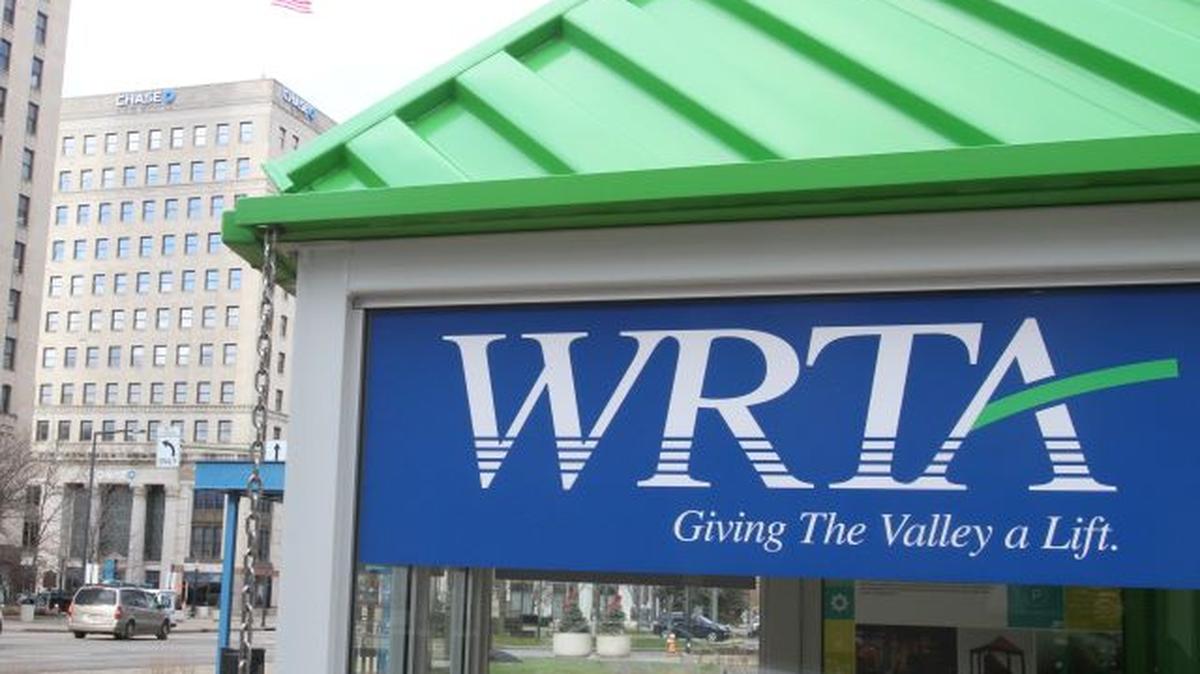
WARREN — Regionalized transportation in Trumbull County, though costly, is an investment in the future, said local officials in the weeks after county leaders passed up an opportunity to pitch Nov. 2 general election voters on such a program.
The fate of a reliable public transit program, proposed by Western Reserve Transit Authority, came down to politics and spending, Mahoning Matters reported last month, after Trumbull County commissioners decided not to seek a quarter-percent tax levy to fund WRTA's $6 million expansion into Trumbull.
One of the two opposing commissioners called the proposal too oversized and pledged to help develop a new solution that fits, despite years of abandoned in-county transit plans and administrative failures.
WRTA last year received a $1.6 million state grant to create six new fixed paratransit routes around the City of Warren, and $800,000 for countywide door-to-door service. The routes, which branch out from the city center into Champion, Bazetta, Howland and Warren townships, are expected to continue running only through next month, for lack of continued funding. WRTA's countywide service, however, will continue through the end of the year.
Two of the fixed routes were expected to be canceled in June due to low ridership, according to a recent Eastgate Regional Council of Governments transit study.
The human impact
A regionalized system would be enabling for everyone, said Sarah Lowry, director of Healthy Community Partnership Mahoning Valley, in a letter sent out June 2, the day before commissioners' last deadline to put the matter to Mahoning and Trumbull voters.
"Trumbull County residents and businesses deserve a robust transportation system and should not have to go backwards and accept fewer options, less access and more uncertainty," she wrote. "State and federal resources have enabled WRTA to dramatically change the way the Mahoning Valley values and understands the essential role public transit plays in its success. Current services offered by WRTA connect workers to jobs, students to education, expecting mothers to prenatal care, consumers to retailers and patients to medical services.
"Without dedicated local support, these improvements will be rolled back, leaving residents, businesses and the region stranded and facing unnecessary uncertainty," Lowry wrote.
While Trumbull County riders continue to wait for the bus, other officials and analysts continue to survey the region's transit shortcomings and encourage a regionalized system as an economic driver.
A recent series of surveys identified several "gaps" in the region's public and private transportation systems, said Linda Conway, senior associate at Delta Development Group of Canfield, which coordinated the surveys as well as focus groups and a transportation steering committee.
About 100 respondents surveyed called for expanded services in Trumbull County specifically, and the need for a regionalized system — one that operates primarily between Mahoning, Trumbull and Mercer counties, Conway said. Some respondents even wanted a route that reached the Cleveland Clinic, she said.
They also saw the need for increased transportation funding, whether it be used as local matching dollars to fund a new fixed-route service in Trumbull County or for shoring up other transit means, such as making sidewalks safer, she said.
They also noted the need for multiple types of service; that "one transportation mode does not work for all … that there is a need for fixed routes but also demand response or shared rides," Conway said.
Many respondents said they felt a fixed-route service would offer more independence, she said.
Mike Salamone, Trumbull County's transit administrator, said the dependability of a fixed route service can be a game-changer for some people. They can then factor that mobility into their daily lives. That's something he thinks most don't understand about the differences between fixed-route and on-demand transit.
"I could come down here on High Street. I know the bus is gonna' be there at 30-after. … Unless there's a major accident, the bus will be there on time," he said. "With on-demand, I have to call an hour in advance; a week in advance. If the bus is full, I gotta' figure out a different way to go."
The census tracts where WRTA already operates fixed routes — including its temporary Warren-area routes established with one-time state funding, which are set to expire at the end of August — have some of the highest concentrations of residents who are living at least 150 percent above federal poverty guidelines, according to GIS maps developed by Eastgate Regional Council of Governments.
Those living in poverty in some of the more far-flung pockets of the county must still rely on the county's on-demand service — which county officials say can be unreliable — including parts of Cortland and Brookfield and Farmington townships, according to the maps. The maps also highlight a high concentration of senior and/or disabled residents in Cortland, Brookfield, Howland and Champion — places where WRTA could have looked to expand fixed-route service in its first three years in the county.
The economic impact
Officials also should consider the economic boon reliable transit program provides, said Mirta Reyes-Chapman, Eastgate's transit program manager. Every $1 spent on public transportation is estimated to generate $5 in economic return, she said.
"With regionalization, whether you're talking about transit … or other programs, you're looking at the whole area and how it economically impacts the area. It's not a new concept," she said.
"A lot of employers, when they come into an area, they ask, 'Is there public transit?' That's gonna' dictate whether they can get people to and from jobs at their site," Reyes-Chapman said.
Recently, she's taken calls from a Geauga-area employer that has more than 2,000 available jobs going unfilled for lack of public transit.
One Mahoning Matters reader, in response to the previous story in this series, said: "For anyone on the edge about the need for transit: I was blessed to be able to ride WRTA for 4 years going to YSU. This saved me hundreds of dollars in gas, car insurance and parking fees. I know every semester parking went up so I'm sure they're over $100 by now."
Dean Harris, WRTA's executive director, said he's heard potential Trumbull riders would use the service to traverse the Valley's vast food deserts or meet medical appointments. Fixed route service would also have served Lordstown, "where new jobs are forming," he said.
Lordstown Mayor Arno Hill last month expressed his disappointment in commissioners' decision to the Tribune Chronicle.
"We have a lot of jobs coming in; we would like to see a bus service. Our businesses are clamoring for people to work. They may need transit. It bothers me a bit [that] the commissioners didn't put it up for a vote," he said.
Regionalized transit systems could also be expected to boost property values and local air quality, Reyes-Chapman added.
"We have to plan for the future. Not only the future of us, but our kids and grandkids. We have to look at the broader picture," she said.
Trumbull 'can't be trusted'
But Commissioner Niki Frenchko, who pushed for a formal vote to create the WRTA ballot issue said she doesn't think county officials have a plan for transit. Meanwhile, the county is missing out on federal transit funding, she said — a consequence of voting to dissolve its dedicated transit board earlier this year.
About $174,000 in Federal Transit Administration funding available this year for senior and disabled riders that previously went to the Trumbull County Transit Board will be diverted to the state, while about $500,000 for City of Warren transit programs is being diverted to WRTA.
Though Salamone said he and the county's senior levy administrator are now pooling resources to try pulling down that federal funding again, there's no guarantee.
That's also "not a steady source of income," Reyes-Chapman said.
And senior levy administrators need that to move forward.
The county's senior transportation program, funded by the county's about $450,000 in senior levy funding, went over-budget in 2020 and 2019, administrators said. Though the number of trips provided has grown since the county ended its contract with a private contractor, those rides are only for seniors, not for the general public.
Based on the county's prior outing with that contractor — which at times was paid hundreds of thousands of tax dollars, offered a mere 20,000 annual rides and was riddled with complaints — Frenchko said she thinks "Trumbull County can't be trusted to run transportation."
Coming up next: Mahoning Matters' looks at Trumbull County's risks in joining a regionalized WRTA, what the past several years of results in Valley transit have shown and where the county looks to go from here.