
How can Biden’s infrastructure package help the Valley? Here’s what we know so far
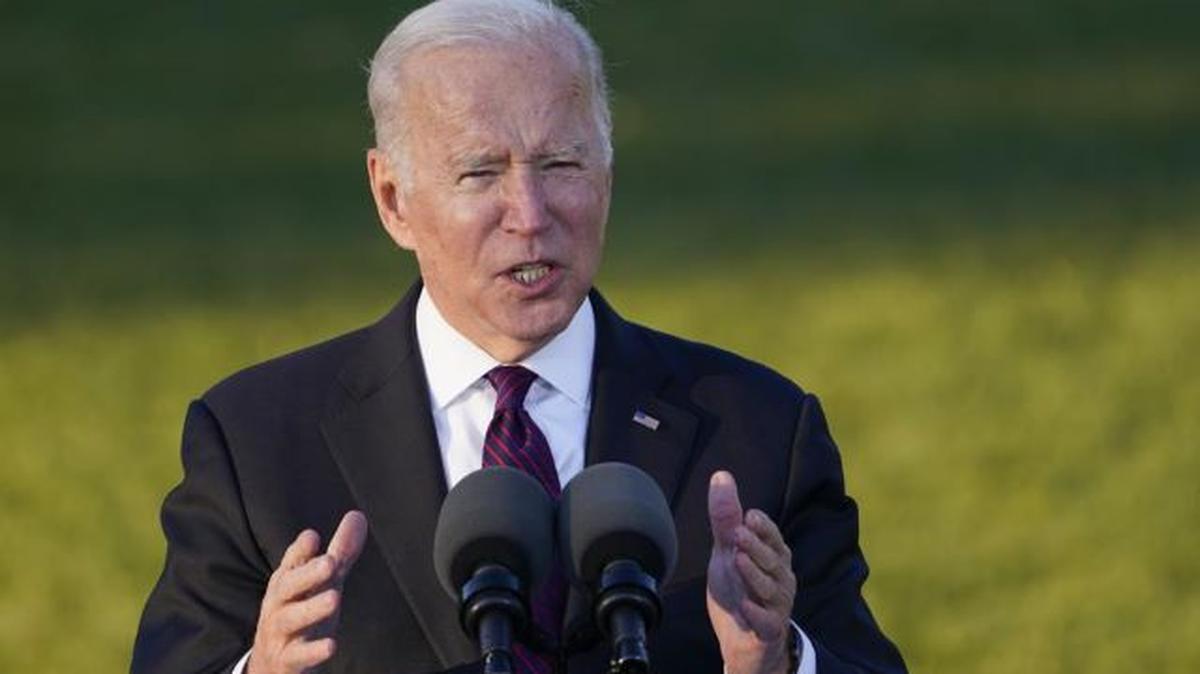
President Joe Biden's $1 trillion infrastructure package is expected to deliver more than $13 billion to Ohio over five years to improve federal highways, bridges, public transportation, broadband access and much more.
Local officials who spoke to Mahoning Matters Tuesday said they're not yet sure how the new money secured in the bipartisan Infrastructure Investment and Jobs Act, signed into law Monday, would trickle down to the ground level, but it will likely follow the traditional competitive federal funding process.
"That's the big unknown — how is this money going to become available?" Mahoning County Engineer Pat Ginnetti said Tuesday.
For federally funded programs, administrators of those funds — like the Ohio Department of Transportation in the example of road projects — open application windows for local projects. Agencies like the Mahoning County Engineer's Office gather data and background on the projects they'd like to have funded. Those pitches are then scored by certain criteria. Local entities are usually expected to put up 20% of the project's total price tag as a local match.
The American Society of Civil Engineers gave Ohio's infrastructure a C-minus grade on its latest report card, according to the White House. Here's a look at the areas where Biden's office thinks new infrastructure funding could be targeted in the state, and how much funding Ohio is expected to get:
Repairing and rebuilding roads and bridges
Based on formula funding, Ohio could get $9.2 billion for federal highway projects and $483 million for bridge replacements and repairs over five years, according to the White House.
The state could also apply for some of the $12.5 billion included in the new law's Bridge Investment Program for "economically significant bridges." That includes the 100-year-old State Street Bridge in Struthers, visited by U.S. Sen. Sherrod Brown of Cleveland, D-Ohio, in September, which is one of the about 3,200 bridges statewide now in need of repairs.
"Replacing and repairing a bridge is much more expensive than fixing a pothole. It takes a lot more effort to find the funding," Ginnetti said in September.
The city's State Street Bridge would in total cost about $850,000 to replace, he said. Though state-administered funding is usually provided within a year of the application, federal funding often takes up to five years, he said.
"It does take longer because it's federal. The process is more complicated," Ginnetti said Tuesday. "Typically, the benefit is great because they're bigger projects."
Ohio has 4,925 miles of highway that are in poor condition and 1,377 bridges considered to be structurally deficient, according to the American Road and Transportation Builders Association's latest report. Driving on poor roads costs Ohio drivers an estimated $506 per year, the White House said.
Mahoning County is responsible for about 485 miles of roadway and nearly 300 bridges, five of which have been identified as the most-traveled, structurally deficient bridges in the 13th and 6th U.S. congressional districts, according to ARTBA's most recent report.
Those bridges are located at:
- South Avenue over Youngstown & Southern railroad, which was built in 1957 and is crossed about 9,100 times daily;
- Four Mile Run Road over Four Mile Run, which was built in 1931 and is crossed about 6,000 times daily;
- Raccoon Road over Indian Run Creek, which was built in 1957 and is crossed about 4,300 times daily;
- North Lima Road over Yellow Creek, which was built in 1940 and is crossed about 4,200 times daily;
- And Hopkins Road over Andersons Run, which was built in 1938 and is crossed nearly 3,300 times daily.
Expanding high-speed internet access
Ohio is expected to receive at least $100 million to make broadband internet more accessible and affordable statewide, and to connect some 259,000 Ohioans who currently don't have internet access, according to the White House.
"Broadband internet is necessary for Americans to do their jobs, to participate equally in school learning, health care, and to stay connected," reads the White House fact sheet. "Yet 14% of Ohio households do not have an internet subscription and 2% of Ohioans live in areas where, under the FCC's benchmark, there is no broadband infrastructure. Even where infrastructure is available, broadband may be too expensive to be within reach."
The infrastructure deal also offers new benefits for low-income families to afford it. More than 3.1 million Ohioans — more than a quarter of the state's population — would be eligible, according to the White House.
Eastgate Regional Council of Governments' proposed 100-mile fiber internet "backbone" running from Lake Erie to the Ohio River through Ashtabula, Mahoning and Trumbull counties is a prime candidate for this funding, said Executive Director Jim Kinnick.
The project could cost between $15 million and $20 million, he told Mahoning Matters Tuesday.
Eastgate in June unveiled the results of its broadband feasibility study in those three counties, which calls for the creation of a regional broadband authority to coordinate the expansion.
Improve drinking water and eliminate lead pipes
Under the infrastructure deal, Ohio could expect to get $1.4 billion over five years for water infrastructure improvements, including the elimination of lead service lines and pipes.
Ohio has the second-highest number of lead lines still in use nationwide, according to a July 2021 report from the National Resources Defense Council.
Youngstown Mayor Jamael Tito Brown, while campaigning for re-election in October, vowed to prioritize removal of the city's lead pipes, which he said has a direct link to the city's high infant mortality rate.
Other targets for the new infrastructure funding in Ohio, based on formula estimates, include:
- $1.2 billion over five years to improve public transportation;
- $253 million over five years for infrastructure development at airports;
- $140 million over five years to expand the network of electric vehicle charging stations; another $2.5 billion in competitive grant funding will also be open;
- $26 million over five years for wildfire protection; another $3.5 billion available nationwide will help households with weatherization;
- $25 million over five years to protect against cyberattacks.
This story was originally published November 17, 2021 at 3:52 AM with the headline "How can Biden’s infrastructure package help the Valley? Here’s what we know so far."