Stop! That baby animal doesn’t need your help, OH experts say
Every year around this time in Ohio, animal rescue centers and the Ohio Department of Natural Resources (DNR) receive an influx of calls from well-meaning residents who find young critters alone and assume they need help.
Even though you may be well-meaning, wildlife experts say: Don’t be too quick to intervene.
In many cases, what looks like an abandoned animal is perfectly normal—and trying to rescue it could actually do more harm than good.
The Lake Erie Nature and Science Center says “Baby wildlife is rarely abandoned in nature. Mothers will often leave their young unattended for hours to collect food or prevent the attraction of predators.”
Sometimes hidden in tall grass or shrubbery, many people mistakenly believe that these babies have been abandoned, when really it’s “the mother’s way of preventing attracting predators.”
Keep an eye out for these young animals:
Rabbits (kitten): Nests are shallow depressions with dried grass and fur and mothers only visit only twice daily to nurse.
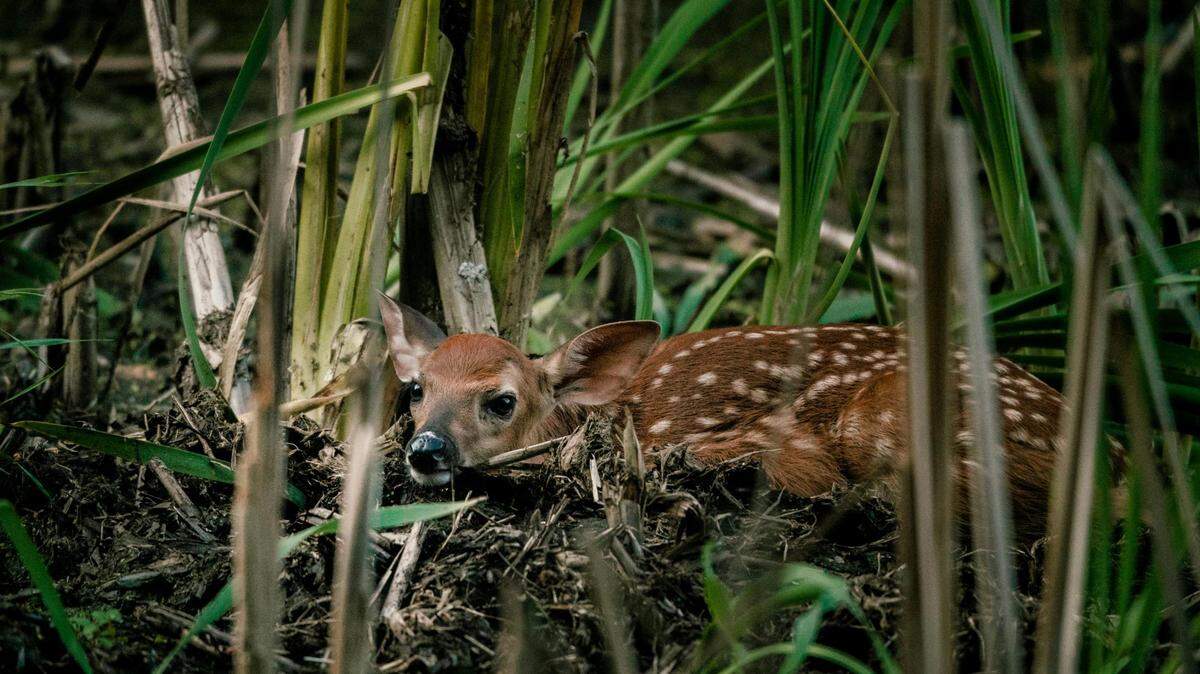
Deer (fawn): Mothers leave them alone and hidden during the day while foraging.
Baby squirrels (pup): They may fall from nests but mothers often retrieve them if possible.
Baby birds (nestlings or fledglings): Even when nestlings fall from nests mothers continue to feed them.
Baby raccoons (cubs): Mothers hide babies in different locations to protect them.
Baby turtles (hatchlings): Hatchlings are independent from birth with no parental care.
The exceptions are often baby opossums. Joeys that are less than seven inches long that are found alone are likely orphaned. Mothers carry young on their backs, so aren’t usually separated from each other.
Here’s some practical advice from the Ohio Wildlife Center.
If you find a fawn
If the fawn is lying quietly, leave it alone.
If it looks injured (bleeding, obviously weak) or is in a dangerous location (road, busy yard), call a licensed wildlife rehabilitator.
Never try to feed a fawn yourself. Cow’s milk can be fatal.
If you find a baby rabbit (a kitten)
If the babies appear warm and uninjured, the mother is likely nearby.
Cover the nest loosely with grass and avoid disturbing it.
Pro tip: If you want to check if the mother returns, place two small sticks in an “X” over the nest and check after 12 hours.
If you find a baby raccoon (a pup)
Raccoon mothers are highly attentive. A lone baby raccoon might have just wandered a short distance from the den.
If it’s active, healthy, and not in immediate danger, observe from a distance.
If it’s clearly orphaned (cold, vocalizing nonstop, injured), contact wildlife rehabbers.
Raising a raccoon as a pet without a permit is illegal in Ohio.
If you find a baby bird (a nestling/fledgling)
If the bird is featherless or has very few feathers, it’s a nestling—and it probably needs help back into its nest.
The Ohio DNR recommends the following:
Locate the original nest: If you find it and can safely reach it, gently place the nestling back inside.
If the nest is destroyed or unreachable: Create a makeshift nest using a small container lined with dry grass or a soft cloth and secure it as high as possible in the tree or shrub
Observe from a distance: Watch for at least an hour to see if the parents return. If the parents do not return, contact a licensed wildlife rehabilitator for help.
Do not attempt to feed or give water to the nestling, as improper care can harm the bird.
If it’s hopping around and fully feathered, it’s a fledgling and it’s learning to fly. Leave it alone.
Touching a baby bird won’t cause the parents to abandon it—this is a myth.
When should you call for help?
You should contact a licensed wildlife rehabilitator if:
The animal is visibly injured or bleeding
The animal is cold, lethargic or crying for hours
The animal is in immediate danger and can’t move itself
A few don’ts
Don’t feed wild animals (wrong food could mean big health risks)
Don’t care for sick, injured or orphaned wildlife in Ohio without a permit
Don’t relocate baby animals far from where you found them (may separate them from their mothers)
In most cases, the best thing you can do is nothing at all. Nature knows what it’s doing and sometimes the kindest act is simply letting baby critters grow up wild.
Have you ever found an injured animal and had to help it? Email me at srose@ledger-enquirer.com or find me on social media.