
Genius Knows No Boundaries: Retired Youngstown professor writes about fostering community, celebrating differences
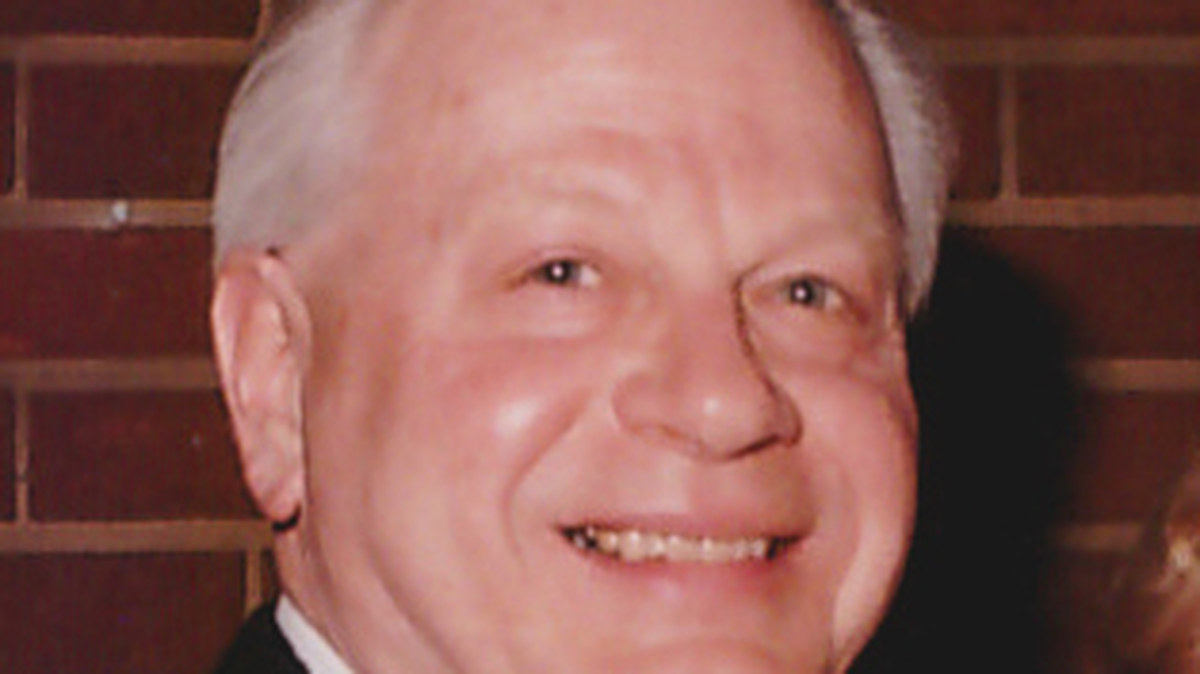
Through thirty years of service, one man in the Mahoning Valley learned valuable lessons and stories of diversity that he’d like to share in his new book.
George Beelen, a retired professor and chairman of the history department at Youngstown State University, shares his life’s work in Genius Knows No Boundaries, a book about the community organization he founded called the Ohio Cultural Alliance.
The group, now part of the Mahoning Valley Historical Society, plans public events and dinners throughout the year to cultivate new relationships within the community. Beelen’s mission when founding the group was to encourage bringing people from different cultural backgrounds together to see they’re not so different after all.
Mahoning Matters reporter Kelcey Norris talked to Beelen about his journey serving the Mahoning Valley and what the book means to him.
Suppose you want to learn more about Beelen’s organization and its impact. In that case, you can attend the upcoming engagement event, “Ukraine: Culture and Cuisine,” held at 3 p.m. on April 2 at the Ukrainian Orthodox Cultural Center.
Norris: So George, thank you so much for being here with me today. Introduce yourself and tell me about your time as a Youngstown State University professor.
Beelen: My name is George Beelen. I got my doctor’s degree from Kent State University in 1971. I taught at Poland High School for eight years and simultaneously taught part-time at YSU. And I started full-time at YSU in 1966. I retired in 1996. I was rehired by the university to be the lobbyist for the university to go to Columbus to represent the university and enjoyed it immensely all those years. When I was there at YSU, it was a growing time. We were growing in terms of facilities, growing in terms of hiring faculty and staff. I was chairman of the History Department for about half that time. And as I say, I enjoyed it immensely.
KN: Wonderful. Do you have any special memories from campus or special things that happened during your time at YSU?
GB: Well, memories of the students when I retired might sound trite, but I just missed the students. Most teachers, particularly history teachers, tell stories, and I love telling the stories and getting feedback from the students. That was always a delightful thing. And then you’re so happy when some of your students have done something wonderful in life. And you say, well, maybe I had a small role in that. And that makes you feel good. I had several awards from the university, which makes you feel good, too. One of them is one of the highest awards that YSU gives its retirees: the Heritage Award. So they give out up to two yearly, sometimes only one. So that was a rewarding thing too.
KN: Can you tell me about your new book, Genius Knows No Boundaries?
GB: Genius Knows No Boundaries, yes. It’s the story of the Ohio Cultural Alliance, which I founded in 1987 and continues to preside over for 30 years. So during that time, we came up with various stories about the people, institutions, and culture of the Mahoning Valley people. The early part of the book talks about how we started, our origins and the Ohio Cultural Alliance. It came by the way I was asked to give a speech in Middletown, Ohio, where they were focusing on Mexico. So I gave my talk there, and folks from Mexico invited me to Guadalajara to provide the word there a few months later. And they said, ‘George, you need to start an Ohio Cultural Alliance,’ as they had the Guadalajara Cultural Alliance, the Dallas Cultural Alliance, and others. So that was the start of it; that was the impetus. We got going after a year or two and we developed a model. We developed a model and the model was to have a theme for the year. That theme could be, for example, immigrants coming to the Mahoning Valley. So we took one country at a time, talked about that, had dinner that was generally related to that cultural group, and then had cultural enrichment or entertainment all in one evening. So it’s an easy way to learn and get people involved, and we used a lot of local people to present these talks.
We developed an understanding of many people, not only our people but people different from us. And we understood that ‘Geez whiz, people are much more alike than they are different.’ And it gave us hope, too. As I said to Chris earlier, this book is meant to be an antidote to the alleged bad news of the Valley. It’s a positive thing, understanding and hope by, again, local people and by local engagement. And we concluded that almost all cultures have so many good, empathetic, kind, and genius people. It covers all people and all cultures. So genius knows no boundaries.
The book is in ebook form online, in paperback and hardback, and I have copies of all of them.
KN: Wonderful. What inspired you to write it down in a book? Was it all the people that you met?
GB: Well, after 30 years, I couldn’t get anybody to pick up to be the director of it, although I’ll say parenthetically now, after a short time, we knew that we would be integrated into the Mahoning Valley Historical Society. So we’re a part of them now. And in fact, we’ve had had a series of meetings [scheduled] under the banner of Mahoning Valley Historical Society, but then because of COVID had to cancel everything. So we’re picking it up again. We have a meeting on April 2 dealing with Ukraine, and our theme is culture and cuisine. So that will be our theme during this year, five meetings a year.
But we had ten meetings a year when we were at our height. We attracted 200, 250, and 300 people in ten meetings every year at each monthly meeting. Twice, we had 330 people when we had Tony Lariccia, if you know of him, a wonderful philanthropist of the area, a little guy with a huge heart. And Bishop George Murray, the bishop of Youngstown Catholic Diocese. So, we knew that we wanted to do something afterward, too. So I got all my records. I had records as a historian, you know, of all 30 years, pulled it all together. And I said, ‘I think we have a book here.’ And I think we evolved to a point where we can be called an organization that shows that genius has no boundaries. So that became our title.
KN: And you said there’s an April event open to the public?
GB: Oh, yes. Yes. Yeah, it’s open to the public. And you contact them, the Mahoning Valley Historical Society.
KN: Where can we check out your book?
GB: Right now, through me and I’m going to try to get it into Barnes and Noble, for example, and at the Butler and a few other venues. And you can get it online, of course, too.
KN: Awesome. And what does the Mahoning Valley mean to you?
GB: The Mahoning Valley is one area with diverse peoples, and they’re integrated. We don’t call it a melting pot, but it’s not quite that; it’s more like somebody said it’s a kind of a quilt of all the cultures. At our best, we get along well. We don’t always get along well, [you know], but at our best, we get along well because we learn more and more from each other. We understand that, as I said earlier, we have more things in common than we have differences. So we studied religions, we studied all the various cultures, and this represents the Mahoning Valley; I think
KN: Was there anything else that you wanted to add?
GB: Yeah, we did several other things to create community. We played a role in the creation of the community. We did such things as inviting people to shake hands with somebody else during the meeting that they didn’t know. Shake hands and introduce yourself. We ask people at times, not all every month but at times to bring somebody different from you to the meeting — different sexes, different color, a different religion, whatever, a younger or older person than you.
We collected food and distributed it to agencies in the area. We had difference makers whom we invited for a five-minute talk. This is the last several years we have done this. We asked people from the various community who were heads of agencies or did something vital in the community to talk about their organization. So in their five minutes, they were our guests. We learned about them, and they learned about us. We did such things as included in their reservation. We had area milestones. What have you done lately? Did you retire, get a new job, get an award, write an article, or write a book? What’s your anniversary, your birthday? So again, it’s a matter of trying to engender community this way. We felt it was important to have name tags, so we knew each other then and created a community within our groups.
We had a huge world map that I bought when I was on an airplane, I ordered it, and it was like, I don’t know, 20 feet by 15 feet. So as we’re talking about a specific country, we can point to it then, which was fascinating. So, I don’t know whether we have made a difference over the years. Have these experiences mattered? Have we dealt with enough universal issues? Are we now more inclusive than we tried to be? Are we more understanding? Are we more tolerant? Are we more compassionate? We certainly did try, and I think we made at least some routes into that.
KN: Wonderful; thank you so much. I appreciate you taking the time, and congratulations on your new book and the success of your organization.
GB: Thank you, Kelcey. Thanks a lot. Good luck to you in whatever you do. Thank you.
-------------------------------------------------------------------------------------------------------------------------
(EDITOR’S NOTE: Get the latest Mahoning Valley news in your email inbox weekday mornings. Sign up here for our free daily newsletter.)
-------------------------------------------------------------------------------------------------------------------------
Follow Mahoning Matters on Facebook, Twitter and LinkedIn.