Meet Mercy Health doctor, author helping Rescue Mission of Mahoning Valley
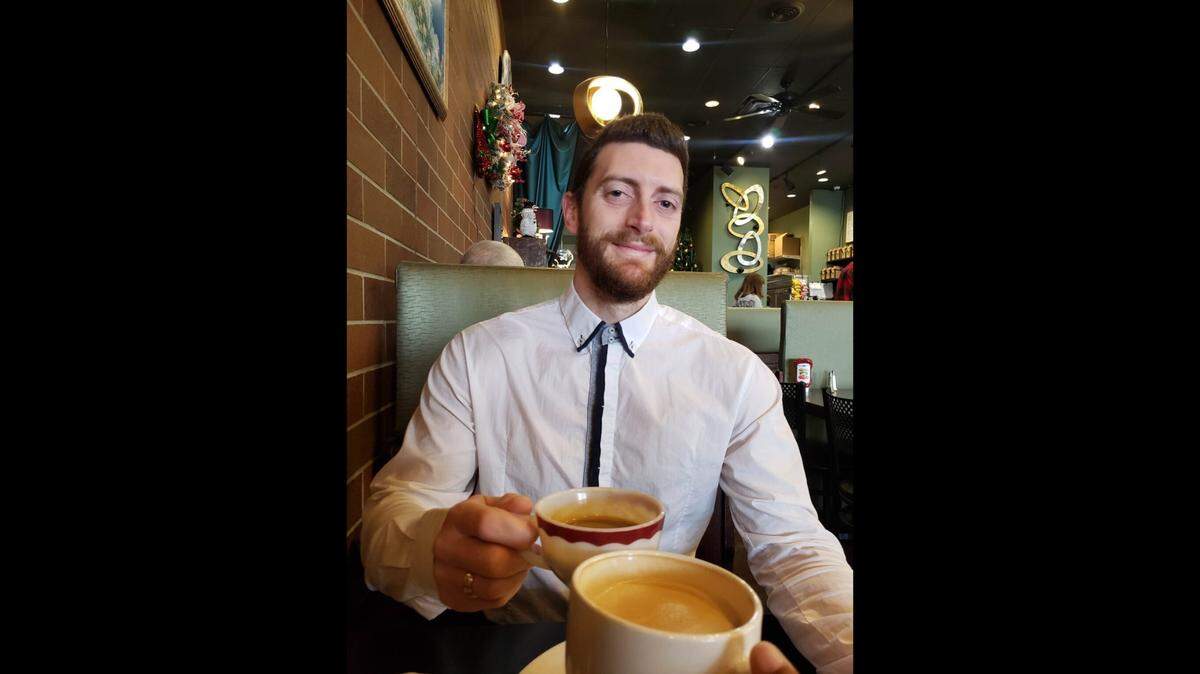
Meet Dr. Christian Yeasted, a local doctor, instructor and author of a book called The Final Invention.
He’s been practicing family medicine as a primary care doctor with Mercy Health for eight years in the Mahoning county area.
“For half of the week, I’m seeing my own patients, and the other half I am teaching the up-and-coming doctors, the residents at Youngstown Primary Care,” Dr. Yeasted said.
Dr. Yeasted is originally from Pittsburgh, but settled down in the Mahoning Valley. He said he wrote The Final Invention to serve as an ethics teaching tool for readers who want to be immersed in an exciting story.
As chair of ethics at St. Elizabeth Hospital, he’s researched artificial intelligence and how it relates to the future of humanity.
“In the book, I covered not only medical ethics, which is called bio ethics, but also the ethical application of AI in law, war, religion and finance,” Dr. Yeasted said. “It’s actually an adventure story, not boring as heck; it’s more of a thriller cause who wants to read a book about ethics? I tried to make it as interesting as possible and cover the most important parts.”
“The book is meant to teach, but some people don’t like being lectured to, so I figured I would make it worth someone’s time,” he added.
All the proceeds from his book are being donated to charitable organizations, split between the Rescue Mission of the Mahoning Valley and Feed My Starving Children.
Helping the Rescue Mission of Mahoning Valley
Dr. Yeasted said it’s always been his intention to donate the proceeds from sales to charitable organizations ever since he started writing the book.
“The Rescue Mission has always been fantastic. I have a lot of my patients who have been through there, and the Rescue Mission is there for them in a time of need,” he said. “The Rescue Mission, they really do a lot of good with the money that they get. I wanted to give back to the place that has helped some of my patients so much and means so much to them.”
Copies of The Final Invention are available for purchase through online retailers such as Amazon, Audible, Walmart, Barnes & Noble, Ingram Spark, Apple and more.
A paperback copy costs $17.95, or you can download a copy of the eBook for $2.99.
All proceeds from The Final Invention go toward the Rescue Mission of Mahoning Valley and Feed My Starving Children.
“I’ve actually raised money for Feed My Starving Children before because I strongly believe in what they do,” Dr. Yeasted said. “They mostly help kids in Africa.”
Yeasted explained these are kids that have so little to eat they’re not even able to focus on whatever education they might be getting in schools.
“If I am to care about teaching, I would like to reach out to the least fortunate of all the students, and start by giving them at least something in their belly so they can pay attention at school better and perhaps make a better future for themselves,” he said.
What can readers learn from The Final Invention?
Dr. Yeasted’s passion for teaching in ways that hold the learner’s interest lead him to write The Final Invention.
Here’s what he wants The Final Invention to teach readers about AI:
“AI is not going away,” he said. “The most important lesson to take away from the reading is that the ultimate decision-making for any application of AI should be left with the humans, because we care about other humans.”
“It’s deeply ingrained in us to care about our fellow human, and it’s so far not something that AI has ever been capable of, because it’s simply a tool,” Yeasted added. “If anyone thinks, ‘Well, maybe eventually AI will care,’ I would say it would have to be a human to care about humans as much as humans do.”
Decisions like loan eligibility, bails and policies should always be made by people, not AI, according to Dr. Yeasted.
Ethics in healthcare
According to Dr. Yeasted, ethics in health care is called bioethics.
“Ethics in general is like guidelines, or an algorithm that you would follow based on the law of the land, the morals of the society, expectations and cultural differences between people, and you take all that into account,” he said. “There’s different types of approaches. Sometimes it’s - what does the most good and the least amount of harm, the most good for the most people - hat’s utilitarian.”
“We kind of try to incorporate all the different ways of doing good and try to figure out the best course of action,” Yeasted said.
Yeasted’s research into the history of bioethics led him to want to know more about the future of ethics in AI.
“Bioethics has been around since ancient Greek, ancient Roman times, but it really started taking off around World War Two and afterward,” he said. “Researchers started saying ‘We’re not just going to be doing anything we want to human subjects - they have rights.’ Then also in the hospital, now it’s more for patient care.”
For more information, visit The Final Invention website.