
Hearing set on GM battery plant wetlands impact
LORDSTOWN — The Ohio Environmental Protection Agency and the U.S. Army Corps of Engineers are taking public input on the environmental impact of General Motors' proposed electric vehicle battery cell plant.
A public hearing is set for 5 p.m. March 12 in Lordstown High School's Crawford Auditorium, 1824 Salt Springs Road. Registration and an informal open house is planned for 5 p.m. to 6 p.m., with a public information session to follow.
Oral statements and testimony can be offered after the information session. Statements about the proposal can also be submitted before the March 12 session to the U.S. Army Corps of Engineers Pittsburgh District office, 1000 Liberty Ave., Pittsburgh, PA 15222.
"The Corps of Engineers will grant a permit unless its issuance is found to be contrary to the public's interest," reads a Tuesday release from the Corps. "Any objections received during this period may be forwarded to the applicant for possible resolution before the determination is made whether to issue or deny the requested [Department of Army] permit."
As Mahoning Matters reported last month, the plant's proposed Tod Avenue site was clear-cut in 2015 and now contains nearly 66 acres of wetlands that are part of the Mahoning River watershed which would be impacted by the new development.
The $2.3-billion joint venture between the automaker and South Korean chemical company LG Chem — currently dubbed GigaPower LLC — would impact about 66 acres of wetlands inside the Mahoning River watershed.
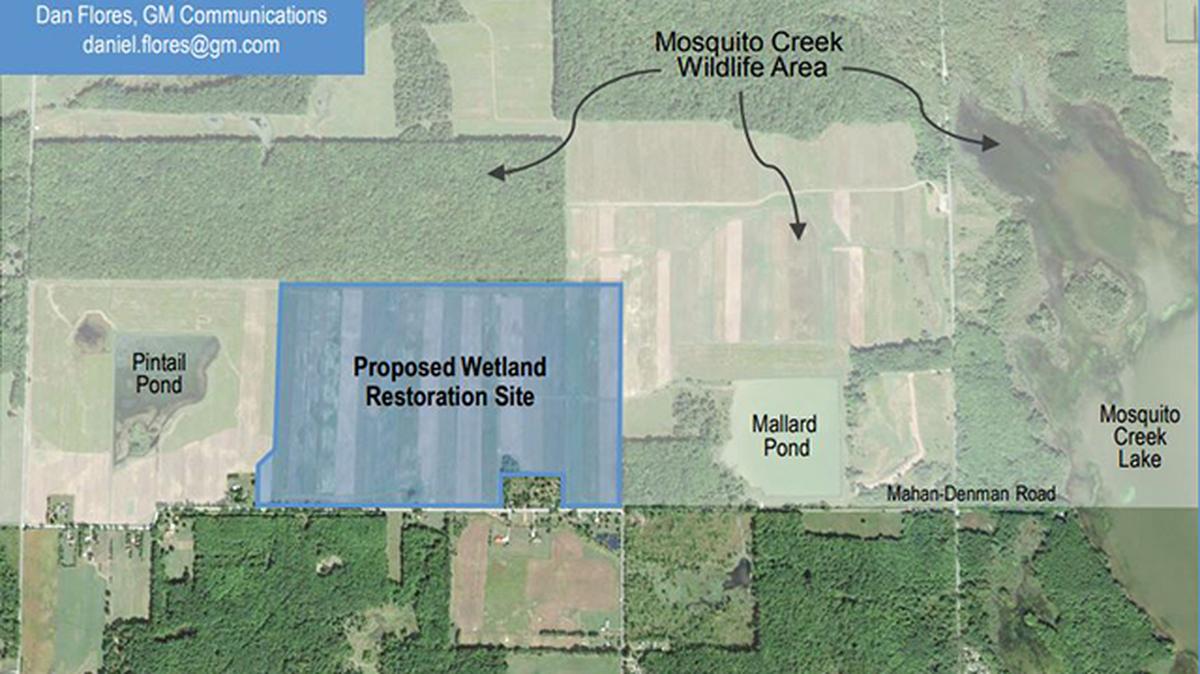
The development plan includes creation of more than 130 acres of new wetlands in the Mosquito Creek Wildlife Area, which is part of the same watershed.
Habitat studies included in the permit indicate the construction wouldn't impact native creatures, including the endangered Indiana bat, which was not spotted in the area.
The Federal Emergency Management Agency considers the site to have a minimal flood risk. The proposed site would include a stormwater management system to keep peak discharge rates below pre-construction levels.
"Downstream sites will not be at greater risk from flooding as a result of the project," the permit states.
The site would produce batteries using lithium, which can pollute groundwater. As part of the site's pollution discharge permit, a stormwater pollution prevention plan would be developed. Through pollution control methods like dust collectors inside the plant and tightly designed substance storage tanks, the facility won't affect groundwater, "therefore, no negative impacts are anticipated … either on-site or downstream off-site," the permit states.
Speaking with reporters earlier this month about the plant, State Sen. Sean O'Brien of Bazetta, D-32nd, and U.S. Rep. Tim Ryan of Howland, D-13th, said they don't anticipate public backlash about its water quality impacts, unlike a previous proposal to bring a TJX/HomeGoods distribution center to the village.
"We're going to work with our communities to assuage their concerns and make sure everything is done to the letter of the law," O'Brien said. "As concerns come up, we're going to have to adapt and look at them and work through them."
This story was originally published February 26, 2020 at 4:15 AM with the headline "Hearing set on GM battery plant wetlands impact."