
Ohio’s final budget bill keeps $250M broadband expansion and ‘escape hatch’ for state-controlled schools
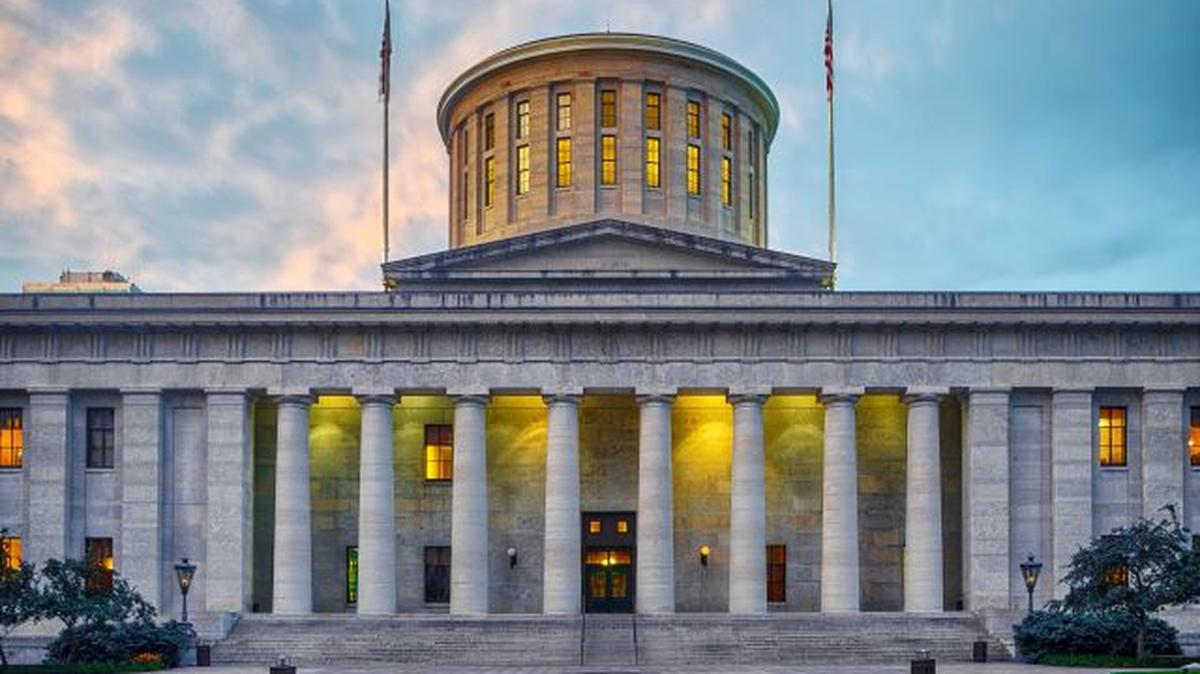
COLUMBUS, Ohio — Ohio's budget bill, which exited committee negotiations Monday, reportedly includes a line item that may bode well for big-ticket broadband expansion in the Mahoning Valley.
The bill, which is expected to get a final floor vote in both chambers this evening, restores a $250 million line item to boost high-speed internet connections in underserved areas.
Lt. Gov. Jon Husted visited Youngstown last week to discuss the need for broadband as well as a $12 million to $15 million proposal to bring a 100-mile high-speed fiber line that could serve more than 620,000 residents between Mahoning, Trumbull, Columbiana and Ashtabula counties.
He expected Gov. Mike DeWine's initial proposal for $250 million in new broadband funding would be restored to the budget bill. He also expected included language prohibiting municipalities from providing their own localized high-speed internet service would be removed — and it was, according to Cleveland.com.
Jim Kinnick, executive director of Eastgate Regional Council of Governments, which has been studying broadband availability in the region and proposed the up to $15 million fiber network installation, said project coordinators have set their sights on the new funding source. Eastgate is already working with BroadbandOhio on a potential state proposal, he said.
Kinnick said a broadband meeting with officials from Mahoning, Trumbull and Ashtabula counties is set for Tuesday afternoon.
The state estimates 300,000 households and at least 1 million residents across Ohio lack broadband. Youngstown was reportedly the 43rd worst city in the nation for broadband connectivity, according to a 2018 study.
The House pared the broadband funding amount down to $190 million. The Senate later removed the broadband funding after Senate President Matt Huffman said there weren't enough details on how the money would be spent for the Senate to support it.
Academic distress commissions
The bill also includes an escape hatch for Ohio school districts now under the purview of academic distress commissions to regain local control, including the city school districts in Youngstown, Lorain and East Cleveland, according to Cleveland.com.
The 2015 Ohio House Bill 70, colloquially known as the "Youngstown Plan," allowed the state to take over chronically failing school districts, putting them under the control of a CEO appointed by the commission.
Provisions included in a previous Senate bill give state-run school districts a chance to set certain benchmarks to be met in three years, and the possibility of two one-year extensions.
"It has to be a written plan and you have to have the current CEO help wean you into having local control of your own. Then there's all kinds of guardrails put in for three to five years," state Sen. Michael Rulli of Salem, R-33rd, told Mahoning Matters earlier this month.
"You can't go five years and maintain all F's. We can't let that happen," Rulli said.
The district has seen little improvement since HB 70 was passed in 2015.
But outgoing city schools Superintendent Joe Meranto worried that another change in leadership could be destablizing.
"We need stability right now," he told Mahoning Matters earlier this month. "We need to try to get the elected board and the CEO to work together in a transition period. And then, in a few months, they can see where we're at. If you feel this isn't working, you can look to make a change. But, right now, this is late. This is June."
Fair School Funding Plan
A bipartisan school-funding plan in the works for years is also back in Ohio's upcoming state budget, under a compromise approved Monday by a joint legislative committee working out final details of the $75 billion spending plan.
The Republican-controlled House had included the education proposal known as the Fair School Funding Plan in its version of the budget passed in April. The plan, supported by multiple education advocacy groups, is meant to bring more reliability to annual school funding payments to districts.
The GOP-controlled Senate stripped the plan from its budget version approved earlier this month, saying its own proposal provided more money than the House plan over the next two years.
The Senate also included a plan that for the first time would require the state, not individual districts, to pay charter schools directly.
The budget compromise announced Monday keeps the direct payment to charter schools. The full House and Senate were expected to approve the budget later Monday.
Other details
Among other details in the final version of the budget, the plan:
• Provides a 3% personal income tax cut for Ohioans, a compromise between the House plan, which proposed a 2% cut, and the Senate, which wanted a 5% personal income tax cut. Democrats oppose the cut, saying it will benefit the wealthiest Ohioans.
• Allots $170 million over two years for the state's H2Ohio clean water initiative.
• Declares Juneteenth a state holiday in Ohio. The day commemorating June 19, 1865, when slaves in Galveston, Texas, were told they were free, was declared a national holiday earlier this month.
— Associated Press writer Andrew Welsh-Huggins and Mahoning Matters reporter Justin Dennis contributed to this report.
This story was originally published June 28, 2021 at 7:54 PM with the headline "Ohio’s final budget bill keeps $250M broadband expansion and ‘escape hatch’ for state-controlled schools."