
NAACP says Black drug offenders are nearly 6 times more likely to be imprisoned
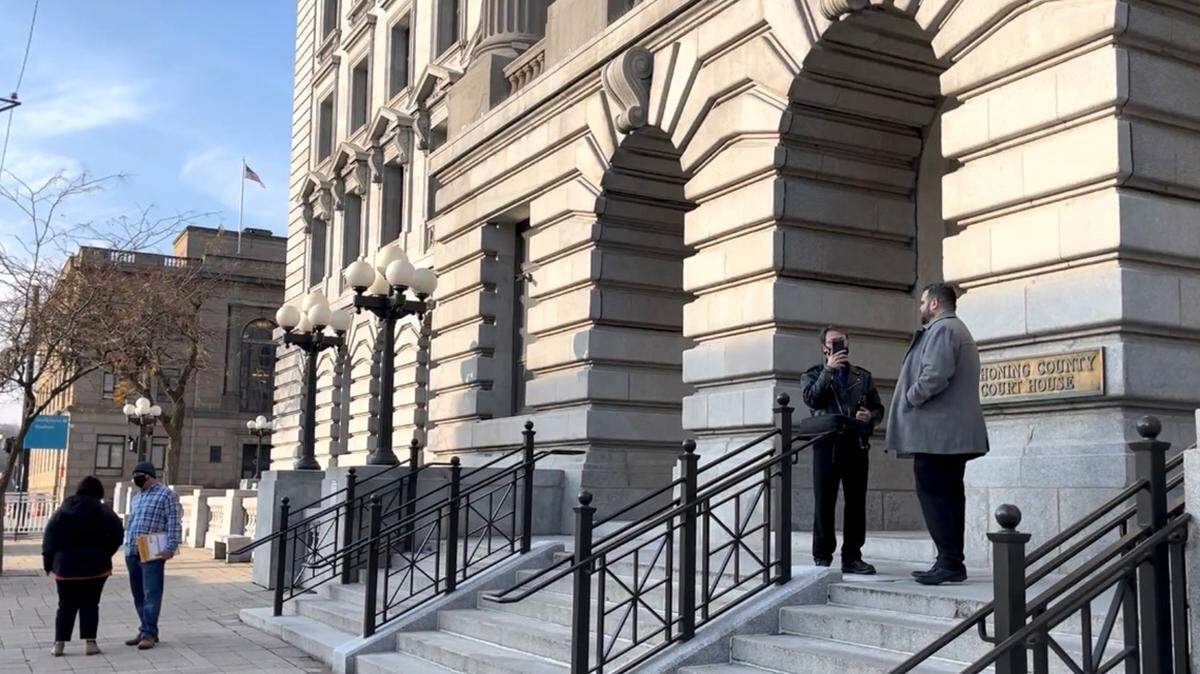
When Amy Klumpp, Mahoning County’s felony drug court coordinator, started working for the court in 2005, she noticed marijuana was no longer the gateway drug.
“We were waiting for meth, but all of the sudden we got heroin addicts coming in,” she said. “They were upper- to middle-class suburban kids. Eight kids from Springfield, six kids from Poland.”
The drug court’s framework encourages addiction treatment and personal accountability, as an alternative to incarceration.
But Klumpp said it has low Black and Hispanic representation. Of the voluntary drug court’s participants, fewer than 10% are Black, she said. She said local and national drug courts similarly do not see an equitable number of Black participants.
Since the drug court does not have a public defender advocating for a diverse group for drug treatment, local attorneys often decide “who would be successful or not,” she said.
Klumpp said Black males who live in “tough parts of the city” and are charged with drug offenses often are also charged for possessing weapons which they use to protect themselves.
“We have the eligibility requirement of no weapons charges or convictions, which is very tough for young African American men because they’re often picked up on weapons,” she said. “We even talked about it recently and our prosecutor took it back to the office and they are not budging on that.”
The NAACP reported that Black and white individuals use drugs at similar rates, but the imprisonment rate for Black people is almost six times higher than white people.
Klumpp believes Youngstown may be more segregated between white and Black communities in how they handle treatment and recovery in their own communities.
“We’ve had very few Hispanics, and [instead of] going to a system, they go culturally to family or church. … They go within their own community to address issues.” she said. “I think it’s [mistrust] in the system.”
The Ohio Substance Abuse Monitoring Network reported high usage of drugs in the Youngstown region — Mahoning, Trumbull, Columbiana, Ashtabula and Jefferson counties — from June 2019 to January 2020.
Heroin-related drug offenses in Ohio increased nearly 125% between 2011 and 2014, while non-heroin, opiate-related incidents decreased by 3.5%, the Office of Criminal Justice Services reported.
The increase is largely connected to abuse by young adults 18 to 25 years old, according to the National Institute on Drug Abuse.
Heroin is now the ‘gateway drug’
Klumpp said when heroin became the gateway drug for most drug court participants, the court started seeing more middle- to upper-class offenders — the children of judges, police officers, banking executives and others — using drugs.
“In the days of crack cocaine, it was very punitive. In the days of heroin, it was an interesting cultural dynamic,” she said. “Suddenly, everyone was wanting to be more treatment-oriented instead of [sending drug offenders] to jail.”
Klumpp said legislation has changed drastically over time. The court-appointed program used to be very criminal justice-oriented. Now, it offers support, treatment and programming.
“The issue is legislation, and it has changed so much,” Klumpp said. “When the court started in 1997, a felony level-five could [result in] prison. It’s hard to get someone into prison [now] on a felony five, especially a nonviolent one.”
Klumpp has seen a higher completion rate with more drug offenders living a life of recovery after trauma-informed and holistic treatment, compared to more criminal punishment.
“We have a whole lot of different options in the county to divert them from going to prison,” she said. “I think that we have a great team and because of who the judge is and how long he’s been doing this, he’s well respected. Agencies are stepping over each other trying to get on the team.”
This story was originally published April 18, 2022 at 5:00 AM.