
Testing resources, turnaround time remain a struggle for many in Ohio
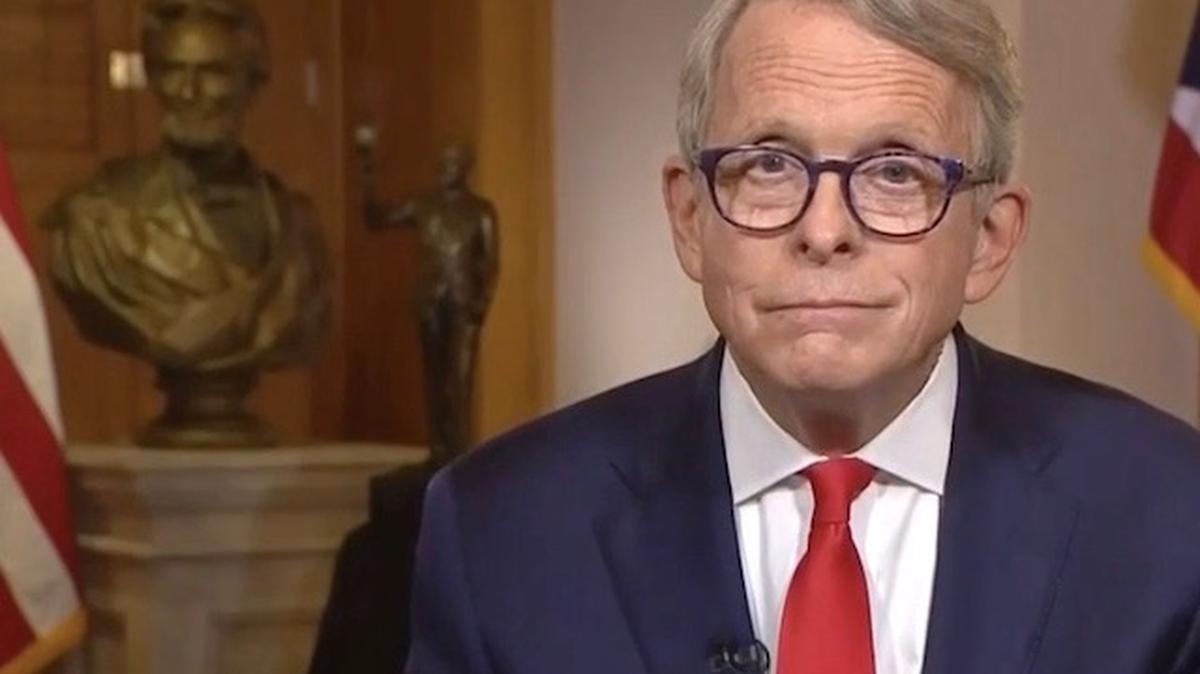
COLUMBUS — Gov. Mike DeWine, who took three different coronavirus tests on what he called a "rollercoaster" Thursday and received results within hours, said Friday testing data in Ohio are slowed by the state's non-uniform patchwork of testing agencies and their privately contracted labs, some of which are struggling to meet demand.
While Ohioans living in the Mahoning Valley and elsewhere across the state have reported waiting several days, a week or more for results, DeWine's two tests, analyzed at Ohio State's Wexner Medical Center, were delivered the same day.
"We're doing everything we can to [decrease] the time. We have two challenges" — the state isn't testing enough and national virus-testing labs are overburdened and "backed up," he said during a Friday briefing on the state's coronavirus response.
Though agencies contracting with those national labs should expect to have results within two days, it's common to wait five or six days, DeWine said.
"It's not a uniform testing in the state of Ohio. There's a lot of different players, a lot of different hospitals," he said.
In Ohio, 682,933 people were tested for coronavirus in July, according to the state's COVID-19 dashboard — an average of about 22,030 people per day. DeWine said the Ohio Department of Health planned to hit that 22,000 average testing goal by the end of May.
DeWine told reporters though the state continues to expand access to testing, ODH's August goal of an average 24,000 tested per day is "simply not acceptable."
Since the beginning of the pandemic, the state has bought up lab capacity from vendors and continued to build its own vendor system and central laboratory, DeWine said.
Dr. Peter Mohler, vice dean for research at Ohio State University's College of Medicine, said during Friday's briefing that "pooled" testing of coronavirus test samples could cut turnaround times. Under that method, multiple samples are tested at once using the same testing resources. If one pool tests positive, each subject in that pool is individually retested, according to the U.S. Food and Drug Administration.
"Because the samples are pooled, it is expected that fewer tests are run overall, meaning fewer testing supplies are used and more tests can be run at the same time allowing patients to receive their results more quickly in most cases," reads the FDA's July 18 order allowing pooled testing for Quest Diagnostics. "This testing strategy is most efficient in areas with low prevalence, meaning most results are expected to be negative."
DeWine added that the scarcity of coronavirus testing reagents means they're often diverted by testing agencies to harder-hit states like Florida and Texas.
"Some of the labs in the state of Ohio are being strangled," he said. "Many of our labs are being literally rationed. That's why we're constantly looking for other opportunities."
Lt. Gov. Jon Husted said in the coming weeks, ODH expects to release preliminary results from widespread testing for coronavirus antibodies, which would give an indication of the virus's community prevalence. Though DeWine told reporters that initiative had faced delays, ODH expects to release a final report in September.
Between 1.4 percent and 1.8 percent of people who have donated blood each week to the American Red Cross have tested positive for coronavirus antibodies, Husted added.
On Thursday, DeWine tested positive for coronavirus through a "rapid" antigen test administered before a scheduled conference with President Donald Trump. During Friday's briefing, the governor faced questions about the accuracy of those tests.
Mohler said antigen tests are not as accurate as the vast majority of the 1.3 million tests administered to Ohioans thus far. He equated the rapid antigen test DeWine took to "a pair of binoculars" and the lab-analyzed PCR test that hours later confirmed DeWine was negative for coronavirus to "a high-powered telescope."
Mohler said antigen testing is still new technology, but it's being studied in the state.
Earlier this week, Ohio, Louisiana, Michigan, Virginia, Maryland and Massachusetts formed a buyer consortium to purchase 3 million "rapid," point-of-care coronavirus tests, which are antigen-type tests, according to The Center Square.
ODH on Friday reported 93,402 confirmed cases of coronavirus statewide to date, 1,129 more than reported Thursday, and 3,381 confirmed deaths.
There have been 2,502 confirmed and probable cases to date in Mahoning County; 1,500 in Trumbull; and 1,634 in Columbiana. There have been 255 confirmed and probable deaths to date in Mahoning County; 106 in Trumbull; and 60 in Columbiana.
Statewide, 75,975 COVID-19 patients are presumed to have recovered from the virus.
Looking at an updated version of Ohio's Public Health Advisory System map, DeWine noted Ohio now has 11 counties in the Level 3 "red" alert phase. Only one county, Mercer, was added to that list this week. Several others were removed from "red" alert status.
Mahoning and Trumbull counties remain in Level 2, "orange" status, while Columbiana County remains in Level 1 "yellow" status.
This story was originally published August 8, 2020 at 5:00 AM with the headline "Testing resources, turnaround time remain a struggle for many in Ohio."